
How to Clean Any Wound at Home: Evidence-Based Guide
19 min read · Updated May 2025
On this page
- 1. Real Scenarios: Common Wound Cleaning Dilemmas
- 2. Quick Reference Guide
- 3. The Science of Proper Wound Cleaning
- Why Proper Cleaning Matters
- Research on Cleaning Solutions
- The Moist Healing Environment
- 4. Evidence-Based Wound Cleaning Protocol
- Before You Begin
- Step-by-Step Cleaning Process
- Research-Based Technique Tips
- Sterile Saline Wound Irrigation (Most Important for Proper Cleaning)
- Arm & Hammer Simply Saline Wound Wash – 7.4 oz (3-Pack)
- AMERIGEL Saline Wound Wash – 7.1 oz
- NeilMed NeilCleanse Wound Wash – 6 oz
- Wound Irrigation Devices (Research-Backed Pressure Control)
- Med Supply Partners 12cc Irrigation Syringe (Non-Sterile)
- EISCO Lab Wash Bottle – 500ml
- Gentle Cleaning Products (Mild Soaps for Skin Around Wounds)
- Dr. Bronner’s Pure-Castile Liquid Soap (Baby Unscented) – 32 oz
- Natural Way Organics Ultra Mild Unscented Castile Soap
- Moist Healing Products (Evidence-Based Wound Environment)
- Vaseline Healing Jelly Original – 13 oz
- Aquaphor Healing Ointment – 14 oz
- Advanced Moist Healing Dressings
- MED PRIDE Hydrocolloid Dressing 2×2 – 10 Pack
- Non-Adherent Wound Dressings
- Telfa Non Adherent Dressing Pads 2″ x 3″ – 100 Count
- Important Shopping Notes:
- Key Research References Supporting These Recommendations:
- 5. Special Wound Situations: Evidence-Based Approaches
- 6. Cleaning Products: Research-Based Recommendations
- 7. Age-Specific Wound Cleaning Guidelines
- Children
- Adults
- Older Adults
- 8. After Cleaning: Evidence-Based Next Steps
- Wound Covering Essentials
- Monitoring for Complications
- 9. When & Who to Call: Decision Tree
- Seek Emergency Care (ER/911) Immediately If:
- Seek Urgent Care (Same Day) If:
- Schedule Regular Medical Care If:
- 10. Nutritional Support for Wound Healing
- 11. Common Questions Answered with Evidence
- Q: Does hydrogen peroxide help clean wounds?
- Q: Should I let my wound “breathe” or keep it covered?
- Q: When is it appropriate to use antibiotic ointment?
- Q: Can I take a shower with an open wound?
- Q: Should I clean a wound that’s already formed a scab?
- Q: How can I minimize scarring when cleaning wounds?
- 12. Expert Perspectives
- 13. Resources & Top Articles
- 14. Evidence-Based Summary
- 15. References
Medical Disclaimer: This content is for informational purposes only and is not a substitute for professional medical advice. Always consult healthcare professionals for medical concerns.
1. Real Scenarios: Common Wound Cleaning Dilemmas
Tasha’s 8-year-old came home with a classic playground scrape—raw, dirty, and painful. She reached for the hydrogen peroxide but hesitated, remembering something about it possibly damaging tissue. “What’s actually the best way to clean this?” she wondered.
Michael cut his finger while cooking and couldn’t remember if soap was safe to use directly on the wound or if he should just rinse it.
Sandra’s elderly father scraped his shin, and she was concerned about infection risk due to his diabetes. She wanted to use the right cleaning method the first time.
If any of these scenarios sound familiar, you’re not alone. Wound cleaning advice has evolved significantly in recent years, with clinical research challenging many traditional practices. This evidence-based guide will help you clean wounds effectively without causing harm.
Dealing with a wound that won't heal?
We'll help connect you with a wound care practice near you — free, no obligation.
Find a Practice Near You2. Quick Reference Guide
| Question | Evidence-Based Answer | Research Support |
|---|---|---|
| Best cleaning solution? | Potable (drinkable) tap water or sterile saline | Worster et al. (2015), Fernandez et al. (2001) |
| Is soap okay? | Mild soap around wound edges only, not directly in open wounds | Wilkins & Unverdorben (2013) |
| How long to rinse? | 30-60 seconds for minor wounds; 1-2 minutes for dirty wounds | Singer & Dagum (2008) |
| Is hydrogen peroxide helpful? | Not recommended—damages healthy tissue and may delay healing | Wilkins & Unverdorben (2013) |
| Should wounds be kept moist or dry? | Moist—significantly faster healing and less scarring | Korting et al. (2011) |
| Is showering allowed? | Yes, for most wounds including surgical wounds | Fernandez et al. (2004) |
| When is medical attention needed? | Deep wounds (>1/4 inch), embedded debris, continuous bleeding, animal/human bites, tetanus concerns | Worster et al. (2015) |
3. The Science of Proper Wound Cleaning
Why Proper Cleaning Matters
When skin is injured, the body launches a complex healing process:
- Hemostasis: Blood vessels constrict and platelets form clots to stop bleeding
- Inflammation: Immune cells arrive to clean debris and fight potential infection
- Proliferation: New blood vessels form and tissue rebuilds
- Remodeling: Wound fully closes and scar tissue matures
How Cleaning Helps: Proper cleaning supports this process by removing harmful bacteria, debris, and dead tissue that would otherwise impede healing. However, aggressive cleaning with harsh antiseptics can damage healthy cells and delay healing.
Research on Cleaning Solutions
Tap Water vs. Saline: Multiple clinical studies, including a systematic review by Fernandez et al. (2001), found no significant difference in infection rates between wounds cleaned with tap water versus sterile saline. This makes tap water a practical, accessible solution for most home wound care.
Antiseptics vs. Water: Research by Wilkins & Unverdorben (2013) showed that antiseptic solutions like hydrogen peroxide, povidone-iodine, and alcohol can damage healthy tissue and may actually delay healing despite their antibacterial properties.
Irrigation Pressure: Singer & Dagum (2008) found that adequate pressure during irrigation (5-15 PSI) is more important than the solution used. This pressure can be achieved at home using a clean syringe or squeeze bottle.
The Moist Healing Environment
Research by Korting et al. (2011) confirmed that moist wound environments:
- Speed epithelialization by 30-50%
- Reduce pain significantly
- Decrease infection rates
- Minimize scarring
This evidence has shifted wound care away from the old “air it out” approach toward keeping wounds appropriately covered and moist.
4. Evidence-Based Wound Cleaning Protocol
Before You Begin
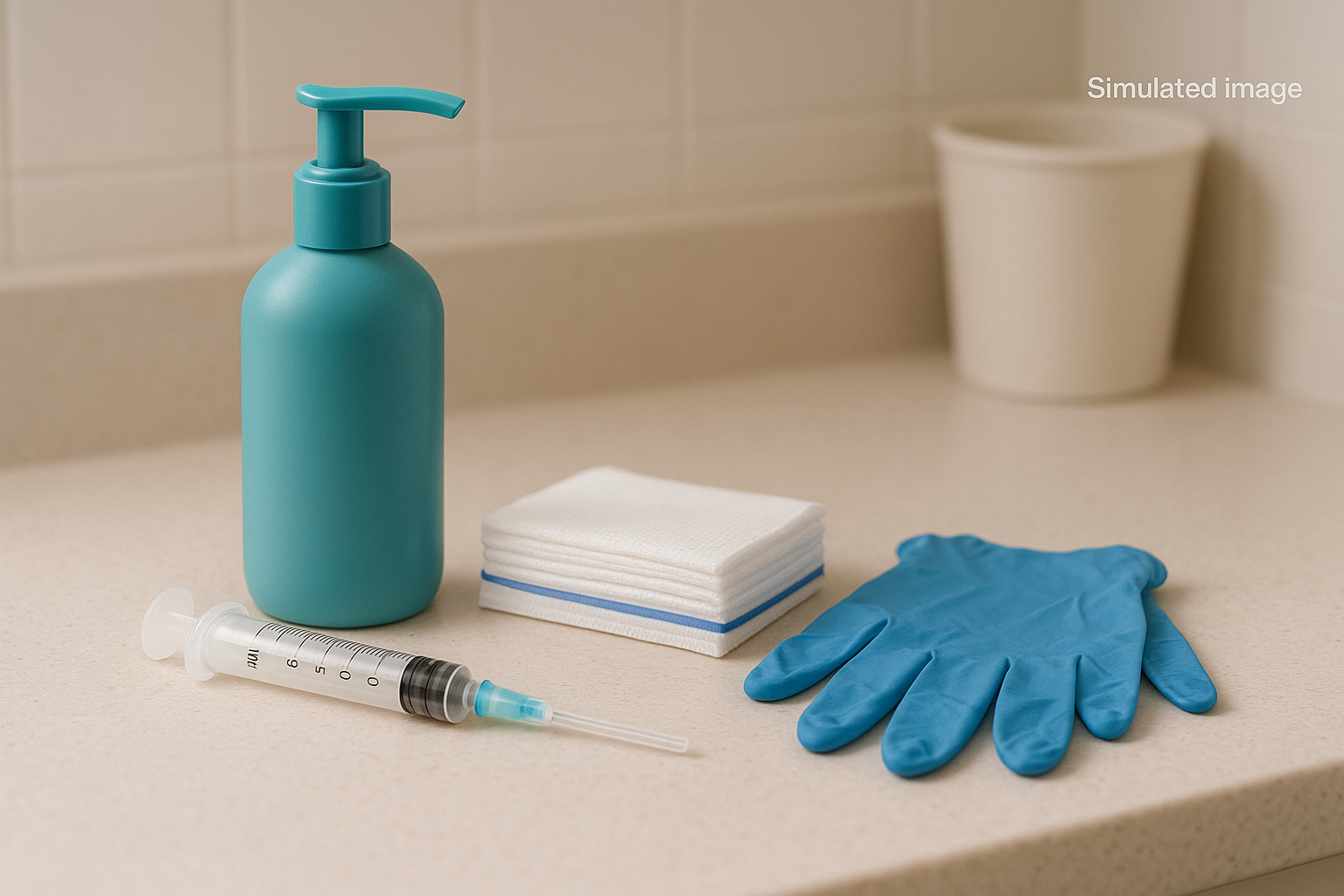
- Gather supplies:
- Clean running water or sterile saline solution
- Clean towel or gauze for drying
- Mild soap (for washing hands and skin around the wound)
- Clean gloves (if someone else is cleaning your wound)
- Appropriate dressing materials
- Clean syringe, squeeze bottle, or shower head for irrigation
- Create a clean workspace
- Wash your hands thoroughly for at least 20 seconds with soap and water
Step-by-Step Cleaning Process
- Control bleeding first
- Apply gentle pressure with clean gauze or cloth
- Elevate the injured area if possible
- Continue pressure for 5-10 minutes for minor wounds
- Prepare the wound for cleaning
- Remove any loose debris or dirt around the wound
- For wounds with clothing stuck to them, soak with saline or clean water to loosen
- Clean the wound using evidence-based methods:For Minor, Minimally Contaminated Wounds:
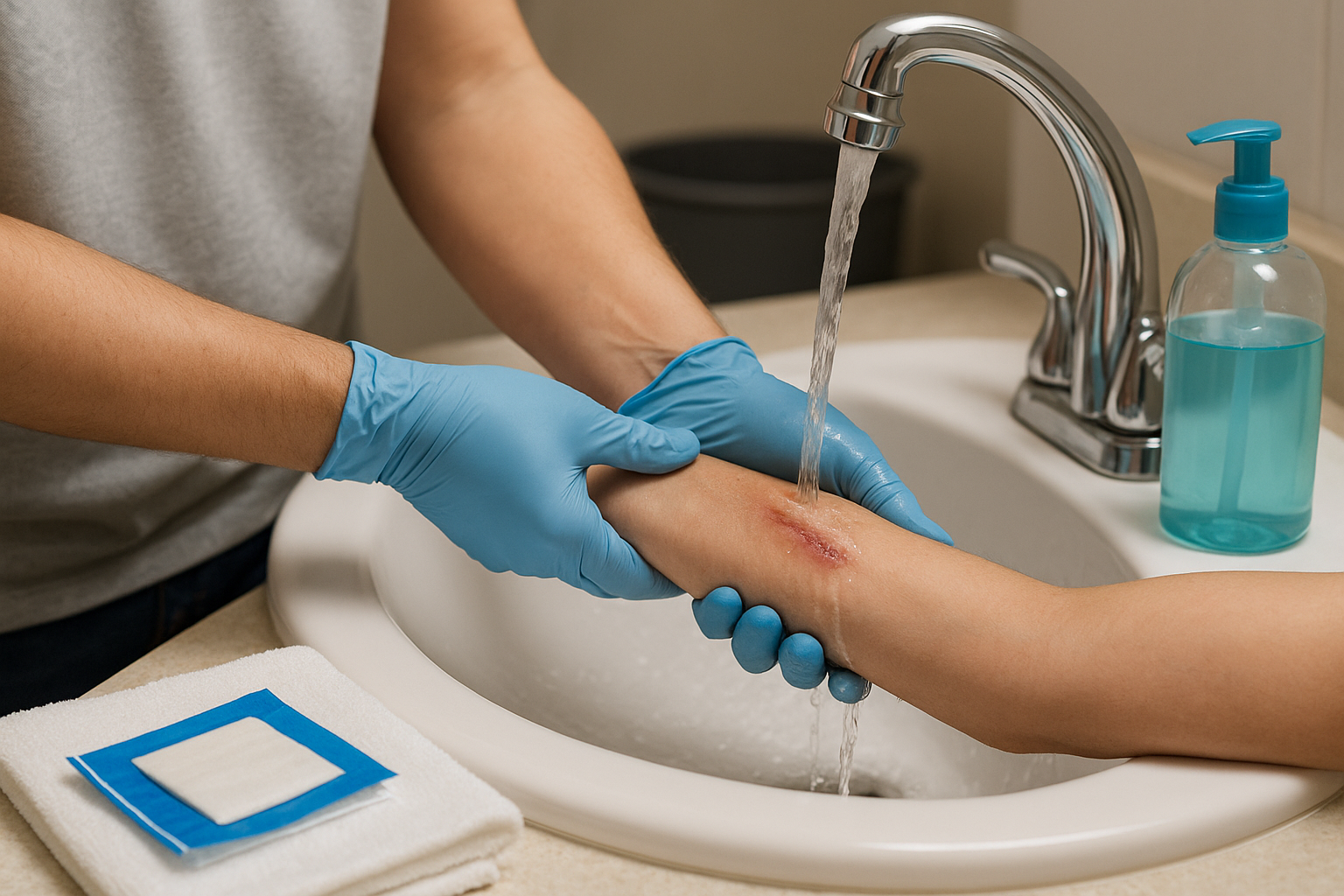
- Irrigate with running tap water (if potable) or sterile saline for 30-60 seconds
- Use gentle pressure—enough to remove visible debris without causing pain
- Temperature should be room temperature to lukewarm (never hot)
- Use a 10-20 mL syringe or squeeze bottle filled with tap water or saline
- Direct the stream into the wound at a 45-degree angle
- Irrigate for 1-2 minutes or until visibly clean
- Research note: This method creates optimal pressure (5-15 PSI) as cited by Singer & Dagum (2008)
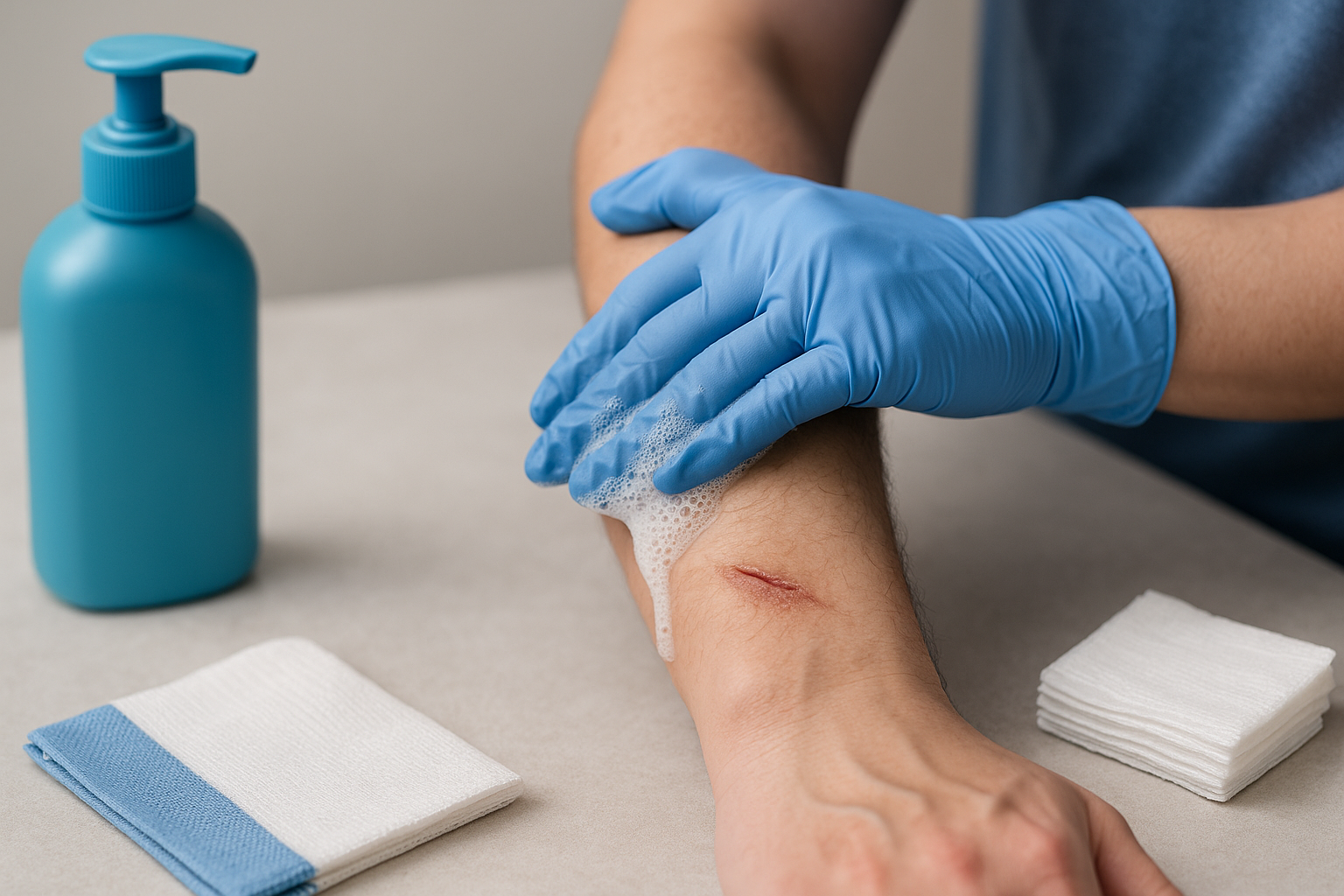
- Wash intact skin around the wound with mild soap and water
- Keep soap out of the actual wound
- Rinse thoroughly
- Gently dry the area
- Pat (don’t rub) with clean gauze or towel
- Leave the wound slightly moist—complete drying is not necessary or beneficial
- Apply appropriate dressing based on wound type
- For detailed dressing selection guidance, see our Wound Dressing Guide
- For natural remedies with research support, see our Natural Remedies for Wounds Guide
- Monitor for signs of infection
- Check daily using guidelines in our How to Tell If a Wound Is Infected Guide
Research-Based Technique Tips
- Irrigation angle: Direct water or saline at a 45-degree angle rather than perpendicular to the wound to maximize debris removal while minimizing tissue trauma (Singer & Dagum, 2008)
- Optimal pressure: Studies show 5-15 PSI pressure is ideal—strong enough to remove bacteria and debris but gentle enough to preserve healthy tissue
- Temperature matters: Room temperature to lukewarm solutions cause less pain and tissue damage than cold solutions
Best Products for Evidence-Based Wound Cleaning
Note: These products align with the evidence-based wound cleaning methods outlined in our guide. Always consult a healthcare professional for persistent or infected wounds.
Sterile Saline Wound Irrigation (Most Important for Proper Cleaning)
Arm & Hammer Simply Saline Wound Wash – 7.4 oz (3-Pack)
Why It’s Best: Clinically-proven pressure removes bacteria and debris and provides the optimal 5-15 PSI irrigation pressure recommended by research How It Works: Delivers sterile saline solution that can be sprayed at any angle, making it perfect for thorough wound irrigation Clinical Support: Aligns with research showing saline irrigation is as effective as expensive antiseptics without tissue damage Use For: All wound types – cuts, scrapes, burns, surgical wounds Price Range: $25-35 for 3-pack Application: Spray directly onto wound for 30-60 seconds, no rinsing required Customer Feedback: “Works great for cleaning incisions and opening areas, with one customer noting it cleans without stinging”
AMERIGEL Saline Wound Wash – 7.1 oz
Key Features: FSA/HSA eligible, sting-free formula, sprays at any angle Benefits: Bag-in-can technology maintains sterility throughout product life Best For: Daily wound cleaning, maintains sterility longer than traditional bottles Price Range: $15-20 per bottle Customer Reviews: Highly rated for effectiveness and gentle cleaning action
NeilMed NeilCleanse Wound Wash – 6 oz
Available at: Walmart and Amazon sellers
Professional Grade: Trusted by medical professionals Sterile Formula: 0.9% sodium chloride solution Gentle Pressure: Optimal for removing debris without tissue damage Price Range: $8-12 per bottle
Wound Irrigation Devices (Research-Backed Pressure Control)
Med Supply Partners 12cc Irrigation Syringe (Non-Sterile)
Why Research-Backed: Studies show 10-20mL syringes create optimal pressure (5-15 PSI) for wound cleaning Professional Use: “Retired firefighter medic on a large fire department and we use them to treat patients” Benefits: Provides controlled irrigation pressure, reusable, clearly marked measurements Use For: Creating pressurized irrigation with clean water or saline Price Range: $8-12 for pack Application: Fill with clean water or saline, direct at 45-degree angle to wound Customer Reviews: “Works well for wound irrigation. This product is put together well and is marked clearly”
EISCO Lab Wash Bottle – 500ml
Professional Quality: Made of low-density polyethylene, unbreakable Controlled Flow: Flexible delivery tube for precise irrigation Versatile Use: Can be used with sterile water or saline solutions Size Options: 250ml, 500ml, 1000ml available Price Range: $12-18 depending on size
Gentle Cleaning Products (Mild Soaps for Skin Around Wounds)
Dr. Bronner’s Pure-Castile Liquid Soap (Baby Unscented) – 32 oz
Why It’s Perfect: Research from 2015 found that saline solution works better than castile soap in cleaning open fractures, but castile soap may be good for surface-wound cleaning when diluted Evidence-Based Use: 1999 animal study found that castile soap was effective in healing wounds and lowering the rate of wound complications Gentle Formula: Double the olive oil, fragrance-free, ideal for sensitive skin Use For: Cleaning intact skin around wounds only (never directly on open wounds) Price Range: $12-16 per bottle Dilution: Use 2 teaspoons per 2 cups water for wound area cleaning Customer Reviews: “This castile soap is organic, mild, makes a great lather, cleans very well”
Natural Way Organics Ultra Mild Unscented Castile Soap
100% Chemical-Free: No artificial colors, fragrances, or harsh chemicals Ingredients: Saponified organic coconut, olive, and jojoba oils, organic aloe vera Gentle Formula: Perfect for sensitive skin around wound areas Price Range: $15-20 per bottle Customer Reviews: “Really great for ‘maturing’ children between ages of 6-12 with sensitive skin/scalp issues”
Moist Healing Products (Evidence-Based Wound Environment)
Vaseline Healing Jelly Original – 13 oz
Research Support: Study found that surgical wounds treated with white petroleum jelly had only a 12% incidence of redness, compared to 52% with other ointments Clinical Benefits: Creates protective barrier, locks in moisture, supports natural healing Evidence: Triple-purified formula is clinically proven to help heal damaged, cracked, and dry skin Use For: Minor cuts, wounds, scrapes, burns – maintains moist healing environment Price Range: $4-6 per jar Application: Thin layer over clean wound, cover with appropriate dressing Safety: Hypoallergenic, non-comedogenic and fragrance-free
Aquaphor Healing Ointment – 14 oz
Multi-Purpose: Contains petrolatum plus additional healing ingredients Clinical Use: Aquaphor tends to be a better moisturizer because it contains humectant ingredients and is occlusive Consideration: Surgical wounds treated with Aquaphor had higher incidence of wound redness (52%) than plain petroleum jelly (12%) Best For: Dry, cracked skin around wounds and general wound protection Price Range: $8-12 per jar
Advanced Moist Healing Dressings
MED PRIDE Hydrocolloid Dressing 2×2 – 10 Pack
Research-Backed: Hydrocolloid dressings create a moist environment that promotes healing and protects new tissue Clinical Benefits: Enhanced wound protection with optimal moisture level for improved healing Evidence: 2021 study on wound care following dermatologic surgery found that hydrocolloid bandages were effective in improving the appearance of scars Use For: Stage II, III, IV wounds, minor cuts, burns, blisters Price Range: $15-20 for 10-pack Duration: Can remain in place for up to 7 days Customer Reviews: “Excellent product, far superior to the normal ‘band aid’. The wound actually heals!”
Non-Adherent Wound Dressings
Telfa Non Adherent Dressing Pads 2″ x 3″ – 100 Count
Amazon ASIN: B000GCPW9G
Clinical Design: Non-adherent contact layer permits free flow of drainage, protects the wound site, and will not stick to granulating tissue Professional Use: “Originally these were only used in hospitals. I know as an R.N.” Benefits: Individually wrapped, sterile, can be cut to size Use For: Lightly draining wounds, surgical wounds, skin tears Price Range: $18-25 for 100-count Application: Place over wound, secure with tape or secondary dressing Customer Reviews: “These are amazingly non-stick, particularly noting that they work well for open wounds and don’t adhere to scabs”
Important Shopping Notes:
Research-Based Choices: All products align with clinical studies showing saline irrigation and moist healing are superior to harsh antiseptics
Avoid These Products: Hydrogen peroxide, alcohol-based cleaners, iodine solutions – research shows these can delay healing
Professional Guidance: While these products follow evidence-based practices, consult healthcare providers for infected or persistent wounds
Expiration Dates: Check dates on all sterile products – typically 2-3 year shelf life
FSA/HSA Eligible: Many wound care products qualify for health savings account purchases
Key Research References Supporting These Recommendations:
- Saline vs. Antiseptics: Multiple clinical studies found no significant difference in infection rates between wounds cleaned with tap water versus sterile saline
- Moist Healing: Research conclusively shows wounds heal 30-50% faster in moist environments with less scarring
- Irrigation Pressure: Studies show 5-15 PSI pressure is optimal for removing bacteria without tissue damage
- Petroleum Jelly Safety: Clinical comparison found plain petroleum jelly caused significantly less wound irritation than complex ointments
5. Special Wound Situations: Evidence-Based Approaches
| Wound Type | Special Considerations | Evidence-Based Approach |
|---|---|---|
| Scrapes/Abrasions | Often contain embedded debris | • Gentle irrigation with running water for 1-2 minutes • May require soft washcloth to gently loosen debris • Keep moist with hydrogel or hydrocolloid dressing |
| Puncture Wounds | Deep, narrow, difficult to clean properly | • Irrigate thoroughly with syringe if possible • Monitor closely for infection • Consider medical attention, especially for deep punctures • Tetanus update often required |
| Lacerations (Cuts) | Edges should be approximated (brought together) | • Clean with irrigation • Consider butterfly bandages for minor cuts • Seek medical attention for deep cuts, facial cuts, or gaping wounds |
| Bites (Animal/Human) | High infection risk | • Immediate medical attention recommended • Clean thoroughly before seeking care • Usually require antibiotics and possible rabies prevention |
| Surgical Wounds | Follow specific post-operative instructions | • Clean as directed by healthcare provider • Research shows showering is generally safe 24-48 hours post-op • Avoid soaking until cleared by provider |
| Burns | Cleaning varies by severity | • First-degree: cool water for 10-15 minutes • Second-degree: cool water, then cover with clean, moist dressing • Third-degree: Emergency care only, cover with clean cloth while seeking help |
6. Cleaning Products: Research-Based Recommendations
| Product Type | Research-Backed Recommendations | When to Use | When to Avoid |
|---|---|---|---|
| Irrigation Solutions | • Tap water (potable) • Normal saline (0.9%) • Commercial wound wash | All wound types if clean and available | • Non-potable water • Non-sterile solutions for large/deep wounds |
| Cleansers to AVOID | • Hydrogen peroxide • Alcohol • Povidone-iodine (Betadine) • Dakin’s solution | Not recommended for routine home wound care | All routine wound cleaning |
| Specialty Cleansers | • Polyhexanide solutions (Prontosan) • Surfactant-based cleansers | Only if prescribed by healthcare provider for specific wounds | Routine minor wounds |
| Irrigation Devices | • 10-20mL syringe (no needle) • Commercial wound wash spray • Clean squeeze bottle | Achieving proper irrigation pressure | High-pressure water jets that cause pain |
| Gentle Soaps | • Mild, fragrance-free soap • pH-balanced cleansers | Cleaning skin around wounds only | Direct application to open wounds |
Research Note: Systematic reviews by Fernandez et al. (2001) and Wilkins & Unverdorben (2013) confirm that tap water is as effective as sterile saline for most wound cleaning, while traditional antiseptics can delay healing by damaging healthy tissue.
7. Age-Specific Wound Cleaning Guidelines
Children
- Preparation: Explain the process simply before starting to reduce anxiety
- Pain management: Consider age-appropriate distraction techniques
- Temperature sensitivity: Children may be more sensitive to temperature—ensure water is comfortably lukewarm
- Technique modification: Gentle but thorough cleaning; may require assistance to hold still
- Dressing considerations: Choose dressings that are less likely to cause pain on removal
Adults
- Self-care capability: Can usually perform adequate wound cleaning independently
- Occupation considerations: Those with higher contamination risk at work may need more thorough cleaning
- Special locations: Wounds in hard-to-reach areas may require assistance or modified techniques
Older Adults
- Skin fragility: Requires gentler handling; even clean gauze can cause skin tears
- Vision/dexterity challenges: May need assistance for proper wound assessment and cleaning
- Slower healing: More vigilant cleaning and monitoring needed
- Medication effects: Blood thinners may require longer pressure time for bleeding control
- Chronic conditions: Diabetes, vascular disease require more careful cleaning and monitoring
8. After Cleaning: Evidence-Based Next Steps
Wound Covering Essentials
Research by Korting et al. (2011) confirms that covered wounds heal faster with less scarring and lower infection rates than uncovered wounds. After cleaning:
- Apply an appropriate dressing based on wound type:
- For detailed dressing guidance, see our Wound Dressing Guide
- Ensure the dressing maintains a moist (not wet) healing environment
- Choose dressings that won’t disrupt new tissue when removed
- Consider evidence-backed topical treatments:
- Medical-grade honey for minor wounds with some contamination
- Petroleum jelly for clean, minor cuts (simple, effective, and inexpensive)
- Prescribed antibiotic ointments only if specifically recommended by a healthcare provider
- For more options, see our Natural Remedies for Wounds Guide
- Plan for appropriate dressing changes:
- Most modern dressings can remain in place for 1-3 days
- Change immediately if the dressing becomes soaked, soiled, or dislodged
- Clean wound again with each dressing change
Monitoring for Complications
Use our How to Tell If a Wound Is Infected Guide for a comprehensive reference, but key warning signs include:
- Increasing redness extending beyond wound edges
- Increasing pain after 48 hours
- Yellow or green drainage
- Red streaking from the wound
- Fever or chills
9. When & Who to Call: Decision Tree
Seek Emergency Care (ER/911) Immediately If:
- Wound is spurting blood or bleeding cannot be controlled after 10-15 minutes of direct pressure
- The injury involves severe crushing or a deep puncture
- There is exposure of bone, tendon, or significant underlying structures
- The wound contains foreign bodies that cannot be removed
- Signs of severe infection are present (red streaking, fever, significant swelling)
- The wound is from a human or animal bite (especially on hands or face)
- The injured person shows signs of shock (confusion, rapid breathing, weakness)
Seek Urgent Care (Same Day) If:
- The wound is deep (more than ¼ inch) or has jagged edges that do not come together
- You cannot adequately clean the wound despite your best efforts
- Foreign material remains embedded in the wound
- The wound is large (longer than 1-2 inches) or crosses joint lines
- Facial wounds that may leave cosmetic concerns
- It’s been more than 5 years since your last tetanus shot and the wound is dirty
- You have diabetes, immunosuppression, or vascular disease and sustain anything beyond a minor wound
Schedule Regular Medical Care If:
- The wound shows early signs of infection despite proper home care
- A wound isn’t showing improvement after 3-5 days of home treatment
- You’re uncertain about proper wound care or appropriate dressings
- You have concerns about scarring or cosmetic outcomes
- You want to discuss tetanus vaccination status (if it’s been 5-10 years since your last shot)
Research Note: According to Worster et al. (2015), tetanus immunization status should be verified for all wounds, with boosters recommended for dirty wounds if more than 5 years have elapsed since the last immunization, or 10 years for clean wounds.
10. Nutritional Support for Wound Healing
Research demonstrates that proper nutrition significantly impacts wound healing outcomes. Consider these evidence-based recommendations:
| Nutrient | Food Sources | Function in Wound Healing | Evidence-Based Recommendation |
|---|---|---|---|
| Protein | Lean meats, fish, eggs, legumes, dairy | Provides building blocks for tissue repair and immune function | 1.2-1.5 g/kg body weight daily during healing |
| Vitamin C | Citrus fruits, bell peppers, strawberries, broccoli | Essential for collagen formation and immune function | 500-1000 mg daily for enhanced wound healing |
| Zinc | Oysters, red meat, poultry, beans, nuts | Supports immune function and tissue repair; deficiency significantly impairs healing | 15-30 mg daily (don’t exceed 40 mg without medical guidance) |
| Vitamin A | Sweet potatoes, carrots, spinach, liver | Supports epithelial integrity and immune function | 10,000-15,000 IU daily for 7-10 days for enhanced healing |
| Vitamin E | Nuts, seeds, vegetable oils, green leafy vegetables | Antioxidant protection of cell membranes | From food sources—supplementation may impair healing |
| Hydration | Water, herbal teas, broth | Supports blood flow and oxygen delivery to healing tissues | Minimum 8 cups (64 oz) of fluids daily |
Research Support: Clinical studies show that inadequate protein intake can reduce wound tensile strength by up to 50%, while vitamin C deficiency significantly impairs collagen synthesis and increases infection risk.
11. Common Questions Answered with Evidence
Q: Does hydrogen peroxide help clean wounds?
A: Despite its popularity, research doesn’t support using hydrogen peroxide for wound cleaning. Wilkins & Unverdorben’s (2013) review found it damages healthy cells and can delay healing. The bubbling effect that people associate with “cleaning” is actually damaging to healthy tissue, and the solution doesn’t effectively reduce bacterial counts compared to simple irrigation.
Q: Should I let my wound “breathe” or keep it covered?
A: The “let it breathe” approach is outdated and contradicted by modern research. Multiple studies, including those by Korting et al. (2011), conclusively show that wounds heal approximately 50% faster in a moist, covered environment. Covered wounds also develop less scarring and experience less pain. The exception is very minor, superficial scratches that form a thin scab within hours.
Q: When is it appropriate to use antibiotic ointment?
A: The routine use of antibiotic ointments for all wounds isn’t supported by evidence. Research shows they provide minimal benefit for most clean, minor wounds compared to petroleum jelly. However, they may be beneficial for wounds with higher contamination risk. If you do use them, apply a thin layer only, as excessive amounts can create an overly wet environment.
Q: Can I take a shower with an open wound?
A: Yes, in most cases. Fernandez et al. (2004) found that showering is safe even for surgical wounds after 24-48 hours, provided you follow any specific instructions from your healthcare provider. The gentle flow of clean shower water can actually help with wound cleaning. However, avoid soaking in baths, hot tubs, or swimming pools until the wound is fully closed, as standing water can introduce bacteria.
Q: Should I clean a wound that’s already formed a scab?
A: Once a stable scab has formed, aggressive cleaning isn’t necessary and may disrupt healing. However, you should gently clean around the scab with water to prevent buildup of debris. If you notice signs of infection under or around a scab, seek medical advice rather than trying to remove it yourself.
Q: How can I minimize scarring when cleaning wounds?
A: Gentle atraumatic cleaning that removes debris without damaging healthy tissue helps minimize scarring. After cleaning, maintaining a moist wound environment with appropriate dressings significantly reduces scar formation compared to dry healing or scab formation. Silicone-based dressings have the strongest evidence for scar prevention once the wound has closed.
12. Expert Perspectives
Dr. Leah Hart, MD, FACS, Wound Care Specialist “The biggest misconception I see is people equating aggressive cleaning with better cleaning. Harsh antiseptics and scrubbing can actually cause more harm than good. Simple irrigation with water or saline removes most bacteria and debris without damaging the healing tissue. I tell my patients: gentle but thorough wins the race.”
Professor Robert Chen, PhD, Wound Healing Researcher “The science is clear—moist wound healing is superior to dry. Yet I still meet people who believe wounds should be ‘aired out’ to form a scab. This approach actually slows healing by creating a barrier that new skin cells must tunnel under. Modern dressings that maintain appropriate moisture while absorbing excess fluid represent one of the most significant advances in wound care.”
Sarah Johnson, RN, WCC, Wound Care Nurse “In my practice, I find that patients often overthink wound cleaning. Clean tap water and gentle irrigation remove contamination effectively for most minor wounds. The key is thoroughness without aggressiveness. For home care, I recommend spending more time on gentle irrigation and less on applying products that may not be necessary.”
13. Resources & Top Articles
- How to Clean Any Wound at Home
- Guide to Wound Dressings
- Natural Remedies for Wound Healing
- How to Tell If a Wound Is Infected
14. Evidence-Based Summary
- Science-backed cleaning method: Gentle irrigation with clean running water or sterile saline for 30-60 seconds is the gold standard for most wounds.
- Solutions to avoid: Hydrogen peroxide, alcohol, and povidone-iodine damage healthy tissue and may delay healing despite their antimicrobial properties.
- Pressure matters: The mechanical action of properly pressurized irrigation (5-15 PSI) is more important than the solution used for removing bacteria and debris.
- Moist environment: Research conclusively shows that maintaining a moist wound environment with appropriate dressings speeds healing by up to 50% compared to dry healing.
- Appropriate covering: Choose dressings based on wound type, location, and drainage level. For detailed guidance, see our Wound Dressing Guide.
- Watch for complications: Monitor for infection using our How to Tell If a Wound Is Infected Guide, and consider natural remedies with scientific backing from our Natural Remedies for Wounds Guide.
15. References
- Fernandez, R., Griffiths, R., & Ussia, C. (2001). Water for wound cleansing. Cochrane Database of Systematic Reviews.
- Fernandez, R., Griffiths, R., & Ussia, C. (2004). Effectiveness of solutions, techniques and pressure in wound cleansing. JBI Reports.
- Korting, H.C., Schöllmann, C., & White, R.J. (2011). Management of minor acute cutaneous wounds. Journal of the European Academy of Dermatology and Venereology.
- Singer, A.J., & Dagum, A.B. (2008). Current management of acute cutaneous wounds. New England Journal of Medicine.
- Wilkins, R.G., & Unverdorben, M. (2013). Wound cleaning and wound healing: a concise review. Advances in Skin & Wound Care.
- Worster, B., Zawora, M.Q., & Hsieh, C. (2015). Common questions about wound care. American Family Physician.
Related answers
- A Transparent Film Dressing Is Used for Which Type of Wound?
- Does Alcohol Affect Wound Healing?
- Evidence-Based Natural Remedies for Wound Healing
- How to Tell If a Wound Is Infected (Evidence-Based Visual Guide)
This content is for educational purposes only and is not a substitute for professional medical advice. Always consult a qualified healthcare provider about your wound.