
How to Shower with a Wound Dressing
18 min read · Updated May 2025
On this page
- 1. Real-Life Scenarios
- 2. Fast-Facts Snapshot: Showering & Dressings
- 3. The Science Behind Waterproof Dressings
- 4. Step-by-Step Guide: Showering Safely with a Wound Dressing
- Step 1: Get Healthcare Provider Approval
- Step 2: Choose the Right Dressing or Cover
- Step 3: Prepare Before Showering
- Step 4: Proper Showering Technique
- Step 5: After-Shower Care
- 5. Choosing the Right Waterproof Dressing
- Recommended Waterproof Options
- Dressings to Avoid for Showering
- Decision Matrix by Wound Type
- 6. Best Amazon Products for Shower Wound Protection
- Premium Waterproof Film Dressings
- Hydrocolloid Waterproof Dressings
- Commercial Waterproof Covers & Protectors
- Specialized Limb Protectors
- Waterproof Medical Tape & Adhesives
- Essential Shower Accessories
- Complete Shower Kit Recommendation:
- Important Shopping Notes:
- 6. DIY Waterproof Covering Techniques
- Method 1: Plastic Wrap Technique
- Method 2: Plastic Bag Cover for Extremities
- Method 3: Silicone-Based Protective Barriers
- Important Safety Notes for DIY Methods:
- 7. When & Who to Call: Decision Tree
- Seek Immediate Medical Attention If:
- Contact Your Healthcare Provider Within 24 Hours If:
- Post-Shower Dressing Assessment Guide
- 8. Healing Timeline & Safe Showering
- Special Considerations by Wound Type
- 9. Nutrition & Lifestyle Support for Wound Healing
- Essential Nutrients for Optimal Healing
- Lifestyle Factors That Impact Wound Healing
- Activities to Avoid During Healing
- 10. Comprehensive FAQ
- 11. Evidence-Based Summary
- Key Evidence-Supported Findings:
- Best Practices for Safe Showering with Wounds:
- 12. References & Citations
Medical Disclaimer: This content is for informational purposes only and is not a substitute for professional medical advice.
1. Real-Life Scenarios
Emily’s Post-Surgery Puzzle: After knee surgery, Emily was told to keep the incision dry for 7 days. She stared at her clear film dressing in confusion—could she shower or not?
Carlos the Athlete: Carlos scraped his shin during a trail run. His doctor used a waterproof dressing, but Carlos, an avid swimmer, worried about how to keep it intact in the shower.
Trina’s Daily Care: With a chronic venous ulcer on her lower leg, Trina needs to shower daily for hygiene. Her foam dressing isn’t waterproof, so she relies on protective sleeves and careful technique.
If you’re unsure whether it’s safe—or smart—to shower with your bandage on, you’re not alone. Here’s exactly how to do it safely.
Dealing with a wound that won't heal?
We'll help connect you with a wound care practice near you — free, no obligation.
Find a Practice Near You2. Fast-Facts Snapshot: Showering & Dressings
| Question | Answer |
|---|---|
| Can you shower with a wound? | Yes—with proper precautions |
| Best dressing type? | Waterproof film, hydrocolloid, or dedicated shower covers |
| Should water touch the wound? | No—unless specifically cleared by your healthcare provider |
| How to protect it? | Use waterproof dressing or cover with plastic and tape |
| Change dressing after? | Only if soaked or compromised during the shower |
3. The Science Behind Waterproof Dressings
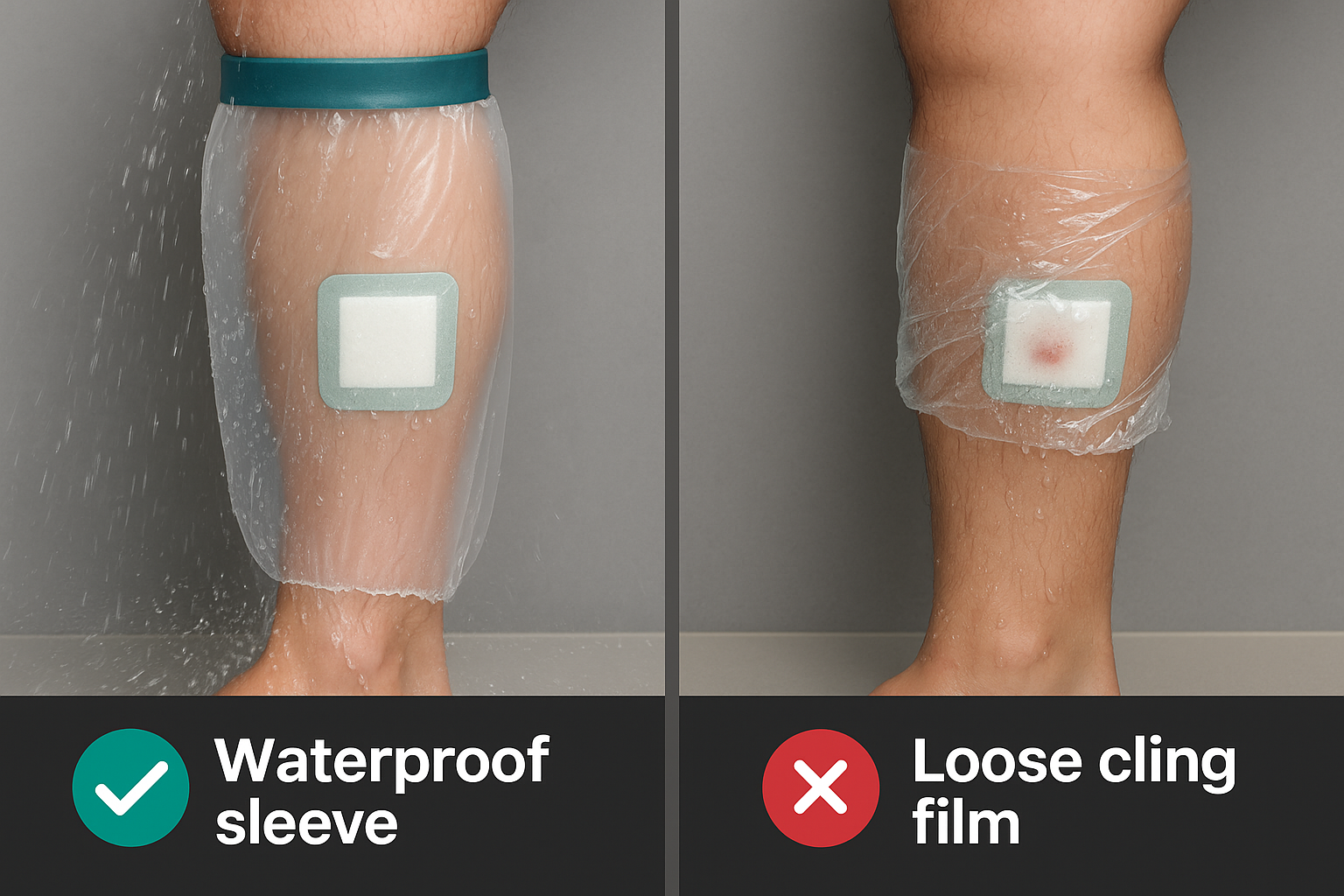
Waterproof dressings help maintain a moist healing environment—a key to faster epithelialization and lower infection risk (Bolton et al., 2000).
These specialized dressings provide multiple benefits:
- Form a barrier against bacteria, contaminants, and water
- Allow oxygen exchange and moisture vapor transmission while sealing out liquid water
- Reduce pain and scarring through occlusion (Kannon & Garrett, 1995)
- Support autolytic debridement by maintaining appropriate moisture levels
Modern film dressings, like transparent adhesive films, allow safe showering because they’re waterproof yet breathable. Research by Kent et al. (2018) demonstrated that infection rates are similar or lower when waterproof options are used correctly compared to traditional non-waterproof dressings that require removal before showering.
Dabiri et al. (2016) found that maintaining a consistent wound environment without disruption for dressing changes leads to better healing outcomes, making waterproof dressings that allow showering an excellent option for many patients.
4. Step-by-Step Guide: Showering Safely with a Wound Dressing
Step 1: Get Healthcare Provider Approval
- Confirm your specific wound is ready for potential water exposure
- Ask about timing (many providers recommend waiting 24-48 hours after surgery)
- Get clear instructions about your specific dressing type
Step 2: Choose the Right Dressing or Cover
- For waterproof dressings:
- Transparent film dressings (e.g., Tegaderm™, Opsite™)
- Hydrocolloid dressings with intact adhesive borders
- Water-resistant foam dressings with film backing
- For non-waterproof dressings:
- Commercial waterproof covers (e.g., Bloccs™, Shower Shield™)
- DIY option: plastic wrap secured with waterproof medical tape
- Specialized limb protectors for extremity wounds
Step 3: Prepare Before Showering
- Inspect the current dressing for:
- Secure edges with no lifting
- Complete seal around the entire perimeter
- No visible drainage reaching edges
- For added protection:
- Apply additional waterproof tape around edges if needed
- Position limb covers/shields and check for proper seal
- Have replacement dressing materials ready in case of compromise
Step 4: Proper Showering Technique
- Adjust water temperature to warm, not hot (hot water increases circulation and potential bleeding)
- Position body to minimize direct water stream on the dressing
- Keep shower brief (5-10 minutes maximum)
- Use a handheld showerhead if available to control water direction
- Wash other body parts first, wound area last
- Avoid using soaps or body wash directly over the dressing
- Do not scrub or rub the dressing
Step 5: After-Shower Care
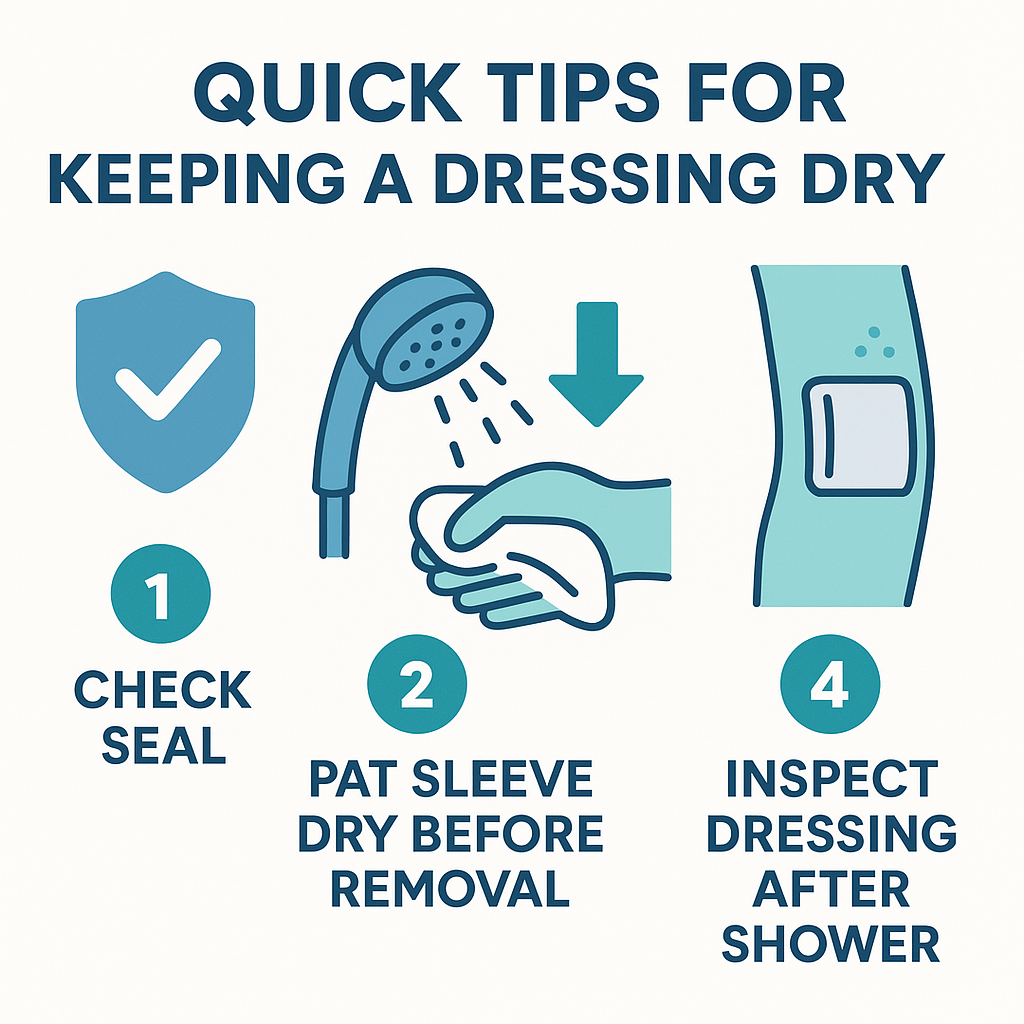
- Pat the dressing gently dry with a clean towel—never rub
- If using a hairdryer, use cool setting only and keep at least 12 inches away
- Carefully inspect the dressing for:
- Water penetration (dressing becoming opaque or soggy)
- Edge lifting or curling
- Increased drainage or fluid accumulation
- Replace the dressing only if:
- Water has penetrated to the wound
- The dressing is no longer adhering properly
- There are signs of compromised integrity
For detailed instructions on proper wound care and dressing application, see our How to Clean Any Wound at Home guide.
5. Choosing the Right Waterproof Dressing
Different wound types and locations require specific waterproof solutions for safe showering. Here’s how to match the right dressing to your situation:
Recommended Waterproof Options
Transparent Film Dressings
- Best for: Surgical incisions, superficial wounds, IV sites, minimally draining wounds
- Advantages: Allows wound visualization, highly conformable, shower-proof
- Limitations: Cannot absorb moderate to heavy drainage, not for infected wounds
Hydrocolloid Dressings
- Best for: Partial-thickness wounds, light to moderate drainage, abrasions
- Advantages: Excellent adhesion, water-resistant, absorbs small amounts of drainage
- Limitations: Opaque (can’t see wound), not for heavily draining or infected wounds
Waterproof Foam Dressings
- Best for: Moderate drainage wounds requiring absorption plus shower protection
- Advantages: Combines absorption with water resistance, comfortable
- Limitations: More expensive, bulkier than films, requires secure borders
Commercial Waterproof Protectors
- Best for: Larger wounds, non-waterproof primary dressings, extremity wounds
- Advantages: Complete protection, reusable, works with any primary dressing
- Limitations: Added cost, may be hot or uncomfortable, requires correct sizing
Dressings to Avoid for Showering
- Standard gauze with paper tape (rapidly absorbs water)
- Non-bordered foam dressings (edges allow water penetration)
- Alginate dressings without secondary waterproof covering
- Petroleum-based dressings without waterproof covering
Decision Matrix by Wound Type
| Wound Type | Recommended Waterproof Solution | Special Considerations |
|---|---|---|
| Surgical incision (closed) | Transparent film dressing | Check surgeon’s approval first |
| Superficial abrasion | Hydrocolloid or transparent film | Ensure complete edge seal |
| Partial-thickness burn | Transparent film or silicone-based film | Very gentle removal technique |
| Venous/arterial ulcer | Waterproof cover over primary dressing | May need compression after shower |
| Pressure injury | Commercial waterproof cover | Avoid pressure on injury during application |
| Diabetic foot ulcer | Specialized foot/leg protector | Extra caution with water exposure |
| IV site | IV-specific transparent film | Secure catheter before showering |
For more detailed guidance on selecting appropriate dressings for different wound types, see our comprehensive Wound Dressing Guide.
6. Best Amazon Products for Shower Wound Protection
Note: These products should be used under healthcare provider guidance. Always consult a healthcare professional for proper wound care instructions.
Premium Waterproof Film Dressings
3M Tegaderm Transparent Film Dressing (Various Sizes)
- Technology: Medical-grade transparent adhesive film
- Waterproof Rating: 100% waterproof, allows showering and swimming
- Breathability: Moisture vapor permeable while blocking liquids
- Size Options: 2⅜″x2¾″, 4″x4¾″, 6″x7″ available
- Price Range: $15-25 for 10-pack (depending on size)
- Best For: Surgical incisions, superficial wounds, IV sites
- Duration: Can remain in place for up to 7 days
Smith & Nephew Opsite Post-Op Waterproof Dressing
- Features: Transparent film with absorbent pad center
- Waterproof Protection: Complete seal against water penetration
- Absorption: Central pad absorbs minimal drainage
- Size Options: 2½″x3″, 4″x3½″, 4″x6″
- Price Range: $18-28 for 20-pack
- Application: One-step application with easy removal tabs
Hydrocolloid Waterproof Dressings
DuoDERM Extra Thin Hydrocolloid Dressing
- Technology: Hydrocolloid matrix forms gel when in contact with wound exudate
- Water Resistance: Excellent water resistance for showering
- Adhesion: Superior adhesion, stays in place during water exposure
- Size Options: 2″x2″, 4″x4″, 6″x6″ squares available
- Price Range: $12-20 per 10-pack (4″x4″)
- Best For: Abrasions, minor burns, partial-thickness wounds
ConvaTec Aquacel Foam Adhesive Waterproof Dressing
- Multi-Layer Design: Waterproof film backing with foam absorption layer
- Comfort: Soft silicone adhesive border for gentle removal
- Absorption: High absorption capacity for moderate drainage
- Size Options: 3″x3″, 4″x4″, 5″x5″, 6″x6″
- Price Range: $8-15 per individual dressing
- Duration: Up to 7 days wear time
Commercial Waterproof Covers & Protectors
BLOCCS Waterproof Cast and Bandage Protector
- Design: Reusable waterproof sleeve with vacuum seal
- Sizes: Available for arm, leg, foot, hand protection
- Seal Technology: Creates watertight seal above wound area
- Reusability: Can be used multiple times with proper care
- Price Range: $25-45 depending on size
- Benefits: Allows normal showering and bathing activities
- Includes: Pump for creating vacuum seal
Shower Shield Waterproof Bandage Cover
- Material: Medical-grade vinyl with secure adhesive strips
- Sizes: Pediatric and adult sizes for various body parts
- Application: Easy self-application without assistance needed
- Price Range: $15-25 for 5-pack
- Best For: Temporary protection during single shower use
Specialized Limb Protectors
AquaShield Reusable Waterproof Cast and Bandage Protector
- Construction: Durable latex-free material with diaphragm seal
- Fit: Stretches to accommodate various limb sizes and dressings
- Seal: Diaphragm creates watertight seal without tape or pumps
- Sizes: Short arm, long arm, short leg, long leg, foot
- Price Range: $20-35 per protector
- Warranty: Manufacturer guarantee against water penetration
Dry Pro Waterproof Vacuum Sealed Cast Cover
- Technology: Vacuum-sealed system for complete water protection
- Pump: Hand pump included for creating vacuum seal
- Durability: Heavy-duty construction for repeated use
- Size Range: Fits arms 6″-17″ circumference, legs 8″-25″
- Price Range: $35-55 depending on size
- Professional: Used in medical facilities and physical therapy
Waterproof Medical Tape & Adhesives
3M Medipore H Soft Cloth Surgical Tape (Waterproof)
- Material: Soft cloth with strong adhesive, water-resistant
- Gentle: Low-trauma removal, won’t damage sensitive skin
- Width Options: ½″, 1″, 2″, 3″ widths available
- Price Range: $8-15 per roll
- Use: Securing DIY waterproof covers and reinforcing dressing edges
Mueller Underwrap Pre-Tape (Water-Resistant)
- Function: Protective layer under waterproof tape to prevent skin irritation
- Material: Thin foam that doesn’t absorb water
- Width: 2¾″ width, 30-yard roll
- Price Range: $5-8 per roll
- Application: Apply before waterproof tape for comfort
Essential Shower Accessories
Waterpik Handheld Shower Head with Multiple Settings
- Control: Adjustable pressure settings for gentle wound area cleaning
- Reach: 6-foot flexible hose for easy maneuvering
- Settings: 7 spray settings including gentle mist
- Price Range: $25-40
- Benefits: Precise water control to avoid direct pressure on dressing
Shower Bench with Back Support
- Safety: Reduces risk of falls when managing wound protection
- Stability: Non-slip feet and surface for secure seating
- Height: Adjustable height to accommodate different users
- Price Range: $40-80
- Weight Capacity: Typically supports 300+ pounds
Complete Shower Kit Recommendation:
Comprehensive Shower Protection System (assemble yourself):
- 3M Tegaderm Film Dressings (variety pack) – $35
- BLOCCS Waterproof Protector (appropriate size) – $35
- Waterproof medical tape – $12
- Waterpik handheld shower head – $30
- Non-slip shower mat – $15
- Backup gauze and tape – $10
Total Investment: ~$137 for complete shower wound protection system
Important Shopping Notes:
- Size Verification: Measure wound area and surrounding skin before ordering
- Healthcare Approval: Confirm product choice with your healthcare provider
- 💡 Backup Supply: Always have backup dressings in case of water penetration
- 📅 Expiration Dates: Check expiration dates on adhesive products
- Return Policy: Verify return policies for unused medical supplies
6. DIY Waterproof Covering Techniques
When commercial waterproof dressings aren’t available, these DIY methods can provide temporary shower protection:
Method 1: Plastic Wrap Technique
Materials needed:
- Kitchen plastic wrap
- Waterproof medical tape (not paper tape)
- Scissors
Steps:
- Wash and dry hands thoroughly
- Cut plastic wrap large enough to extend 3-4 inches beyond dressing edges
- Apply plastic wrap over the existing dressing, smoothing from center outward
- Secure all edges with waterproof medical tape, creating a complete seal
- Test seal by gently pressing (no air should escape)
- Remove immediately after showering
- Do not reuse plastic wrap for subsequent showers
Method 2: Plastic Bag Cover for Extremities
Materials needed:
- Clean plastic bag (appropriate size for limb)
- Waterproof tape or rubber band
- Towel
Steps:
- Place towel under the area where the elastic will go to protect skin
- Slide limb into plastic bag, positioning wound area in the center
- Create a seal with gentle elastic or waterproof tape above the wound area
- Check that the seal is secure but not too tight (should not restrict circulation)
- Keep covered limb elevated and away from direct water stream
- Remove immediately after showering
Method 3: Silicone-Based Protective Barriers
Materials needed:
- Silicone skin protectant (e.g., Skin-Prep™)
- Existing waterproof or semi-waterproof dressing
- Hairdryer (optional, cool setting only)
Steps:
- Apply silicone skin protectant around dressing edges and allow to dry
- Reinforce edges with additional tape if needed
- After showering, pat dry or use cool hairdryer setting
- Inspect for water penetration and replace dressing if compromised
Important Safety Notes for DIY Methods:
- These are temporary solutions only
- Not suitable for prolonged or repeated use
- Check with your healthcare provider before attempting
- Not recommended for infected wounds
- Remove promptly after showering to avoid moisture buildup
- Monitor skin for irritation from tape or elastic
For evidence-based approaches to supporting wound healing, see our Natural Remedies for Wound Healing guide.
7. When & Who to Call: Decision Tree
Seek Immediate Medical Attention If:
- Wound has significantly increased redness, swelling, or warmth after showering
- You see red streaking extending from the wound
- There is sudden increase in pain or throbbing
- You develop fever or chills after a shower with a wound
- Wound edges have separated or reopened
- Foul-smelling drainage appears
Contact Your Healthcare Provider Within 24 Hours If:
- Water penetrated the dressing and directly contacted the wound
- Dressing will not re-adhere after getting wet
- Skin around the wound appears white, wrinkled, or macerated
- Drainage has increased but is clear or normal in appearance
- You’re unsure how to properly replace a compromised dressing
- You notice increasing drainage through an intact dressing
Post-Shower Dressing Assessment Guide
| Observation | Action | When to Notify Provider |
|---|---|---|
| Dressing completely dry and intact | Continue to monitor | No action needed |
| Dressing edges slightly damp but seal intact | Pat dry, reinforce edges if needed | Not necessary if seal remains intact |
| Water visible under transparent dressing | Remove and replace dressing | If wound appears changed or concerning |
| Dressing completely saturated | Remove and replace immediately | If unable to replace properly or signs of infection |
| Dressing partially detached | Replace entire dressing | If this happens repeatedly despite precautions |
| Skin irritation around dressing | Apply new dressing with skin barrier | If irritation worsens or prevents proper adhesion |
For help identifying signs of wound infection that require immediate attention, refer to our How to Tell If a Wound Is Infected guide.
8. Healing Timeline & Safe Showering
Understanding when it’s appropriate to shower with different wound types helps prevent complications while maintaining hygiene. This timeline provides general guidance, but always follow your healthcare provider’s specific instructions.
| Healing Phase | Typical Timeline | Showering Recommendations | Warning Signs |
|---|---|---|---|
| Initial Healing Phase | Days 0-3 post-injury/surgery | • Avoid showering if possible<br>• If necessary, use commercial waterproof cover<br>• Keep exposure brief<br>• No direct water stream | • Any water penetration<br>• Dressing displacement<br>• Increased drainage<br>• Wound edge separation |
| Early Healing Phase | Days 4-7 | • Short showers with waterproof dressing<br>• Avoid direct spray on wound area<br>• Pat dry thoroughly after<br>• Check dressing integrity before and after | • Maceration (white, soggy skin)<br>• Increased redness at edges<br>• Drainage through dressing<br>• Dressing loosening |
| Proliferative Phase | Days 8-14 | • Regular showers with appropriate protection<br>• Monitor for signs of granulation tissue (pink/red)<br>• Ensure dressing remains intact for 24+ hours | • Failure to show healing progress<br>• Persistent drainage<br>• Hypergranulation (raised tissue)<br>• Pain increases after improving |
| Remodeling Phase | 2+ weeks | • Follow provider guidance on direct water exposure<br>• May transition to lighter dressings for showering<br>• Continue monitoring for complete closure | • Reopening of previously closed areas<br>• Scar tissue breaking down<br>• New drainage after drying<br>• Increased sensitivity |
Special Considerations by Wound Type
Surgical Incisions:
- Many surgeons allow showering after 24-48 hours with waterproof dressing
- Staples/sutures typically need protection until removal
- Follow surgeon’s specific protocol for your procedure
Chronic Wounds (Ulcers):
- Generally require protection throughout showering
- May need specialized covers or techniques
- Compression wraps need complete protection or reapplication after showering
Burns:
- Extremely susceptible to infection and maceration
- Require healthcare provider clearance before any water exposure
- Often need specialized burn center guidance for showering
Diabetic Wounds:
- Require extra precautions due to infection risk
- Often need complete waterproof protection
- Should be thoroughly dried and inspected after any potential moisture exposure
9. Nutrition & Lifestyle Support for Wound Healing
Proper nutrition and lifestyle choices significantly impact wound healing, especially when managing wounds through daily activities like showering.
Essential Nutrients for Optimal Healing
| Nutrient | Function | Food Sources | Daily Target During Healing |
|---|---|---|---|
| Protein | Provides building blocks for tissue repair | Lean meats, fish, eggs, legumes, dairy | 1.2-1.5g/kg body weight |
| Vitamin C | Essential for collagen formation | Citrus fruits, bell peppers, strawberries, broccoli | 500-1000mg |
| Zinc | Supports immune function and cell division | Oysters, beef, pumpkin seeds, yogurt | 15-30mg |
| Vitamin A | Promotes epithelialization | Sweet potatoes, carrots, spinach, liver | 700-900μg RAE |
| Iron | Carries oxygen to healing tissues | Red meat, spinach, lentils, fortified cereals | 8-18mg (varies by gender) |
| Water | Supports circulation and cellular function | Water, herbal tea, broth, high-water content fruits | Minimum 8 cups daily |
Lifestyle Factors That Impact Wound Healing
Hygiene Considerations:
- Maintain clean environment for dressing changes after showering
- Use clean towels for post-shower drying
- Keep shower/bath clean to reduce bacterial exposure
Physical Activity Modifications:
- Adjust shower timing around exercise (shower before if dressing is secure)
- Consider wound location when planning activities
- Allow extra time for dressing checks after increased activity
Temperature Management:
- Use tepid water, not hot (hot water increases circulation and can exacerbate edema)
- Keep environment warm during dressing changes to prevent chilling
- Consider wound location and circulation when adjusting water temperature
Sleep and Stress Management:
- Ensure adequate sleep (7-8 hours) to support healing
- Practice stress reduction techniques
- Create a shower routine that minimizes stress about wound management
Activities to Avoid During Healing
- Swimming pools, hot tubs, or public waters until wound is completely closed and healed
- Baths or soaking unless specifically approved by healthcare provider
- Steam rooms or saunas which can compromise dressing integrity
- Excessive heat exposure which can increase wound circulation and drainage
10. Comprehensive FAQ
Q: Can I take a bath instead of a shower with a wound dressing? A: Bathing is generally not recommended until your wound is completely healed. Baths immerse the wound and increase infection risk from contaminated water. Showers with proper protection are safer because the water flows away from the body rather than pooling around the wound. Always follow your healthcare provider’s specific guidance.
Q: What if water accidentally gets under my dressing during a shower? A: If water penetrates your dressing, remove it as soon as possible after your shower. Gently pat the wound dry with a clean gauze or towel, allow it to air dry completely, and apply a fresh sterile dressing. Monitor the wound closely over the next 24-48 hours for any signs of infection (increased redness, warmth, pain, or drainage).
Q: How can I make a waterproof cover at home if I don’t have commercial options? A: For temporary protection, you can use plastic wrap secured with waterproof medical tape (not paper tape). Ensure it extends at least 3-4 inches beyond all edges of your dressing, and create a complete seal around the perimeter. For limbs, a clean plastic bag secured with gentle elastic can work. However, these DIY solutions should only be used short-term and with your healthcare provider’s approval.
Q: Is it safe to use a hairdryer to dry my dressing after showering? A: Yes, but only on a cool setting, never warm or hot. Keep the dryer at least 12 inches away from the dressing and use gentle sweeping motions. Hot air can damage healing tissue and potentially melt adhesives on dressings. For most situations, patting dry with a clean towel is safer and sufficient.
Q: When is the best time to change my dressing in relation to showering? A: If your dressing remains intact after showering, there’s no need to change it unless it’s due for a scheduled change. If you need to change your dressing anyway, doing so after showering can be convenient since you’ll already be clean. Just ensure your wound area is completely dry before applying a new dressing to prevent trapping moisture.
Q: Can I use soap or body wash near my wound dressing in the shower? A: It’s best to avoid applying soaps, shampoos, or body washes directly over or near your wound dressing. These products can seep under dressing edges, irritate the wound, or compromise adhesive seals. Wash other body areas first, then rinse thoroughly before carefully washing around (not on) the dressing area with minimal or no soap.
Q: How do I know if my waterproof dressing is still working after a shower? A: A functioning waterproof dressing should remain completely adhered around all edges, maintain its original appearance (not cloudy or opaque), and feel dry to the touch on the surface. The skin underneath should be visible through transparent dressings and should not appear white or wrinkled. There should be no increased drainage or fluid accumulation under the dressing.
Q: Can I shower with a drain or catheter in place? A: Drains and catheters require special consideration and protection during showering. Always consult your healthcare provider for specific instructions. Generally, these sites need a secure, waterproof covering and extra precautions to prevent tension on the tubing during showering. Commercial shower covers designed for drains are available and recommended.
11. Evidence-Based Summary
Showering with a wound dressing requires balancing proper hygiene with wound protection. Evidence-based research provides clear guidance for safe practices:
Key Evidence-Supported Findings:
- Waterproof dressings are safe and effective for showering when properly applied and maintained. Kent et al. (2018) demonstrated equal or lower infection rates compared to traditional methods requiring dressing removal before showering.
- Maintaining a consistent wound environment by using waterproof dressings that allow showering without removal promotes faster healing and less disruption to the wound bed, as shown by Dabiri et al. (2016).
- Early showering with proper protection (24-48 hours post-surgery) has not been shown to increase infection rates in many surgical procedures, according to multiple studies including Queirós et al. (2013).
- Moisture-retentive dressings that allow showering support faster epithelialization and can reduce scarring, as demonstrated in research by Bolton et al. (2000).
Best Practices for Safe Showering with Wounds:
- Use appropriate waterproof dressings designed for showering or proper waterproof covers for non-waterproof dressings
- Limit shower duration and water temperature to minimize risks of dressing compromise and increased drainage
- Thoroughly inspect and dry the dressing after showering to ensure integrity is maintained
- Replace dressings only when necessary rather than disrupting the wound environment without cause
- Monitor for signs of infection or complications after showering, especially if there’s any concern about water penetration
Remember that specific guidance from your healthcare provider always takes precedence over general recommendations, as they can tailor advice to your particular wound type, location, and healing progress.
12. References & Citations
- Kannon GA, Garrett AB. (1995). “Moist wound healing with occlusive dressings.” Dermatologic Surgery.
- Bolton L et al. (2000). “Moisture-retentive dressings: effectiveness in managing chronic wounds.” Advances in Skin & Wound Care.
- Kent TL et al. (2018). “The impact of water-resistant dressings on surgical site infection rates: A systematic review.” Journal of Clinical Nursing.
- Slater H. (2008). “Efficacy of moisture barriers in maintaining wound environment.” Journal of Wound Care.
- Chaby G et al. (2007). “Dressings for acute and chronic wounds: a systematic review.” British Journal of Dermatology.
- Handayani L et al. (2022). “Wound cleansing with saline and waterproof dressings.” International Wound Journal.
- Queirós PS et al. (2013). “Surgical site cleansing and infection rates.” Journal of Wound, Ostomy and Continence Nursing.
- Dabiri G et al. (2016). “Choosing a wound dressing based on common wound characteristics.” Journal of the American Academy of Dermatology.
Related answers
- A Transparent Film Dressing Is Used for Which Type of Wound?
- Does Alcohol Affect Wound Healing?
- Does Itching Mean a Wound Is Healing? (Science-Based Guide)
- Does Nicotine Patch Affect Wound Healing?
This content is for educational purposes only and is not a substitute for professional medical advice. Always consult a qualified healthcare provider about your wound.