
Medical Disclaimer: This content is for informational purposes only and is not a substitute for professional medical advice.
1. Real-Life Scenarios
Lori’s Diabetic Ulcer: Lori had been treating her diabetic foot ulcer for weeks. Despite following instructions, using advanced dressings, and even taking antibiotics, the wound didn’t improve. Her doctor mentioned a word she hadn’t heard before: biofilm.
James’ Post-Surgery Infection: Two weeks after a minor procedure, James noticed his surgical wound kept oozing and smelling—even after rounds of antibiotics. His wound care nurse suspected biofilm was blocking his recovery.
Sandra’s Clinical Clarity: As a home health nurse, Sandra heard the term “biofilm” during continuing education. Suddenly, the stubborn wounds she saw daily made more sense—biofilm was the invisible barrier sabotaging her patients’ healing.
If you’ve ever wondered why a wound just won’t get better despite proper care and treatment, biofilm may be the hidden culprit working against your healing efforts.

2. Fast-Facts Snapshot: Biofilm Basics
| Question | Answer |
|---|---|
| What is biofilm? | A colony of bacteria encased in a protective matrix |
| Why is it bad? | It resists antibiotics, immune defenses, and delays healing |
| Where does it form? | On chronic wounds, surgical sites, and medical devices |
| How common is it? | Present in over 60% of chronic wounds |
| Can you see it? | Often invisible—may appear as thin slough or film |
| How to treat it? | Combination of debridement and antimicrobial dressings |
3. The Science of Biofilm
Biofilm is far more complex than simple bacterial contamination. It represents a sophisticated microbial community that actively works to protect itself and resist treatment.
What Exactly Is Biofilm?
Biofilm consists of communities of microorganisms—primarily bacteria, but sometimes also fungi and protozoans—that:
- Adhere to the wound surface or implanted medical devices
- Produce and surround themselves with extracellular polymeric substances (EPS)
- Create a protective matrix shield against external threats
- Communicate with each other through “quorum sensing” to coordinate defenses
- Exist in a metabolically altered state that enhances survival
The Biofilm Life Cycle
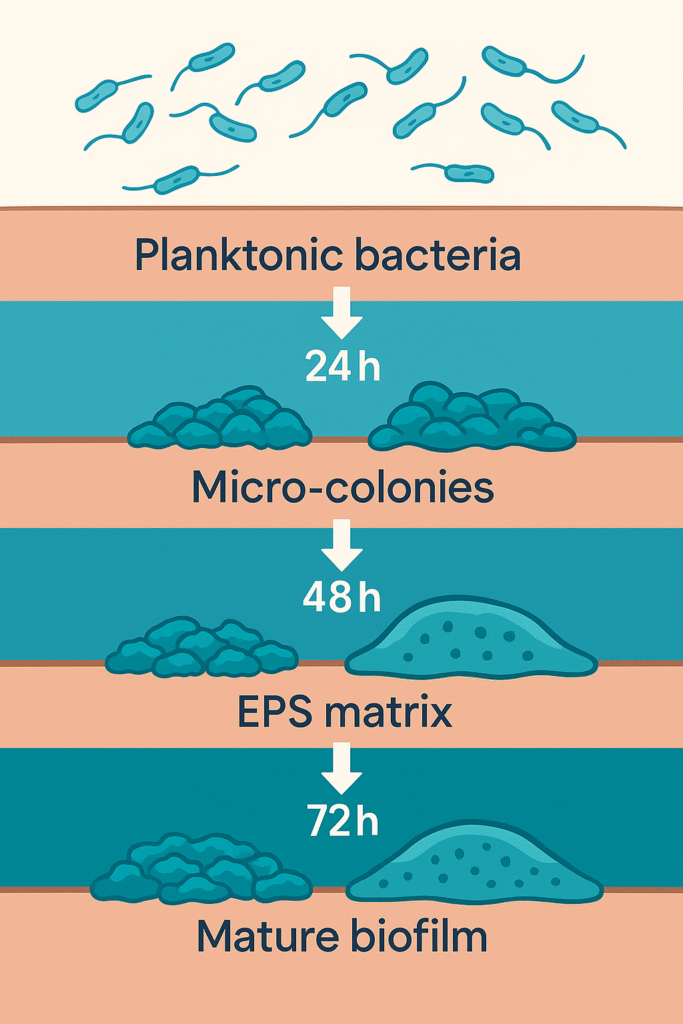
According to Costerton et al. (1999), biofilm formation follows a predictable pattern:
- Attachment: Free-floating (planktonic) bacteria attach to a wound surface
- Colonization: Bacteria multiply and begin producing protective matrix
- Maturation: The biofilm develops a complex structure with channels for nutrient flow
- Dispersion: Fragments break off to colonize new areas of the wound
This cycle can occur rapidly, with mature biofilms forming within 24-48 hours. Once established, biofilms can be incredibly difficult to eradicate.
How Biofilm Impairs Wound Healing
Research by Percival et al. (2012) demonstrates several mechanisms by which biofilm impedes healing:
- Antibiotic Resistance: The protective matrix blocks antibiotics from reaching bacteria
- Immune Evasion: Biofilm evades and suppresses the body’s immune response
- Chronic Inflammation: Maintains a state of non-resolving inflammation that prevents progression to the proliferative phase of healing
- Competitive Metabolism: Consumes oxygen and nutrients needed for tissue repair
- Enzymatic Damage: Releases enzymes that break down healing tissue and growth factors
Wolcott et al. (2008) found that biofilms can increase antibiotic tolerance by 500-5000 times compared to planktonic bacteria, explaining why standard antibiotic treatments often fail in chronic wounds.
4. How to Identify Biofilm in Wounds
Biofilm can be challenging to identify with the naked eye, but certain clinical signs strongly suggest its presence.
Visual Indicators
- Translucent film: A thin, shiny layer that may appear white, yellow, or grayish
- Viscous exudate: Thick, sticky drainage that reforms quickly after cleaning
- Inconsistent granulation: Patchy or pale granulation tissue rather than healthy bright red
- “Slough-like” material: Material that returns within 24-48 hours after debridement
Clinical Signs
- Delayed healing: Wound fails to progress despite appropriate standard care
- Persistent low-grade inflammation: Continued redness without acute infection signs
- Recurring infection: Cycles of improvement and deterioration
- Antibiotic failure: Limited response to systemic antibiotics
- Increased exudate: Persistent drainage despite management strategies
- Subtle odor: Mild but persistent unpleasant smell even with regular cleaning
Laboratory Confirmation
While not typically available in home care settings, advanced diagnostic methods include:
- Microscopy with specific staining techniques
- DNA analysis of wound samples
- Specialized culture techniques
- Fluorescence microscopy
- Scanning electron microscopy
According to Malone et al. (2017), approximately 60-80% of chronic wounds contain biofilm, making it a primary consideration when standard treatments fail.
For help identifying signs of infection that might indicate biofilm, see our How to Tell If a Wound Is Infected guide.
5. Evidence-Based Treatment Strategies for Biofilm

Effective biofilm management requires a multifaceted approach. Research shows that no single intervention is sufficient—combinations of treatments yield the best results.
Step 1: Wound Bed Preparation Through Debridement
Types of Effective Debridement:
- Sharp Debridement: Considered the gold standard for biofilm removal
- Uses sterile instruments to physically remove biofilm
- Performed by trained healthcare professionals
- Most effective but requires specialized skills
- Mechanical Debridement:
- Includes wound irrigation with pressure
- Monofilament pads designed for biofilm disruption
- Wet-to-dry dressings (though these can be traumatic to new tissue)
- Autolytic Debridement:
- Uses the body’s own enzymes to break down devitalized tissue
- Facilitated by moisture-retentive dressings
- Gentler but slower than other methods
- Enzymatic Debridement:
- Commercial enzyme preparations that dissolve necrotic tissue
- Can help break down biofilm structure
- Often used when sharp debridement isn’t possible
Clinical Tip: Wolcott et al. (2008) found that frequent debridement (2-3 times weekly initially) significantly improves outcomes when biofilm is present.
Step 2: Antimicrobial Dressings and Solutions
After physically disrupting the biofilm, antimicrobial products help prevent regrowth:
- Silver-Impregnated Dressings:
- Broad-spectrum antimicrobial properties
- Effective against many biofilm-forming bacteria
- Available in various formats (foams, alginates, hydrofibers)
- Iodine-Based Products:
- Cadexomer iodine has strong evidence for biofilm control
- Sustained release formulations maintain activity
- Particularly effective against Pseudomonas biofilms
- Polyhexamethylene Biguanide (PHMB):
- Found in some cleansers and dressings
- Disrupts bacterial cell membranes
- Low toxicity to human cells
- Medical-Grade Honey:
- Multiple mechanisms of action (osmotic effect, low pH, enzyme activity)
- Leptospermum species (Manuka) show strongest anti-biofilm activity
- Available in various delivery formats
Step 3: Wound Cleansers with Anti-Biofilm Properties
- Surfactant-Based Cleansers:
- Break surface tension and disrupt biofilm matrix
- Examples include poloxamer-based products
- More effective than saline alone
- Hypochlorous Acid Solutions:
- Mimics the body’s natural antimicrobial responses
- Penetrates biofilm effectively
- Low tissue toxicity
Step 4: Advanced Therapies for Resistant Biofilm
- Negative Pressure Wound Therapy (NPWT):
- Mechanically disrupts biofilm
- Removes excess exudate
- May be combined with instillation of antimicrobial solutions
- Ultrasound Therapy:
- Low-frequency ultrasound disrupts biofilm physically
- Increases effectiveness of antimicrobial agents
- Used in specialized wound care settings
For detailed instructions on proper wound cleaning techniques that help manage biofilm, see our How to Clean Any Wound at Home guide.
6. Best Amazon Products for Biofilm Management
Note: These products should be used under healthcare provider guidance for chronic or infected wounds. Always consult a healthcare professional for persistent wounds.
Cadexomer Iodine Products (Most Effective Against Biofilm)
IODOSORB 0.9% Cadexomer Iodine Gel – 10g Tube Available through medical suppliers and some Amazon sellers
- Why It’s Best: Research shows cadexomer iodine is superior to silver and PHMB against mature biofilms
- How It Works: Dual action – absorbs wound exudate while releasing sustained iodine for 72+ hours
- Clinical Evidence: Over 7 log reduction in P. aeruginosa biofilm within 24 hours in studies
- Use For: Venous ulcers, diabetic foot ulcers, pressure sores with biofilm
- Price Range: $45-65 per 10g tube
- Application: Apply 3mm thick layer, change when gel turns from brown to white
IODOFLEX Cadexomer Iodine Pads Amazon ASIN: Available through medical suppliers
- Size Options: 4″ x 6″ or 2″ x 3″ pads
- Benefits: Pre-formed pads for easy application to wounds
- Best For: Flat surface wounds with moderate to heavy exudate
- Price Range: $25-35 per pad
Medical-Grade Manuka Honey Dressings
Hofencare Manuka Honey Wound Care Gauze 4″ x 4″ (10-Pack)
- Key Features: 100% medical-grade New Zealand Manuka honey
- Anti-Biofilm Properties: MGO compounds disrupt biofilm formation
- Clinical Benefits: Non-adherent, painless removal, promotes autolytic debridement
- Customer Reviews: 4.3/5 stars with excellent healing testimonials
- Price Range: $25-35 for 10-pack
- Best For: Burns, abrasions, cuts, chronic wounds with biofilm
Advanced Wound Cleansers with Anti-Biofilm Properties
Vashe Wound Solution (Hypochlorous Acid)
- Active Ingredient: Pure hypochlorous acid (HOCl)
- pH: Skin-neutral pH, non-cytotoxic
- Biofilm Efficacy: Penetrates and disrupts biofilm matrix effectively
- Safety: Safe for daily use, no tissue damage
- Size: 8.5 fl oz spray bottle
- Price Range: $25-35
- Application: Spray directly on wound, no rinsing required
Prontosan Wound Irrigation Solution Available through medical suppliers
- Active Ingredients: 0.1% PHMB + Betaine surfactant
- Biofilm Action: Combination disrupts biofilm matrix and kills bacteria
- Clinical Evidence: Superior biofilm removal vs. saline in multiple studies
- Professional Grade: Used in hospitals and wound clinics
- Price Range: $40-55 per 350ml bottle
Antimicrobial Wound Dressings
Aquacel Ag+ Extra Hydrofiber Dressing with Silver
- Technology: Ionic silver + strengthened hydrofiber
- Biofilm Action: Silver ions penetrate biofilm, kill bacteria on contact
- Absorption: Manages heavy exudate while maintaining antimicrobial activity
- Size Options: 2″x2″, 4″x4″, 4″x5″ available
- Price Range: $12-18 per dressing (4″x4″)
- Duration: Can remain in place for up to 7 days
Mepilex Ag Antimicrobial Foam Dressing
- Silver Technology: Sustained silver release for broad-spectrum activity
- Biofilm Benefits: Prevents biofilm reformation after debridement
- Comfort: Silicone border, gentle removal
- Sizes: Multiple sizes from 3″x3″ to 8″x8″
- Price Range: $15-25 per dressing (depending on size)
Supporting Products for Biofilm Management
Sterile Normal Saline Wound Wash
- Use: Initial wound cleaning before antimicrobial application
- Benefits: Removes debris without tissue damage
- Size: 7.1 oz spray can with controlled pressure
- Price Range: $8-12
- Application: Use before applying antimicrobial dressings
Non-Adherent Wound Dressing Pads
- Purpose: Secondary dressing over antimicrobial treatments
- Benefits: Protects biofilm-disrupting treatments from washing off
- Size: 3″x4″ sterile pads
- Quantity: 100-count box
- Price Range: $12-18
Biofilm Management Protocol Kit Recommendation:
Complete Biofilm Management System (assemble yourself):
- Vashe Wound Solution – $30 (initial biofilm disruption)
- Hofencare Manuka Honey Gauze – $30 (10-pack, anti-biofilm dressing)
- Aquacel Ag+ Extra – $45 (3-pack 4″x4″, antimicrobial protection)
- Non-adherent pads – $15 (secondary dressings)
- Sterile saline – $10 (wound prep)
Total Investment: ~$130 for comprehensive biofilm management supplies
Important Shopping Notes:
💡 Professional Guidance: Consult healthcare provider for biofilm treatment protocol 📅 Expiration Dates: Check dates on antimicrobial products – typically 2-3 year shelf life
6. Biofilm Prevention Strategies
Preventing biofilm formation is easier than treating established biofilm. These evidence-based approaches can help reduce biofilm risk:
Wound Care Practices
- Regular, Appropriate Cleansing:
- Use recommended cleansers rather than plain water
- Clean with enough pressure to remove surface contaminants
- Follow wound cleansing with prompt, appropriate dressing application
- Moisture Balance:
- Avoid over-hydration of the wound bed
- Select dressings that manage exudate appropriately
- Change dressings when saturated, not on a rigid schedule
- Early Intervention:
- Address signs of delayed healing promptly
- Don’t wait until a wound is clearly problematic
- Consider preventative anti-biofilm strategies for high-risk wounds
Infection Control Measures
- Proper Hand Hygiene:
- Thorough handwashing before and after wound care
- Use of clean or sterile gloves as appropriate
- Avoiding cross-contamination between different wounds
- Clean Environment:
- Maintain cleanliness of the wound care area
- Use fresh, clean supplies for each dressing change
- Proper disposal of used dressings and materials
Nutritional Support
- Adequate Protein Intake:
- Essential for immune function and tissue repair
- Aim for 1.2-1.5g/kg body weight daily during healing
- Micronutrient Support:
- Vitamin C for collagen synthesis
- Zinc for immune function and tissue repair
- Vitamin A for epithelialization
- Hydration:
- Proper hydration supports circulation and nutrient delivery
- Minimum of 8 cups of fluid daily unless contraindicated
For evidence-based approaches to supporting wound healing through nutrition and natural remedies, see our Natural Remedies for Wound Healing guide.
7. When to Seek Professional Care
Biofilm management often requires professional intervention. Know when to escalate care:
Seek Immediate Medical Attention If:
- The wound shows signs of serious infection:
- Increasing redness spreading away from the wound
- Red streaking extending from the wound
- Significant increase in pain or warmth
- Fever or chills
- Pus or foul-smelling drainage
- You notice:
- Exposed bone, tendon, or muscle
- Wound has significantly increased in size
- New areas of tissue breakdown around the wound
Contact Your Healthcare Provider When:
- A wound has shown no improvement in 2 weeks despite appropriate care
- The wound improves initially but then plateaus or worsens
- You notice recurring episodes of increased drainage or odor
- Granulation tissue appears unhealthy (pale, friable, or bleeds easily)
- You’re uncertain about how to properly care for a wound with suspected biofilm
Specialist Referral Considerations:
A referral to a wound care specialist may be necessary if:
- The wound is complex or has failed to respond to standard care
- The patient has significant comorbidities affecting healing (diabetes, vascular disease)
- Advanced debridement or specialized treatments are needed
- The wound requires interdisciplinary care (vascular, infectious disease, etc.)
8. Biofilm Management Timeline
Understanding the typical timeline for biofilm management helps set realistic expectations and ensures appropriate follow-up.
| Phase | Timeline | Clinical Goals | Warning Signs |
|---|---|---|---|
| Initial Treatment | Days 1-7 | • Disrupt established biofilm • Control bacterial load • Reduce inflammation | • Failure to see any improvement • Increasing signs of infection • Worsening pain |
| Early Response | Weeks 1-2 | • Prevent biofilm re-formation • Establish healthy granulation • Manage exudate | • Persistent slough or film • Lack of granulation tissue • Continued high exudate levels |
| Intermediate Phase | Weeks 2-4 | • Progressive wound healing • Decrease in wound size • Improved tissue quality | • Stalled progress • Return of biofilm signs • New areas of breakdown |
| Advanced Healing | Weeks 4+ | • Continued contraction and epithelialization • Transition to maintenance care • Scar management | • Failure to continue healing • Recurrent infection • Wound deterioration |
Note: Timeline may vary significantly based on:
- Wound type, size, and location
- Patient factors (age, comorbidities, mobility)
- Effectiveness of biofilm disruption
- Consistency of care
9. Comprehensive FAQ
Q: Can I see biofilm with my naked eye? A: Biofilm is often invisible or may appear as a thin, translucent film on the wound surface. What you might see is a shiny, viscous layer that reforms quickly after cleaning. In some cases, it resembles slough (yellow-white dead tissue) but returns more rapidly after removal.
Q: Do oral antibiotics effectively treat biofilm? A: Oral antibiotics alone are usually ineffective against mature biofilm. The protective matrix prevents antibiotics from reaching bacteria at effective concentrations. Physical disruption (debridement) combined with topical antimicrobials is typically more effective than antibiotics alone.
Q: How quickly does biofilm form in a wound? A: Biofilm can begin forming within hours of bacterial attachment and can reach maturity in as little as 24-48 hours. This rapid development is why consistent, proactive wound care is essential for prevention.
Q: Is hydrogen peroxide effective against biofilm? A: No. Despite its bubbling action, hydrogen peroxide has limited penetration into biofilm matrix and can damage healthy tissue cells needed for healing. Modern wound cleansers with surfactants or antimicrobial properties are more effective.
Q: What’s the best dressing for treating biofilm? A: There is no single “best” dressing, as different wounds may respond to different approaches. However, dressings containing cadexomer iodine, medical-grade honey, silver, or PHMB have shown effectiveness. Often, the combination of appropriate debridement and an antimicrobial dressing yields the best results.
Q: Can biofilm spread to other parts of the body? A: While biofilm itself doesn’t spread like an infection, bacteria from biofilm can detach and potentially cause infection elsewhere. Additionally, biofilm fragments can seed new areas of the same wound, which is why comprehensive wound bed preparation is important.
Q: How long does it take to eliminate biofilm from a wound? A: Established biofilm typically requires 2-4 weeks of consistent treatment to show significant improvement. Complete resolution depends on the wound’s complexity, the biofilm’s maturity, and patient factors. Maintenance therapy is often needed to prevent recurrence during healing.
Q: Are some people more susceptible to developing biofilm in wounds? A: Yes. Risk factors include diabetes, immunosuppression, poor circulation, repeated antibiotic use, and the presence of foreign materials in the wound. These conditions create environments where bacteria can more easily establish biofilm communities.
10. Nutrition & Lifestyle Support for Biofilm Management
Proper nutrition and lifestyle modifications can enhance the body’s ability to combat biofilm and promote healing.
Essential Nutrients for Biofilm Management
| Nutrient | Function | Food Sources | Daily Target |
|---|---|---|---|
| Protein | Supports immune function and tissue repair | Lean meats, fish, eggs, legumes, dairy | 1.2-1.5g/kg body weight |
| Vitamin C | Essential for collagen formation and immune function | Citrus fruits, bell peppers, berries, broccoli | 500-1000mg |
| Zinc | Supports immune response and cell growth | Oysters, beef, pumpkin seeds, lentils | 15-30mg |
| Vitamin A | Promotes epithelialization and immune function | Sweet potatoes, carrots, spinach, liver | 700-900μg RAE |
| Vitamin D | Modulates immune response and reduces inflammation | Fatty fish, fortified milk, sunlight exposure | 1000-2000 IU |
| Iron | Necessary for oxygen transport to healing tissues | Red meat, spinach, lentils, fortified cereals | 8-18mg (varies by gender) |
Lifestyle Factors That Impact Biofilm
Blood Glucose Management:
- Consistently elevated blood glucose provides fuel for biofilm growth
- Target HbA1c below 7% when possible
- Monitor glucose levels regularly if diabetic
Smoking Cessation:
- Smoking reduces tissue oxygenation by up to 40%
- Impairs immune function needed to combat biofilm
- Contains chemicals that interfere with healing processes
Hydration:
- Supports circulation and nutrient delivery
- Enhances immune cell function
- Facilitates removal of waste products
- Aim for 8+ cups of fluid daily unless contraindicated
Stress Management:
- Chronic stress impairs immune function
- May increase inflammation, supporting biofilm persistence
- Consider stress reduction techniques (meditation, deep breathing, etc.)
Sleep Quality:
- Poor sleep impairs immune function and tissue repair
- Aim for 7-8 hours of quality sleep
- Consider sleep hygiene practices to improve quality
11. Evidence-Based Summary
Biofilm represents one of the most significant challenges in wound care, particularly for chronic, non-healing wounds. Understanding its role is essential for effective treatment:
- Biofilm is a complex microbial community protected by a self-produced matrix that shields bacteria from antibiotics and immune responses.
- It is present in 60-80% of chronic wounds, making it a primary factor in delayed healing, according to research by Percival et al. (2012).
- Effective management requires a multi-faceted approach:
- Regular debridement to physically disrupt the biofilm
- Antimicrobial dressings to prevent regrowth
- Specialized cleansers with anti-biofilm properties
- Appropriate moisture management
- Nutritional support to enhance the body’s healing capacity
- Consistency is crucial as biofilm can reform within 24-48 hours after disruption.
- Prevention strategies should be implemented early in wound care to reduce biofilm formation risk.
- Professional evaluation is necessary when wounds fail to progress despite appropriate care, as specialized interventions may be required.
By recognizing biofilm’s role in delayed healing and implementing evidence-based management strategies, many previously stalled wounds can resume their healing progression, leading to significantly improved outcomes.
12. References & Citations
- Percival SL et al. (2012). “Biofilms and wounds: An identification algorithm and potential treatment options.” Wound Repair and Regeneration
- Wolcott RD et al. (2008). “Biofilm maturity studies indicate sharp debridement opens a time-dependent therapeutic window.” Journal of Wound Care
- Costerton JW et al. (1999). “Bacterial biofilms: A common cause of persistent infections.” Science
- Malone M et al. (2017). “The prevalence of biofilms in chronic wounds: A systematic review and meta-analysis of published data.” Journal of Wound Care
- Phillips PL et al. (2010). “Biofilms made easy.” Wounds International
- Schultz G et al. (2017). “Consensus guidelines for the identification and treatment of biofilms in chronic nonhealing wounds.” Wound Repair and Regeneration
Meta Description: What is biofilm in wounds? Learn how these bacterial communities delay healing and discover evidence-based treatments that effectively disrupt biofilm to promote wound recovery.