
Medical Disclaimer: This content is for informational purposes only and is not a substitute for professional medical advice.
1. Real-Life Scenarios
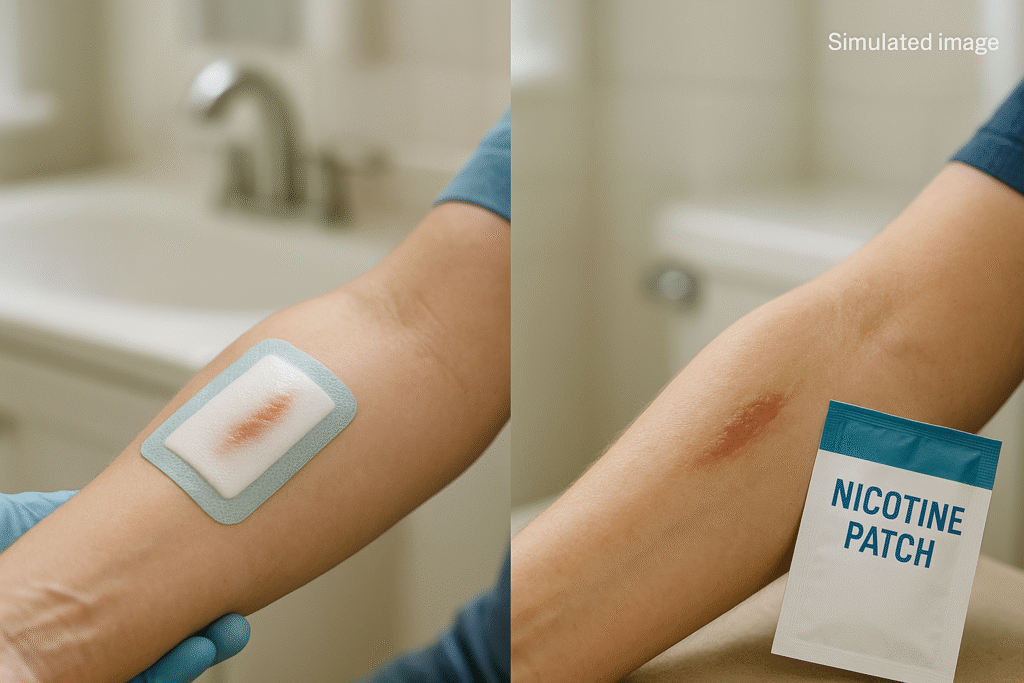
Anna’s Story: Anna, 54, has struggled with smoking for over 30 years. Now dealing with venous ulcers on her legs, her doctor encouraged her to quit. She switched to nicotine patches but started wondering—was the patch affecting her healing?
Dr. Miles’s Dilemma: At his busy wound care clinic, Dr. Miles often fields questions from post-surgery patients: “Should I stop using the nicotine patch now that I’m healing?” His short answer: “It’s better than smoking.” But the long answer? That takes a little unpacking.
Ray’s Recovery: After foot surgery, Ray was determined to quit smoking. He used a nicotine patch faithfully, but after two weeks, his wound seemed slow to close. Was it the patch—or something else?
If you’re using a nicotine patch and watching a wound heal slowly, you’re not alone. This guide dives into the science, evidence, and what really works.
2. Fast-Facts Snapshot: Nicotine & Healing
| Question | Answer |
|---|---|
| Is smoking bad for wound healing? | Yes—reduces oxygen delivery, slows immune response |
| What about nicotine itself? | Mixed effects—can hinder inflammation, stimulate some cell growth |
| Are nicotine patches safer? | Yes—no carbon monoxide, less vascular damage |
| Should I stop patches post-surgery? | Ideally yes, but still safer than continued smoking |
Key Insight: Quitting smoking—even with a patch—improves healing outcomes within 4 weeks. Tissue oxygen and immune function begin to rebound quickly (Sørensen, 2003).
3. The Science Behind Nicotine and Wound Healing
Smoking harms wounds through several mechanisms:
- Reduced oxygen delivery (carbon monoxide binds to hemoglobin)
- Decreased collagen production (needed for tissue strength)
- Weakened immune function
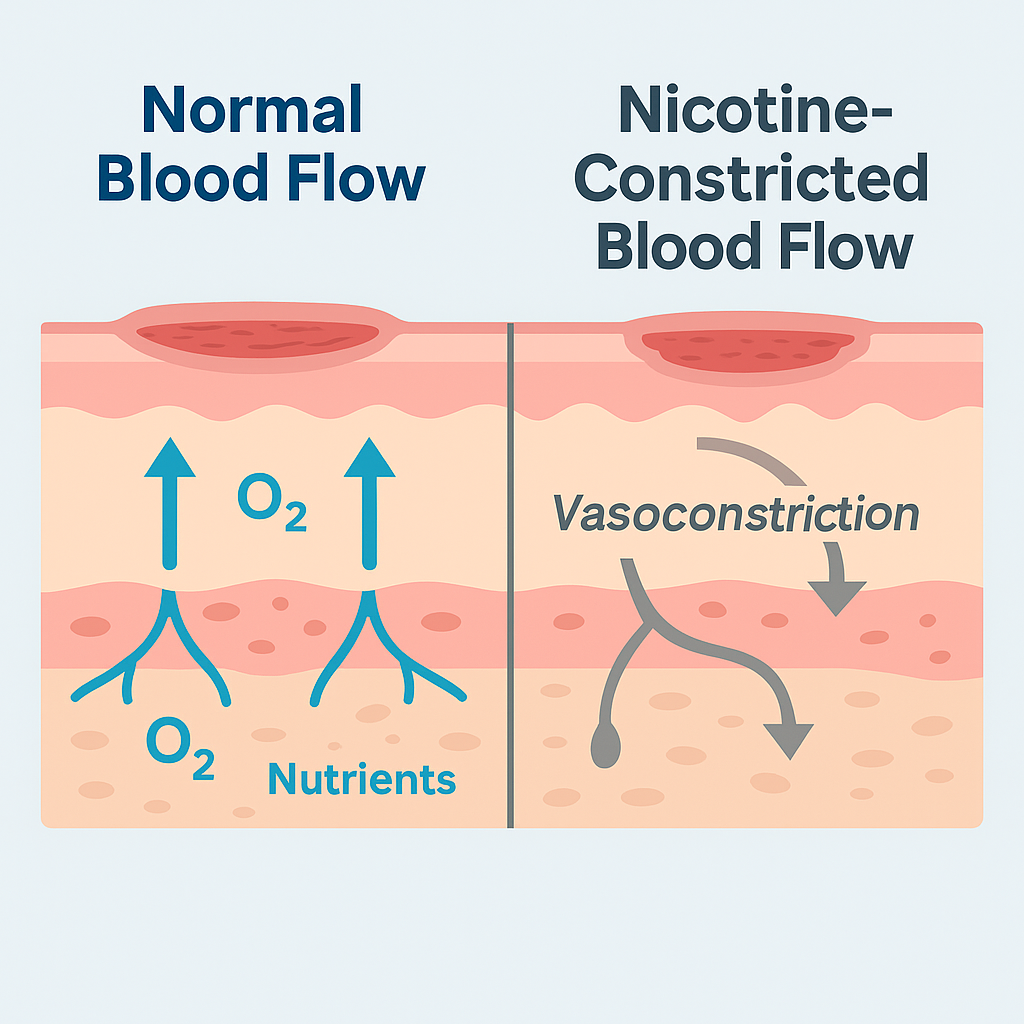
- Vasoconstriction (narrowing of blood vessels)
- Increased oxidative stress (damages cells and tissues)
Nicotine alone is more complex. Research shows:
- Impaired inflammation (lower immune cell recruitment)
- Increased proliferation (may stimulate new tissue growth)
- Mild vasoconstriction (but significantly less than smoking)
This means nicotine might delay the early clean-up phase (inflammation), while boosting the rebuilding phase (proliferation). However, full healing requires both phases to work properly.
Sørensen’s research (2012) found smokers have lower levels of vitamin C and collagen precursors, but that 4 weeks of abstinence restores most inflammatory function—regardless of nicotine patch use. This indicates the other components of cigarette smoke cause most of the damage, not nicotine alone.
4. Step-by-Step Guidance: Nicotine and Wound Recovery
Step 1: Understand Your Situation
- If you’re a smoker with a healing wound, quitting is crucial
- Using nicotine replacement therapy (NRT) is significantly better than continuing to smoke
- Disclose all nicotine use (smoking or NRT) to your healthcare providers
Step 2: Optimize Your Approach
- If possible, start quitting 4+ weeks before planned surgery
- If you’re already healing, switching to a patch is still beneficial
- Follow the recommended patch dosing schedule and aim to taper down
Step 3: Support Wound Healing
- Eat high-protein, vitamin C-rich foods (chicken, bell peppers, citrus)
- Stay well hydrated with at least 8 cups of water daily
- Avoid alcohol and excess sugar, which can impair healing
- Get adequate rest and sleep to support immune function
Step 4: Monitor Progress
- Track your wound’s appearance daily
- Document any changes in size, drainage, color, or pain
- Report significant changes to your healthcare provider
Step 5: Adjust as Needed
- If possible, reduce patch strength over 2–4 weeks as healing progresses
- Consider additional wound care approaches if healing stalls
- Don’t return to smoking if the patch seems to slow healing
For detailed instructions on proper wound care, see our How to Clean Any Wound at Home guide.
5. What the Research Really Says
Multiple studies have examined the relationship between nicotine, smoking, and wound healing:
- Sørensen et al. (2003) found that smokers who stopped for 4 weeks before surgery had infection rates comparable to non-smokers—regardless of whether they used nicotine patches.
- Sørensen et al. (2010) demonstrated that smoking decreases collagen production in wounds, but nicotine replacement therapy had a much smaller impact.
- Martin et al. (2009) showed that nicotine inhibits early inflammatory response but may actually promote proliferation of certain cells involved in the later stages of healing.
- Yang & Longaker (2003) found that abstinence from smoking reverses most negative effects within 4 weeks, even if nicotine replacement is used.
- Suissa et al. (2011) demonstrated that negative-pressure wound therapy outperformed standard care in smokers, suggesting benefits of adjunct support regardless of nicotine use.
Conclusion: While nicotine itself does have some effects on wound healing, the evidence clearly shows that nicotine patches are significantly safer than continued smoking. The most harm comes from the other 4,000+ chemicals in cigarette smoke, not from nicotine alone.
6. Evidence-Based Natural Approaches & Lifestyle Support
Nutrition Support
| Nutrient | Function | Food Sources |
|---|---|---|
| Protein | Provides building blocks for tissue repair | Chicken, fish, eggs, legumes |
| Vitamin C | Essential for collagen production | Citrus fruits, bell peppers, berries |
| Zinc | Supports immune function and cell division | Meat, shellfish, pumpkin seeds |
| Vitamin A | Promotes epithelialization | Sweet potatoes, carrots, leafy greens |
| Vitamin D | Supports immune function | Fatty fish, fortified milk, sunlight |
Hydration
- Aim for at least 8-10 cups of water daily
- Avoid excessive caffeine, which can cause mild dehydration
- Monitor urine color (pale yellow indicates good hydration)
Sleep & Stress Management
- Get 7-8 hours of quality sleep
- Practice stress reduction techniques
- Consider meditation or gentle yoga
Evidence-Based Topical Supports
- Medical-grade honey: For superficial wound support and antibacterial properties
- Aloe vera: Soothing support once the wound has begun to close
- Silicone sheets: For scar management after wound closure
For more natural approaches to wound healing, visit our Natural Remedies for Wound Healing guide.
7. When & Who to Call: Decision Tree
Call Your Healthcare Provider Immediately If:
- Your wound shows signs of infection (increasing redness, warmth, swelling, pus, or fever)
- You experience sudden increased pain
- The wound begins to open after starting to close
- Red streaks appear extending from the wound
Schedule a Follow-Up Appointment If:
- Your wound isn’t showing signs of improvement after 2 weeks
- You’re concerned about your nicotine patch’s effect on healing
- You need help with smoking cessation strategies
When to Adjust Your Approach:
- If healing seems stalled, don’t abandon the nicotine patch and return to smoking
- Instead, consult your provider about adjusting the dosage or adding other wound care approaches
For guidance on identifying wound infection, see our How to Tell If a Wound Is Infected guide.
8. Healing Timeline: Smoker vs. Patch User vs. Nonsmoker
| Phase | Smoker | Nicotine Patch User | Nonsmoker |
|---|---|---|---|
| Inflammation<br>(Days 1–3) | High inflammation, poor oxygen delivery | Moderate inflammation, better oxygen levels | Optimal inflammatory response |
| Proliferation<br>(Days 4–14) | Delayed granulation, increased infection risk | Steady but somewhat slower tissue growth | Rapid granulation and contraction |
| Remodeling<br>(Days 15–30+) | Weaker scar formation, delayed completion | Good strength, slightly delayed completion | Optimal scar formation and maturation |
Key Differences:
- Smokers have up to 2-3× higher infection rates compared to nonsmokers
- Patch users show infection rates much closer to nonsmokers
- Patch users typically show better collagen production than active smokers
- Complete healing may take 1.5-2× longer in smokers versus nonsmokers
- Patch users’ healing times fall between the two groups, but closer to nonsmokers
9. Comprehensive FAQ
Q: Does nicotine slow wound healing? A: Yes, nicotine alone can impair some aspects of wound healing, particularly in the early inflammatory phase. However, its effects are significantly less harmful than continued smoking.
Q: Should I stop my patch after surgery? A: Ideally yes, but this depends on your risk of returning to smoking. Discuss with your healthcare provider, as continued smoking would be far worse for healing than using a patch.
Q: Is vaping safer for wound healing than smoking? A: While vaping eliminates some harmful combustion products, it still delivers nicotine and other chemicals that may impair healing. It’s likely better than smoking but worse than nicotine patches.
Q: Can I use medical honey alongside a nicotine patch? A: Yes. There’s no evidence of interaction between topical wound treatments and nicotine patches. Medical-grade honey can support moist wound healing when applied as directed.
Q: How long until healing improves after quitting smoking? A: Significant improvements in tissue oxygen levels occur within days. After four weeks without smoking, most wound healing parameters show marked improvement, even if you’re using nicotine replacement therapy.
Q: Should I delay elective surgery if I’m using a nicotine patch? A: If possible, work with your healthcare provider to quit completely before surgery. However, surgery while using a patch is still safer than having surgery while actively smoking.
10. Evidence-Based Summary
The research on nicotine patches and wound healing provides several clear conclusions:
- Smoking significantly impairs wound healing through multiple mechanisms, increasing infection risk and delaying closure.
- Nicotine alone has less harmful effects than complete cigarette smoke, though it can still affect some aspects of the healing process.
- Using nicotine patches is substantially better for wound healing than continued smoking and represents an acceptable compromise during the healing process.
- Abstaining from smoking for 4 weeks before surgery or wound treatment provides the best outcomes, even if nicotine replacement is used during this period.
- Supporting the healing process with proper nutrition, hydration, and wound care can help overcome the mild negative effects of nicotine replacement therapy.
The bottom line: If you’re healing from a wound or preparing for surgery, quitting smoking is essential. Using nicotine patches to help you quit is a medically sound approach that significantly improves your healing potential compared to continued smoking.
11. References & Citations
- Sørensen LT et al. (2003). “Smoking as a risk factor for wound healing.” Surgery
- Sørensen LT et al. (2010). “Effect of smoking on wound healing and collagen synthesis.” Annals of Surgery
- Sørensen LT. (2012). “Wound healing and infection in surgery: The pathophysiological impact of smoking, smoking cessation, and nicotine replacement therapy.” Annals of Surgery
- Martin JW et al. (2009). “The effects of nicotine on wound healing.” American Journal of Surgery
- Suissa D et al. (2011). “Negative pressure wound therapy vs. standard wound care in smokers.” Plastic and Reconstructive Surgery
- Yang J, Longaker MT. (2003). “Wound healing and smoking cessation.” Journal of Surgical Research
- Mosely LH et al. (1978). “Impaired wound healing with cigarette smoking.” Plastic and Reconstructive Surgery
Meta Description: Does nicotine patch affect wound healing? Learn what the research says about nicotine replacement therapy during recovery and what helps wounds heal faster.