
How to Treat a Bullet Wound at Home
11 min read · Updated May 2025
On this page
- 1. Real-Life Scenarios
- 2. Fast-Facts Snapshot: Bullet Wound Survival Guide
- 3. The Science Behind Bullet Wounds
- 4. Step-by-Step Protocol: At-Home Bullet Wound Care
- Step 1: Ensure Scene Safety
- Step 2: Call for Help
- Step 3: Control Bleeding
- Step 4: Stabilize the Wound
- Step 5: Monitor Vital Signs
- Step 6: Document and Preserve Evidence
- 5. Professional Treatment Options
- 6. Evidence-Based Natural Approaches & Myths
- Remedies That May Help (After Stabilization and Professional Treatment)
- Myths to Avoid
- 7. Emergency Preparedness: Gunshot Wound Kit Components
- 8. Best Amazon Products for Emergency Gunshot Wound Care
- Essential Individual Emergency Supplies
- Complete Trauma Kits – Ready-to-Go Solutions
- Budget-Friendly Individual Items
- Important Shopping Notes:
- 9. When & Who to Call: Decision Tree
- ALWAYS Call 911 Immediately For:
- While Waiting for Emergency Services:
- 10. Post-Hospital Care Timeline
- 11. Nutrition & Lifestyle Support for Recovery
- 12. Comprehensive FAQ
- 13. Evidence-Based Summary
- 14. References & Citations
Medical Disclaimer: This content is for informational purposes only and is not a substitute for professional medical advice. Bullet wounds are life-threatening emergencies that require immediate professional medical care.
1. Real-Life Scenarios
Tyler’s Story: Hiking deep in Utah’s remote canyons, Tyler heard a deafening crack. A friend’s misfire sent a low-velocity round ricocheting into his thigh. With no cell signal and the nearest road miles away, Tyler had to act fast. His bleeding wouldn’t stop. Panic hit—but so did instinct. He used a belt as a makeshift tourniquet, packed the wound with clean gauze, and waited. He survived, barely.
Linda’s Dilemma: Living in a busy neighborhood, Linda didn’t expect to hear gunshots next door. When her teenage neighbor stumbled onto her porch with a bleeding shoulder, she knew 911 had been called—but help was minutes away. Her nursing background kicked in. She applied pressure, kept the teen calm, and avoided removing the bullet. He made it to the hospital in stable condition.
Marco’s Test: On a family camping trip, Marco’s son accidentally discharged a firearm, shooting himself in the calf. With only a basic first-aid kit and spotty signal, Marco used clean gauze, applied pressure, and stabilized the leg. He flagged down a ranger two hours later. That boy now walks with a small scar—and a lot more respect for firearm safety.
You’re Not Alone: Gunshot injuries are terrifying, but knowing what to do in the first five minutes can mean the difference between life and death. This guide walks you through those steps—clearly, calmly, and with zero fluff.
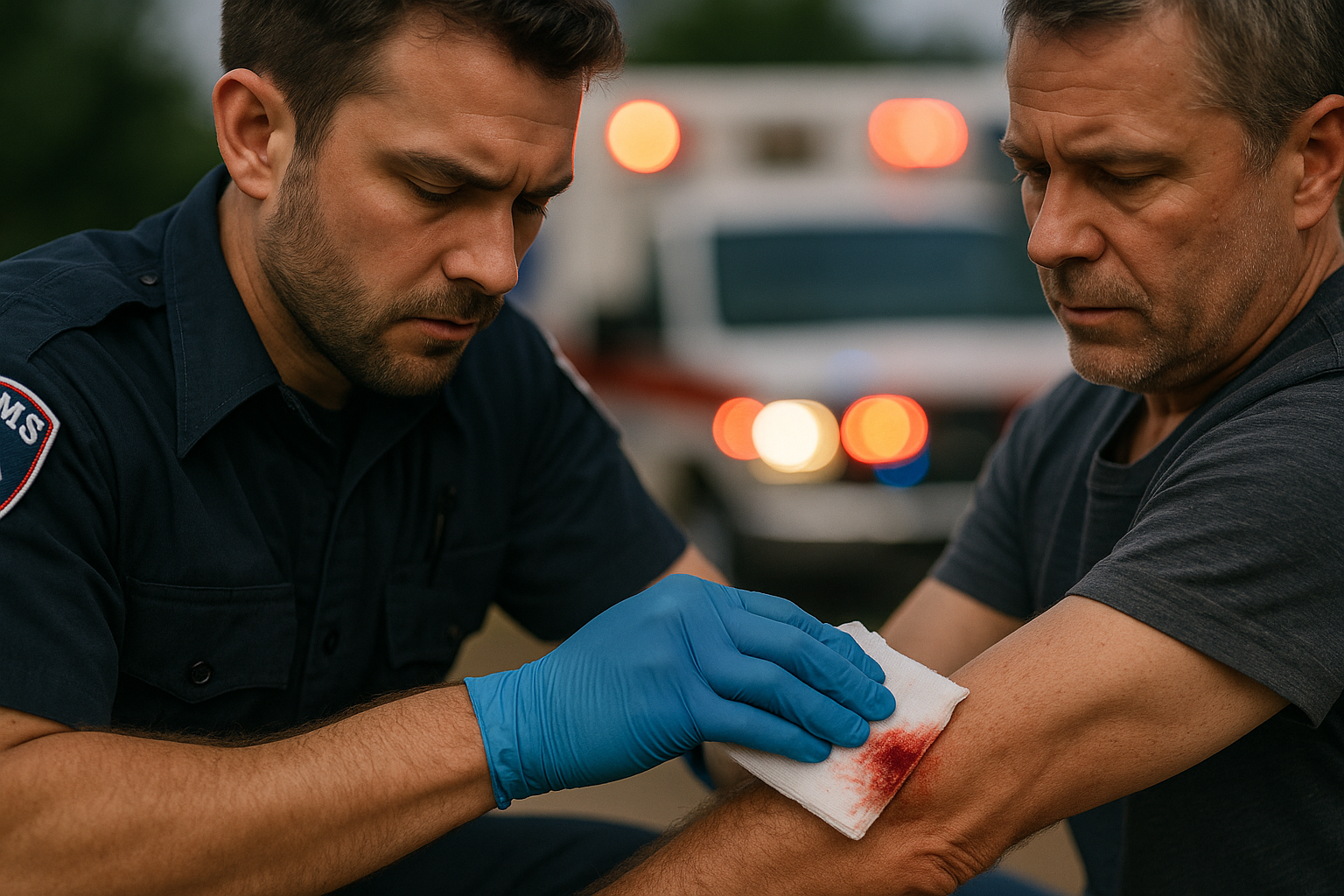
Dealing with a wound that won't heal?
We'll help connect you with a wound care practice near you — free, no obligation.
Find a Practice Near You2. Fast-Facts Snapshot: Bullet Wound Survival Guide
| Question | Answer |
|---|---|
| Can you survive a bullet wound at home? | Sometimes—depends on location and bleeding control |
| First step? | Stop bleeding—apply direct pressure immediately |
| Infection risk? | Extremely high—especially with deep or contaminated wounds |
| Medical red flags? | Spurting blood, chest/abdomen wounds, unconsciousness |
| When to call 911? | Always—start first aid while you wait |
Critical Fact: Arterial bleeding can cause death in under 5 minutes if not controlled. Hemorrhage is the leading preventable cause of trauma death according to the American College of Surgeons.
3. The Science Behind Bullet Wounds
Bullet wounds are complex—not just a hole, but a path of destruction. When a bullet enters the body, it creates a permanent cavity—the tissue it destroys on contact—and a temporary cavity, which stretches and tears surrounding tissue like ripples from a rock in a pond.
High-velocity rounds (military rifles) cause devastating cavitation and tissue destruction. Low-velocity rounds (handguns, BB guns) typically cause more localized damage, but can still be fatal if they strike major vessels, organs, or bones.
After penetration, your body begins trauma response:
- Hemostasis: Platelets and clotting proteins stop bleeding
- Inflammation: White blood cells rush to prevent infection
- Proliferation: New cells and blood vessels rebuild tissue
- Remodeling: Scar tissue forms over months
But gunshot wounds disrupt this orderly process, introducing foreign material, bacteria, and massive inflammation. Immediate intervention is crucial.
Research by Reginelli et al. (2015) shows that internal damage from gunshot wounds often extends far beyond the visible entry and exit wounds, underscoring why professional medical care is essential.
4. Step-by-Step Protocol: At-Home Bullet Wound Care
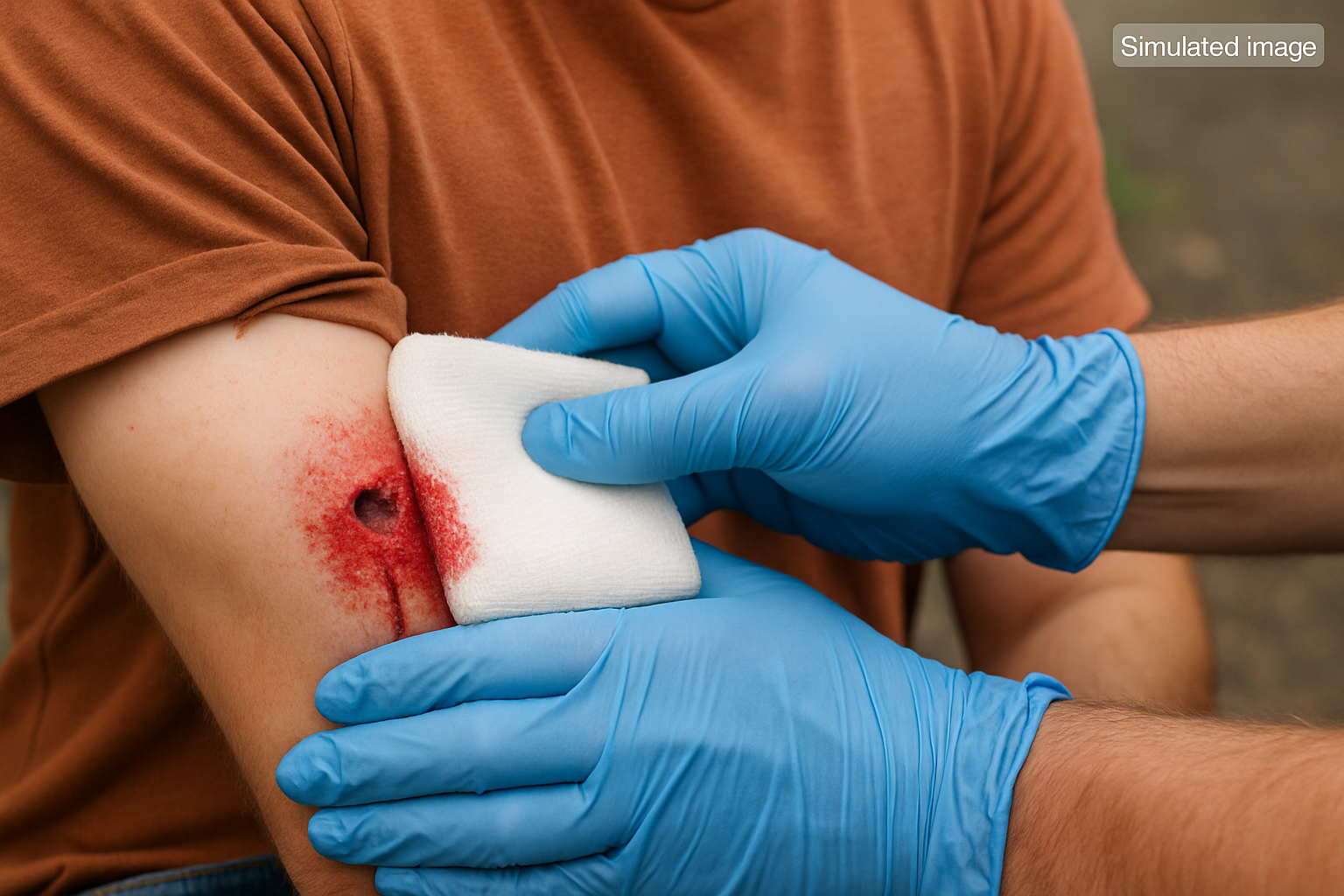
Step 1: Ensure Scene Safety
- Make sure the area is safe from further gunfire or threats
- Use gloves if available to protect from bloodborne pathogens
- Assess the situation quickly but thoroughly
Step 2: Call for Help
- Call 911 immediately—this is ALWAYS the first action with gunshot wounds
- If in a remote area without cell service, send someone for help
- Clearly communicate that you’re dealing with a gunshot wound
Step 3: Control Bleeding
- Apply direct pressure with a clean cloth or gauze
- If bleeding continues, apply a tourniquet 2–3 inches above the wound (not over joints)
- Mark the time the tourniquet was applied—this is critical information for medical personnel
- For deep wounds, use clean fabric or hemostatic gauze to pack the wound tightly
Step 4: Stabilize the Wound
- Cover with sterile dressing or clean cloth
- Apply pressure bandage if possible
- Immobilize the injured area (e.g., splint or keep still)
- Do not probe the wound or attempt to remove bullets or fragments
Step 5: Monitor Vital Signs
- Check for responsiveness, pulse, breathing
- Treat for shock: lay the person flat, elevate legs (if no injury prevents it), and cover with a blanket
- Keep the victim warm to prevent hypothermia, which can worsen shock
Step 6: Document and Preserve Evidence
- Don’t remove clothing stuck to the wound
- Do not remove the bullet
- Note injury details and take a photo if possible
For detailed instructions on proper wound cleaning (after emergency care), see our How to Clean Any Wound at Home guide.
5. Professional Treatment Options
When emergency teams arrive or you reach a hospital, here’s what may happen:
- Imaging: X-rays and CT scans identify internal injuries and bullet location
- Debridement: Surgeons remove dead tissue and contaminants
- Antibiotics: Administered to prevent or treat infection
- Surgical repair: May include organ or vascular repair, fracture stabilization
- Tetanus prophylaxis: Given if vaccination status is outdated
Research by Vlček et al. (2019) confirms that while low-velocity wounds may sometimes need minimal care, abdominal or chest wounds almost always require surgical intervention.
6. Evidence-Based Natural Approaches & Myths
Remedies That May Help (After Stabilization and Professional Treatment)
- Medical-grade honey: May help reduce infection and support healing once the wound is professionally cleaned and stable
- Aloe vera: Can soothe skin once wound edges are healing
Myths to Avoid
- ❌ Hydrogen peroxide or alcohol on open wounds: Destroys healthy tissue and can worsen damage
- ❌ Removing the bullet: Often causes more damage and bleeding—only trained surgeons should attempt this
- ❌ Using herbs or essential oils in the wound: Can introduce infection or delay healing
- ❌ Applying spider webs to stop bleeding: An old folk remedy with no scientific support and high infection risk
For evidence-based approaches to supporting wound healing after professional care, see our Natural Remedies for Wound Healing guide.
7. Emergency Preparedness: Gunshot Wound Kit Components
| Product | Function | Why It’s Important |
|---|---|---|
| CAT Tourniquet | Stops limb bleeding fast | Can stop arterial bleeding that pressure alone cannot |
| Hemostatic Gauze | Promotes clotting in deep wounds | Contains clotting agents that work quickly |
| Pressure Bandage | Compression + cover in one | Maintains pressure after initial bleeding control |
| Chest Seal | Prevents air from entering chest wounds | Critical for treating penetrating chest injuries |
| Trauma Shears | Quickly cuts clothing to access wounds | Allows full assessment without moving victim |
| Nitrile Gloves | Protects caregiver from blood exposure | Reduces infection risk for both parties |
8. Best Amazon Products for Emergency Gunshot Wound Care
Note: These are emergency supplies that should be used only when professional medical help is unavailable. Always call 911 first.
Essential Individual Emergency Supplies
1. North American Rescue C-A-T Combat Application Tourniquet Gen 7 (Black)
- Official tourniquet of the U.S. Army (NSN 6515-01-521-7976)
- Proven 100% effective in stopping blood flow by U.S. Army Institute of Surgical Research
- Gray time-stamped windlass (authentic indicator vs. knockoffs)
- Single routing buckle system for faster, one-handed application
- Price: $28-35
- Why This One: This is the genuine military-grade tourniquet shipped directly by Amazon.com, ensuring authenticity. Avoid cheaper knockoffs that may fail when needed most.
2. Adventure Medical Kits QuikClot Gauze 3″ x 24″ (2-Pack)
- Military-grade kaolin-based hemostatic technology
- Stops bleeding 5x faster than regular gauze
- Non-allergenic mineral formula (safer than older chitosan versions)
- Flexible and pliable for easy wound packing
- Over 9,225 customer reviews with 4.7/5 stars
- Price: $25-35 for 2-pack
- Why This One: Adventure Medical Kits provides the civilian version of military QuikClot Combat Gauze. Kaolin is proven safer and more effective than other hemostatic agents.
3. North American Rescue HyFin Vent Chest Seal Twin Pack
- Two individually packaged vented chest seals for entry/exit wounds
- 3-channel pressure relief vents with backup fail-safe system
- Advanced adhesive works on sweaty or hairy casualties
- 6″ x 6″ coverage area with large red pull tab
- Price: $25-30
- Why This One: The gold standard chest seal used by military and EMS worldwide. NAR’s advanced 3-vent system provides redundancy if channels become blocked.
5. North American Rescue Trauma Shears 7.25″
- Premium-grade stainless steel with serrated cutting edge
- Soft-grip non-slip handles for control even when wet
- Built-in oxygen tank wrench feature
- Rounded safety tips and clothing lift lip
- Autoclavable and reusable
- Price: $18-25
- Why This One: Professional-grade shears used by EMS and military medics. These will cut through anything from denim to leather belts while protecting the patient.
Complete Trauma Kits – Ready-to-Go Solutions
Scherber Premium IFAK Kit Trauma Pack (Black)
- Contents: Genuine NAR CAT Tourniquet, HyFin Vent Chest Seal, Israeli Bandage, QuikClot EMS 4×4 Hemostatic Gauze, Nasopharyngeal Airway with lube, Trauma Shears, Nitrile Gloves, Additional gauze and bandages
- 600D water-resistant MOLLE pouch with rip-away panel
- HSA/FSA approved for health savings account purchases
- All genuine North American Rescue components (no knockoffs)
- Price: $89-120
- Best For: Professional first responders, law enforcement, or serious emergency preparedness
EVERLIT Emergency Trauma Kit with CAT GEN-7 Tourniquet (Black)
- Contents: Genuine CAT Gen 7 Tourniquet, QuikClot Hemostatic Gauze, Israeli-style Bandage, 36″ Aluminum Splint, Chest Seal, Trauma Shears, Emergency Blanket, Compressed Gauze
- Veteran-owned company with exceptional customer service
- Compact design fits in backpack or vehicle
- Includes bone fracture treatment supplies
- Price: $65-85
- Best For: Outdoor enthusiasts, hunters, and comprehensive family emergency preparedness
MediTac Premium IFAK Kit with Celox Hemostatic Granules
- Contents: SOF Tourniquet, Celox Hemostatic Granules (15g), Vented Chest Seal, Israeli-style Bandage, Trauma Shears, Emergency Blanket, Nitrile Gloves, Additional medical supplies
- MOLLE compatible pouch with multiple attachment options
- Celox granules work even in hypothermic conditions
- Includes emergency whistle and face shield
- Price: $45-65
- Best For: Budget-conscious buyers who still want quality trauma supplies
Budget-Friendly Individual Items
For those building custom kits or replacing used supplies:
- Israeli Bandages (10-Pack) – $25-30 (best bulk value)
- QuikClot Gauze – $20-25 (longer length)
- Nitrile Gloves (100-count) – $15-20 (powder-free, puncture-resistant)
- Emergency Thermal Blankets – ASIN: B000I6BXES – $8-12 (reusable, windproof)
Important Shopping Notes:
💳 HSA/FSA Eligible: Most trauma medical supplies qualify for health savings account purchases – look for the “FSA/HSA Eligible” label.
📅 Check Expiration Dates: Hemostatic gauze has a 5-year shelf life. Always check manufacturing dates when ordering.
9. When & Who to Call: Decision Tree
ALWAYS Call 911 Immediately For:
- Any gunshot wound, regardless of severity
- Bleeding that won’t stop with direct pressure
- Wounds to the head, neck, chest, or abdomen
- Signs of shock (pale skin, rapid breathing, confusion)
- Unconsciousness or altered mental status
While Waiting for Emergency Services:
- Continue direct pressure or tourniquet use
- Monitor vital signs
- Keep the victim calm and still
- Protect the wound from contamination
For help identifying signs of infection after professional treatment, see our How to Tell If a Wound Is Infected guide.
10. Post-Hospital Care Timeline
| Phase | What to Expect | Home Care Focus |
|---|---|---|
| Days 1-3 | Pain, swelling, possible drainage from wound site | Medication adherence, wound care as directed |
| Days 4-7 | Reduced swelling, wound edges beginning to close | Monitoring for infection, continuing treatments |
| Days 8-14 | Granulation tissue forming, less drainage | Gentle cleaning, dressing changes per doctor |
| Days 15-30 | Wound contraction, scar tissue development | Scar management, gradual return to activities |
| 1-3 Months | Continued strengthening of scar tissue | Physical therapy if prescribed, nutrition |
| 3+ Months | Remodeling of scar tissue, nerve regeneration | Long-term scar management, full recovery plan |
11. Nutrition & Lifestyle Support for Recovery
| Nutrient | Why It Helps | Food Sources |
|---|---|---|
| Protein | Repairs tissue, builds new cells | Lean meats, fish, eggs, legumes |
| Vitamin C | Boosts collagen, supports immunity | Citrus fruits, bell peppers, broccoli |
| Zinc | Accelerates healing, fights infection | Oysters, beef, pumpkin seeds, lentils |
| Iron | Rebuilds blood supply after loss | Red meat, spinach, fortified cereals |
| Vitamin D | Supports immune function | Fatty fish, fortified milk, sunlight |
Lifestyle Factors That Impact Healing:
- Avoid smoking completely—it reduces blood flow to wounds
- Maintain blood sugar control—high glucose impairs healing
- Get adequate sleep—tissue repair occurs primarily during sleep
- Stay hydrated—dehydration slows healing significantly
12. Comprehensive FAQ
Q: What if the bullet is still inside? A: Do NOT try to remove it. Bullets can be lodged near vital structures, and removal attempts can cause severe bleeding or further damage. Professional surgical removal is necessary.
Q: Can I clean a bullet wound with hydrogen peroxide? A: No. Use only clean water or saline if directed by medical professionals. Hydrogen peroxide damages healthy tissue and can worsen the wound.
Q: Should I close the wound with stitches or adhesive? A: Absolutely not. Gunshot wounds are contaminated and closing them can trap bacteria, leading to severe infection. Leave wound closure to medical professionals.
Q: What if bleeding stops but pain increases days later? A: This is a warning sign of infection. Seek immediate medical attention, as infections from gunshot wounds can be life-threatening.
Q: How long will recovery take? A: Recovery time varies greatly depending on wound location, tissue damage, and complications. Simple extremity wounds may heal in weeks; complex wounds involving bones or organs may require months of recovery and rehabilitation.
Q: Can I take pain medications before medical help arrives? A: Generally avoid giving anything by mouth to someone with a serious traumatic injury. Pain medications may mask symptoms doctors need to evaluate and some may worsen bleeding.
13. Evidence-Based Summary
Gunshot wounds require immediate professional medical care. While waiting for emergency services:
- Control bleeding with direct pressure or a tourniquet if necessary
- Keep the victim calm and treat for shock
- Never attempt to remove bullets or close the wound
- Monitor for changes in breathing, consciousness, or bleeding
- Provide clear information to emergency responders about the injury
After professional treatment:
- Follow all medical instructions precisely
- Watch carefully for signs of infection
- Support healing with proper nutrition
- Attend all follow-up appointments
- Consider physical therapy for functional recovery
Remember: The goal of at-home care is to bridge the gap until professional help arrives, not to replace it.
14. References & Citations
- Reginelli, A. et al. (2015). “Gunshot wounds: Ballistic findings and forensic evaluation.” Critical Reviews in Imaging
- Vlček, P. et al. (2019). “Comprehensive treatment of gunshot wounds: Clinical approaches.” Injury
- Bartlett, C.S. (2003). “Clinical update: Gunshot wound care in orthopaedics.” Journal of Bone and Joint Surgery
- Peled, R. et al. (2012). “Civilian vs. military gunshot wounds.” British Journal of Surgery
- American College of Surgeons. (2021). “Stop the Bleed: Save a Life.” Committee on Trauma
Related answers
- A Transparent Film Dressing Is Used for Which Type of Wound?
- Does Nicotine Patch Affect Wound Healing?
- Evidence-Based Natural Remedies for Wound Healing
- How to Clean Any Wound at Home: Evidence-Based Guide
This content is for educational purposes only and is not a substitute for professional medical advice. Always consult a qualified healthcare provider about your wound.