
Medical Disclaimer: This content is for informational purposes only and is not a substitute for professional medical advice.
1. Real-Life Scenarios
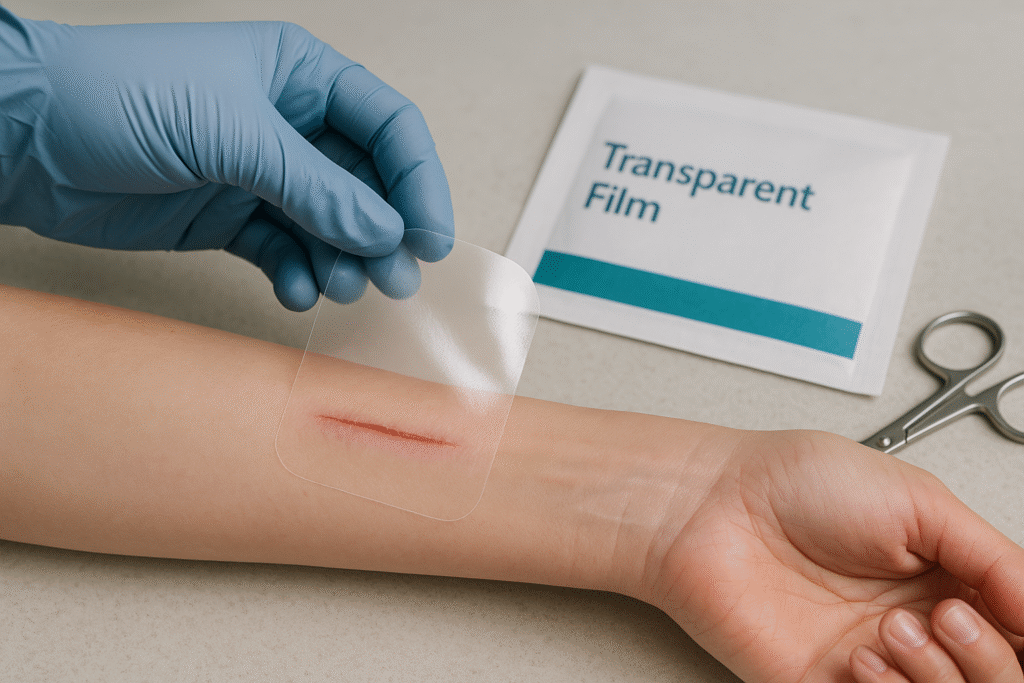
Leah had just undergone minor outpatient surgery. Her discharge instructions emphasized keeping the wound “clean and dry,” yet the nurse applied what looked like a clear sticker over her incision. “Can I shower with this?” she wondered, unsure if this thin, see-through covering was enough protection or if it needed to be changed daily like traditional gauze.
Ruben noticed something different about his elderly mother’s pressure ulcer dressing during his weekly care visit. Instead of the usual gauze and tape that required daily changes, her new nurse had applied a transparent film that stayed in place for three days. It not only saved time but also allowed him to monitor the healing without disrupting the wound.
Dr. Carter, an oncology specialist, has been using transparent film dressings preventatively for patients undergoing radiation therapy. “The skin becomes so fragile during treatment,” she explains. “Traditional adhesive dressings can cause trauma during removal, but these films minimize that damage while still letting us see any early signs of dermatitis.”
Not sure when a see-through dressing is the right choice? You’re not alone. Transparent film dressings occupy a specific niche in wound care—not right for every situation, but invaluable in others. Whether you’re a patient wondering about your new dressing, a caregiver managing someone else’s wound, or a clinician selecting the optimal covering, understanding when to use transparent film can make a significant difference in healing outcomes.
2. Fast-Facts Snapshot: Transparent Film Basics
| Question | Answer |
|---|---|
| What is it? | Thin, flexible polyurethane film with adhesive backing |
| When is it used? | Superficial wounds, surgical incisions, IV sites, prevention |
| Benefits? | Moisture balance, bacterial barrier, wound visibility, shower-proof |
| When to avoid? | High-exudate wounds, fragile skin, infected wounds, deep cavities |
| Change frequency? | Every 3–7 days, or when leaking, lifting, or cloudy |
Key Insight: Transparent film dressings create a moist wound environment that can speed epithelialization by up to 40% compared to dry dressings, while still providing a barrier against external contaminants (Atiyeh et al., 2002).
3. The Science Behind Transparent Film Dressings
Transparent film dressings represent a significant advancement in wound care technology, offering a combination of benefits based on solid scientific principles.
Moist Wound Healing
The primary function of transparent films is maintaining optimal moisture at the wound surface. Research by Atiyeh et al. (2002) confirmed that moist environments accelerate epithelial cell migration across the wound bed, resulting in faster healing and reduced scarring compared to traditional dry dressings.
Bacterial Barrier
These films create an effective barrier against external contaminants. Kannon & Garrett (1995) demonstrated that properly applied transparent films prevent bacterial entry while still allowing oxygen exchange—a critical balance for optimal healing.
Visual Monitoring
Unlike opaque dressings, transparent films allow for wound assessment without removal. This reduces disruption to the healing environment and decreases the risk of mechanical trauma during frequent dressing changes.
Moisture Vapor Transmission Rate (MVTR)
Modern transparent films are engineered with specific MVTRs that allow excess moisture to escape while maintaining adequate hydration. Dabi et al. (1994) showed that this balance helps prevent both desiccation and maceration, two common complications in wound management.
Preventative Applications
Recent studies by Zasadziński et al. (2022) highlight the emerging role of transparent films in preventing radiation dermatitis, demonstrating their value beyond just treatment of existing wounds.
This combination of properties makes transparent film dressings particularly suited to specific wound types and healing situations, though they aren’t universal solutions for all wound care needs.
4. Best Wound Types for Transparent Film
Transparent film dressings excel in specific situations but can be detrimental in others. Understanding when to use—and when to avoid—these dressings is crucial for optimal wound healing.
Ideal Applications for Transparent Films
- Surgical Incisions: Rubio (1991) found that transparent films reduced infection rates in clean surgical wounds while speeding epithelialization.
- Superficial Cuts and Abrasions: Minor wounds with minimal exudate benefit from the moist environment and protection.
- Stage I Pressure Ulcers: Films can protect intact skin from friction and moisture while allowing monitoring.
- Radiation Dermatitis Prevention: Applied before radiation therapy to reduce friction damage.
- IV Sites and Central Lines: Secures catheters while allowing visualization of the insertion site for early detection of complications.
- Donor Sites: Thin, minimally exuding skin graft donor sites heal well under transparent films.
- Blister Protection: Creates a protective cover while allowing visibility.

When to Avoid Transparent Films
- Heavily Exuding Wounds: Films trap excessive moisture, leading to maceration and potential infection.
- Infected Wounds: Limited absorption capacity means infected exudate remains in contact with the wound.
- Deep Wounds or Cavities: Films cannot fill dead space and are ineffective for wounds with depth.
- Fragile Periwound Skin: The adhesive may cause skin tears during removal.
- Full-Thickness Burns: These require specialized burn dressings and management.
| Wound Type | Use Transparent Film? | Rationale |
|---|---|---|
| Clean surgical incision | ✓ YES | Maintains moisture, allows monitoring, prevents infection |
| IV site | ✓ YES | Secures catheter, allows site visualization |
| Stage I pressure ulcer | ✓ YES | Protects from friction, allows monitoring |
| Minor abrasion | ✓ YES | Creates optimal healing environment, waterproof |
| Radiation site (preventative) | ✓ YES | Reduces friction, maintains skin integrity |
| Heavily draining wound | ✗ NO | Cannot handle high exudate, causes maceration |
| Infected wound | ✗ NO | Inadequate drainage, may worsen infection |
| Deep cavity wound | ✗ NO | Cannot fill dead space, inadequate absorption |
| Third-degree burn | ✗ NO | Requires specialized burn management |
For detailed guidance on selecting the appropriate dressing for different wound types, see our comprehensive Wound Dressing Guide.
5. How to Apply and Remove It Safely
Proper application and removal of transparent film dressings are crucial for their effectiveness and for preventing skin damage. Follow these step-by-step instructions for best results.
Application Process
- Prepare the skin:
- Clean the wound with saline or as directed by your healthcare provider
- Pat the surrounding skin completely dry (film won’t adhere to moist skin)
- Ensure a 1-2 inch margin of healthy skin around the wound is clean and oil-free
- Prepare the dressing:
- Select appropriate size (should extend 1-2 inches beyond wound edges)
- Cut to size before removing backing (never cut film while over the wound)
- Round the corners to prevent edge lifting
- Apply the film:
- Remove half of the backing paper
- Position the exposed adhesive side over the wound without stretching
- Gently smooth down from center outward
- Remove remaining backing while smoothing down the film
- Avoid wrinkles and bubbles which can create channels for bacteria
- Secure the edges:
- Press gently around the perimeter to ensure a good seal
- Do not apply additional tape over film (defeats the purpose of transparency)
- Document date of application on the dressing if protocol requires
Safe Removal Technique
- Prepare for removal:
- Have replacement dressing ready if needed
- Wash hands and wear gloves if protocol requires
- Remove without skin trauma:
- Gently lift one corner of the film
- While supporting the skin with one hand, slowly stretch the film parallel to the skin (not upward)
- Continue stretching and releasing around the perimeter
- This “low and slow” technique releases adhesive bonds with minimal trauma
- Post-removal skin care:
- Assess the wound and periwound skin
- Note any changes requiring clinical intervention
- Clean as directed before applying new dressing if needed
Troubleshooting Tips
- If film won’t adhere: Ensure skin is completely dry; consider skin prep solution for very oily skin
- For extra-fragile skin: Use skin barrier film before application, or consider silicone-based transparent films
- Edge lifting: Trim loose edges rather than replacing entire dressing (unless compromised)
- Moisture accumulation: If significant fluid collects, the dressing should be changed to a more absorbent option
For detailed instructions on proper wound cleaning before applying dressings, see our How to Clean Any Wound at Home guide.
6. Pairing with Other Treatments
Transparent film dressings can be used alone or in combination with other wound care products to enhance healing. Understanding compatible and incompatible pairings will optimize your wound care approach.
Compatible Combinations
- Hydrogels: A thin layer of hydrogel under transparent film provides additional moisture to dry wounds while maintaining visibility. This combination works well for:
- Superficial burns
- Radiation skin reactions
- Shallow wounds with minimal exudate
- Barrier Films/Wipes: Applying skin barrier products to periwound skin before transparent film application can protect fragile skin from adhesive damage while maintaining the benefits of film dressings.
- Antimicrobial Solutions: For wounds at risk of infection, certain compatible antimicrobial solutions can be applied before film placement. However, always consult a healthcare provider about specific product combinations.
- Secondary Reinforcement: For wounds in high-movement areas, a secondary dressing (like soft cloth tape at the edges only) can reinforce film dressings without compromising visibility of the wound bed.
Incompatible Combinations
- Petroleum-based Ointments: These prevent adhesion of the film and create a barrier that blocks the film’s moisture-controlling properties. The combination also increases the risk of the film slipping off.
- Heavy Exudate Absorbers: Products like alginates or hydrofibers under transparent film defeat the purpose of both products. The film prevents proper moisture vapor transmission while limiting the absorptive capacity.
- Thick Creams or Pastes: These prevent proper adhesion and visualization of the wound bed, negating the primary benefits of transparent films.
- Wound Fillers: Deep wounds requiring packing materials are generally not appropriate for transparent film as the primary dressing.
Strategic Alternating Protocols
Some advanced wound care protocols alternate between dressing types to gain the benefits of each:
- Film/Hydrocolloid Rotation: Using transparent film for visual assessment days, then switching to hydrocolloid for higher absorption days in moderately exuding wounds.
- Film for Healing Phase Transitions: Starting with more absorbent dressings for heavily exuding wounds, then transitioning to transparent film as exudate decreases and epithelialization begins.
For evidence-based approaches to supporting wound healing with natural remedies after the acute phase, see our Natural Remedies for Wound Healing guide.
7. When & Who to Call: Decision Tree
Knowing when to seek professional help for a wound covered with transparent film can prevent complications and ensure optimal healing. Use this decision guide to determine appropriate next steps.
Immediate Medical Attention Required If:
- Increasing redness extends beyond wound margins
- This may indicate spreading infection requiring antibiotic intervention
- Cloudy fluid accumulates under the dressing
- Especially with odor or yellow/green color (signs of infection)
- Fever develops along with wound changes
- Systemic signs of infection require prompt medical evaluation
- Significant pain develops or intensifies
- New or worsening pain suggests complications
Contact Your Healthcare Provider Within 24 Hours If:
- Film repeatedly fails to adhere properly
- May indicate excessive drainage needing different dressing type
- Wound edges separate or wound appears larger
- Suggests healing complications requiring reassessment
- Skin becomes macerated (white/soggy) around wound
- Indicates excess moisture trapped under film
- No improvement visible after 7-10 days
- Healing trajectory should be assessed
When to Change Dressing Type:
Consider switching from transparent film to an alternative dressing when:
- Drainage increases → Switch to foam or alginate dressing
- Signs of infection develop → Switch to antimicrobial dressing
- Periwound skin becomes irritated → Consider silicone-based or less adhesive options
- Wound depth increases → Select dressing appropriate for cavity wounds
Monitoring Decision Support Tool
| Observation | Action | Alternative Dressing to Consider |
|---|---|---|
| Clear fluid accumulation | Change film if excessive | Foam dressing |
| Cloudy fluid or pus | Seek medical care | Antimicrobial dressing |
| Film edges lifting within 24h | Reapply or select new dressing | Hydrocolloid or bordered film |
| Redness spreading beyond initial area | Seek medical care | Allow provider to select |
| Fragile skin damaged during removal | Avoid further film use | Silicone-based dressing |
| Wound appears dry under film | Continue using film | N/A |
| Healthy granulation tissue visible | Continue using film | N/A |
For help identifying signs of wound infection that require immediate attention, refer to our How to Tell If a Wound Is Infected guide.
8. Healing Timeline with Transparent Film
Understanding the typical healing progression when using transparent film dressings can help you know what to expect and identify any concerning deviations from normal healing.
| Timeline | Normal Healing Signs | Warning Signs | Dressing Considerations |
|---|---|---|---|
| Days 1-3 | • Minimal clear drainage<br>• Slight redness at wound edges<br>• Transparent visibility of wound<br>• Film adheres well | • Excessive fluid buildup<br>• Spreading redness<br>• Significant pain<br>• Film not adhering | • Maintain initial dressing if possible<br>• Change only if seal compromised |
| Days 4-7 | • Decreased redness<br>• Visible wound contraction<br>• Pink wound bed<br>• Minimal drainage | • Cloudy fluid under film<br>• Increased drainage<br>• Deteriorating wound edges<br>• Film lifting | • Assess need for dressing change<br>• Consider if current dressing still appropriate |
| Days 8-14 | • Significant size reduction<br>• Epithelialization visible at edges<br>• Minimal to no drainage<br>• Pink or pale red wound bed | • Stalled healing<br>• Wound breakdown<br>• Hypergranulation (raised tissue)<br>• New drainage | • May transition to lighter dressing<br>• Or continue with film if healing well |
| Beyond 14 days | • Complete or near-complete closure<br>• New skin formation<br>• Film may no longer be needed | • Failure to close<br>• Reopening of previously healed areas<br>• Signs of infection | • Consider underlying factors if healing stalled<br>• May need alternative approach |
Special Considerations by Wound Type
- Surgical Incisions: Typically can maintain the same transparent film for up to 7 days if no complications occur. Visible epithelialization should progress along the incision line.
- IV Sites: Should show no signs of inflammation or infiltration; film should be changed per facility protocol (usually every 3-7 days) or immediately if compromise is suspected.
- Superficial Wounds: Should show progressive size reduction and increased epithelialization visibly through the film.
- Radiation Skin: Preventative film application may continue throughout radiation treatment course; skin under film should show less reaction than exposed areas.
What to Document During Healing
When monitoring a wound with transparent film, note:
- Wound dimensions (visible through film)
- Color of wound bed
- Amount and character of any exudate
- Integrity of surrounding skin
- Edge appearance (attached, rolled, macerated)
- Film condition (intact, lifting, cloudy)
This documentation helps track healing progression and supports decisions about continuing with transparent film or transitioning to other dressing types.
9. Nutrition & Skin Care Tips
Optimal wound healing with transparent film dressings depends not only on proper dressing selection and application but also on supporting the body’s natural healing processes through nutrition and skin care.
Nutritional Support for Wound Healing
| Nutrient | Function | Food Sources | Daily Target |
|---|---|---|---|
| Protein | Provides building blocks for tissue repair | Lean meats, fish, eggs, legumes | 1.2-1.5g/kg body weight |
| Vitamin C | Essential for collagen formation | Citrus fruits, strawberries, bell peppers | 75-90mg (up to 500mg for healing) |
| Zinc | Supports immune function and cell division | Oysters, beef, pumpkin seeds | 8-11mg |
| Vitamin A | Promotes epithelialization | Sweet potatoes, carrots, dark leafy greens | 700-900μg RAE |
| Vitamin E | Antioxidant protection | Nuts, seeds, vegetable oils | 15mg |
| Hydration | Supports circulation and cellular function | Water, herbal teas, broth | Minimum 8 cups daily |
Skin Care Considerations with Transparent Films
Before Application
- Gentle Cleansing: Use mild, non-soap cleansers that don’t leave residue that could interfere with adhesion
- Barrier Protection: For areas with fragile skin, consider applying skin barrier wipes or films to periwound skin (not the wound itself) before transparent film application
- Hair Management: For hairy areas, consider clipping (not shaving) excess hair to improve adhesion and reduce pain on removal
During Use
- Edge Protection: If edges begin lifting but the center is intact, small strips of paper tape can secure edges without needing complete dressing change
- Showering Guidance: Most transparent films are waterproof, but avoid directing strong water streams directly at the dressing; pat dry after showering
- Avoid Topical Products: Don’t apply lotions, oils, or creams near the dressing as they can compromise the seal
After Removal
- Gentle Cleansing: After dressing removal, cleanse skin with mild soap and water to remove adhesive residue
- Skin Recovery: If adhesive-related irritation occurs, applying a thin layer of plain moisturizer to affected skin (not the wound) after dressing removal can help restore skin barrier
- Moisturize Surrounding Skin: Between dressing changes, keep surrounding skin well hydrated with fragrance-free moisturizers (applied away from dressing edges)
Environmental Factors
- Temperature Management: Excessive heat or sweating can compromise film adhesion; consider more frequent changes in hot weather or for active patients
- Humidity Considerations: In very humid environments, check dressings more frequently for trapped moisture
- Activity Modifications: For dressings on high-movement areas, consider activity modifications to reduce mechanical stress on the dressing
These nutritional and skin care approaches complement the benefits of transparent film dressings and help create optimal conditions for wound healing.
10. Comprehensive FAQ
Application & Removal Questions
Q: Can I shower with a transparent film dressing? A: Yes, most transparent film dressings are waterproof and designed to allow showering. However, avoid soaking in baths or pools, and don’t direct high-pressure water streams directly at the dressing. Pat the dressing dry after showering rather than rubbing.
Q: Why is my dressing cloudy underneath? A: Some cloudiness from moisture vapor is normal. However, if the fluid appears milky, yellow, or green, or if the amount is increasing, this may indicate infection requiring medical attention. Small amounts of clear fluid are typically part of normal wound healing.
Q: Should it hurt when removing the film? A: Properly removed, transparent film should cause minimal discomfort. Use the “low and slow” technique: lift one edge, then stretch the film horizontally (parallel to the skin) rather than pulling up. This releases the adhesive with less trauma. If removal is consistently painful, ask your healthcare provider about alternatives or adhesive removers.
Q: How do I know if the dressing is still working? A: A functioning transparent film should maintain its seal, remain relatively clear, allow wound visualization, and stay in place without significant edge lifting. If the dressing is collecting excessive fluid, lifting at the edges, or no longer adhering properly, it needs to be changed.
Wound Care Questions
Q: What’s the best dressing for post-op stitches or staples? A: Transparent film is often ideal for closed surgical wounds with sutures or staples because it allows visualization of the incision while providing protection. However, if the wound produces more drainage than expected, your healthcare provider might recommend a more absorbent dressing.
Q: Can I use antibiotic ointment under the film? A: Generally, no. Most antibiotic ointments contain petroleum that prevents proper adhesion of the film and blocks its moisture vapor transmission properties. If antimicrobial protection is needed, discuss alternatives with your healthcare provider, such as using an antimicrobial transparent film or alternating between treatments.
Q: How long can I leave the same transparent film dressing on? A: Most manufacturers recommend 3-7 days maximum, but the actual timeframe depends on the specific product and wound condition. Change the dressing sooner if it becomes compromised (lifting edges, leaking, or accumulating fluid), shows signs of infection, or according to your healthcare provider’s instructions.
Special Situations
Q: Can transparent film be used on faces or joints? A: Yes, transparent films are often good choices for faces and joints because they’re flexible and conformable. For facial applications, smaller pieces may be easier to apply precisely. For joints, make sure there’s adequate range of motion without dressing disruption, and consider using multiple smaller pieces rather than one large piece.
Q: Are transparent films appropriate for diabetic foot ulcers? A: Generally, transparent films alone are not recommended for diabetic foot ulcers, which often require more specialized care and absorbent dressings. However, they might be used as a secondary dressing or during specific healing phases under healthcare provider supervision.
Q: Can children or elderly patients use transparent film dressings? A: Yes, but with special considerations. For elderly patients with fragile skin, consider silicone-based transparent films or use skin barrier products before application. For children, transparent films can be beneficial as they resist tampering and allow easy monitoring, but proper size selection is important to prevent excessive skin trauma during active movement.
Q: What’s the difference between transparent film and hydrocolloid dressings? A: While both maintain a moist wound environment, transparent films are thin, clear, non-absorbent barriers that allow wound visualization. Hydrocolloids are thicker, opaque, absorptive dressings that turn into a gel when exposed to wound fluid. Hydrocolloids have higher absorption capacity but don’t allow wound visualization without removal.
11. Evidence-Based Summary
Transparent film dressings represent a significant advancement in modern wound care, offering a unique combination of benefits for specific wound types. The evidence supports their use in several key applications while recognizing their limitations in others.
Key Benefits of Transparent Films:
- Creates an optimal moist healing environment that can accelerate epithelialization by up to 40% compared to traditional dry gauze dressings
- Provides a bacterial barrier while still allowing oxygen exchange and moisture vapor transmission
- Enables wound visualization without disrupting the healing environment
- Reduces dressing change frequency, lowering both costs and healing disruptions
- Offers waterproof protection that allows bathing while maintaining wound coverage
Optimal Use Cases:
- Clean, closed surgical incisions
- Superficial wounds with minimal exudate
- IV and catheter sites
- Radiation skin protection
- Stage I pressure injuries
- Partial-thickness burns
- Healing donor sites
Limitations to Consider:
- Not suitable for heavily exuding wounds
- Limited effectiveness with deep or cavity wounds
- Not appropriate as primary dressing for infected wounds
- May cause trauma to very fragile skin during removal
- Cannot provide the absorption capacity of foam or alginate dressings
Transparent film dressings exemplify the principle that the right dressing choice depends on matching the dressing properties to the specific wound characteristics and healing goals. When used appropriately, transparent films provide an excellent balance of protection, visibility, and healing support.
To maximize the benefits of transparent film dressings:
- Ensure proper application technique
- Monitor the wound regularly through the film
- Change promptly if signs of compromise appear
- Consider skin protection for vulnerable patients
- Follow manufacturer guidelines for maximum wear time
By understanding both the capabilities and limitations of transparent film dressings, clinicians and patients can make informed decisions that optimize wound healing outcomes and patient comfort.
12. References & Citations
- Rubio, P. (1991). “Use of transparent dressings for surgical wounds.” AORN Journal
- Pa, A. (1991). “Transparent film dressings in clinical practice.” Nursing Times
- Kannon GA, Garrett AB. (1995). “Moist wound healing with occlusive dressings.” Dermatologic Surgery
- Zasadziński M et al. (2022). “Transparent films in radiation dermatitis.” Journal of Clinical Oncology Nursing
- Dabi Y et al. (1994). “Variable MVTR dressings.” Biomaterials
- Percival SL et al. (2012). “Biofilms and chronic wound healing.” Wound Repair and Regeneration
- Atiyeh BS et al. (2002). “Moist environment and wound healing.” Annals of Plastic Surgery