
Medical Disclaimer: This content is for informational purposes only and is not a substitute for professional medical advice.
1. Real-Life Scenarios
Ellen’s Dilemma: Ellen, 72, has a diabetic foot ulcer and leaves the wound clinic with a silver alginate dressing—but no instructions. Her daughter tries Googling it and finds conflicting advice.
Kevin’s Training Day: As a home care nurse, Kevin supervises new aides learning to dress wounds. He turns to silver alginate dressings for many of his patients with draining ulcers—but proper application is crucial.
Alicia’s Burn Recovery: After a minor kitchen fire, Alicia suffered partial-thickness burns. Her burn team prescribed silver alginate. Within two days, pain decreased and she needed fewer dressing changes.
If you’re facing a draining, infected, or painful wound and have been told to use silver calcium alginate, you’re not alone—and this guide will walk you through every step.

2. Fast-Facts Snapshot: Silver Alginate 101
| Question | Answer |
|---|---|
| What is it made of? | Seaweed-derived alginate + ionic silver |
| What does it do? | Absorbs fluid, controls infection, reduces odor and pain |
| When is it used? | For moderately to heavily draining wounds at risk of infection |
| How long can it stay? | Usually 1–3 days depending on exudate |
| Does it hurt to remove? | No—usually non-adherent and soothing |
3. The Science Behind Silver Alginate Dressings
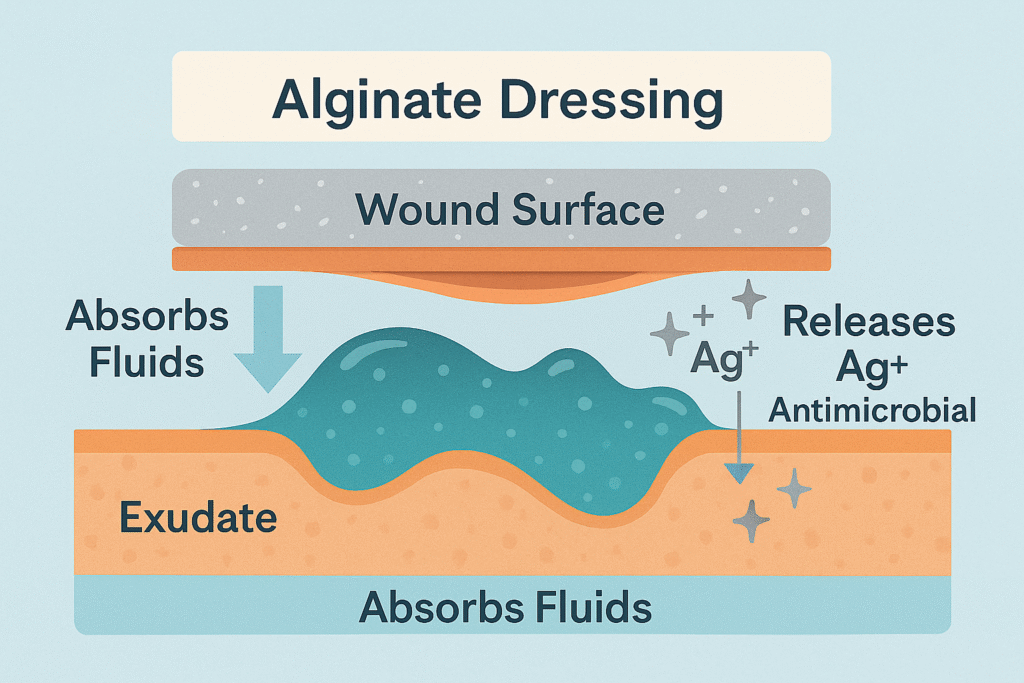
Silver alginate dressings combine two key properties:
- Alginate, derived from seaweed, absorbs fluid and transforms into a soft gel when in contact with wound exudate. This gel creates an ideal moist wound environment while managing excess fluid.
- Silver ions provide antimicrobial action by disrupting bacterial cell membranes and preventing replication (Qin, 2005). The slow-release silver has been shown to maintain antimicrobial activity for up to 7 days.
These dressings have been proven effective in clinical studies:
- Beele et al. (2010) demonstrated a significant reduction in bacterial load in critically colonized wounds
- Opasanon et al. (2010) reported decreased pain and reduced dressing frequency in partial-thickness burns
- Montaser et al. (2016) found improved healing rates in diabetic wounds with silver-nicotinamide alginate dressings
Silver alginate dressings are especially valuable in wounds showing signs of critical colonization (increased exudate, odor, delayed healing) or active infection, offering both absorption and antimicrobial properties in a single dressing.
4. Step-by-Step Instructions for Application
Step 1: Gather Your Supplies
- Silver alginate dressing (appropriate size or roll that can be cut)
- Clean gloves (sterile if required by protocol)
- Sterile saline or clean water for wound cleansing
- Secondary dressing (foam, film, or gauze depending on exudate level)
- Medical tape, wrap, or retention dressing
- Scissors for cutting dressing to size
- Clean towel or gauze for drying surrounding skin
Step 2: Prepare the Wound Area
- Wash hands thoroughly with soap and water
- Put on clean gloves
- Remove old dressing gently, noting its condition
- Clean the wound with saline or clean water as directed by your healthcare provider
- Gently pat dry the skin surrounding the wound (leave the wound bed slightly moist)
- Assess the wound for signs of infection or changes requiring medical attention
Step 3: Apply the Silver Alginate Dressing
- Remove the dressing from its sterile packaging
- Cut the dressing to fit the wound bed precisely, allowing ¼ inch overlap
- Avoid cutting directly over the wound to prevent particles falling in
- Apply the dressing directly onto the wound surface
- For deep wounds or cavities, loosely pack the dressing without overpacking
- Ensure the dressing contacts all wound surfaces
Step 4: Apply Secondary Dressing
- Cover the silver alginate with an appropriate secondary dressing:
- For heavily draining wounds: Use foam dressing
- For moderate drainage: Use absorbent island dressing
- For light drainage: Use film dressing
- Secure the edges completely to prevent leakage
- Ensure the dressing is comfortable and allows movement
Step 5: Monitor and Change Appropriately
- Change the dressing when:
- Drainage is visible at the edges (strike-through)
- The dressing has been in place for the maximum time recommended (usually 1-3 days)
- There are signs of leakage or the dressing becomes dislodged
- When removing, if the dressing has dried, moisten with saline to ease removal
- Document the condition of the wound and dressing with each change
For detailed instructions on proper wound cleaning techniques, see our How to Clean Any Wound at Home guide.
5. When to Use Silver Calcium Alginate
Ideal Wound Types
- Moderate to heavy exudate wounds:
- Venous leg ulcers
- Diabetic foot ulcers
- Pressure injuries (stage 3-4)
- Surgical wounds with drainage
- Infected or critically colonized wounds with signs such as:
- Increased exudate
- Malodor
- Delayed healing
- Local warmth or erythema
- Partial-thickness burns
- Donor sites from skin grafts
When to Avoid
- Dry wounds or wounds with minimal exudate
- Wounds covered with dry eschar or necrotic tissue (needs debridement first)
- Known sensitivity to silver or alginate components
- Third-degree burns (require specialized burn care)
- Clean, well-healing wounds with no signs of infection
Research by Gove et al. (2014) supports using exudate-based decision tools when selecting wound dressings, with silver alginate being appropriate for moderate to high exudate wounds with infection risk.
For guidance on selecting the appropriate dressing for different wound types, see our comprehensive Wound Dressing Guide.
6. Natural & Adjunct Treatments
Compatible Approaches
- Nutritional support:
- Protein supplementation (1.2-1.5g/kg/day)
- Vitamin C (500-1000mg daily)
- Zinc supplementation (15-30mg daily)
- Wound environment optimization:
- Pressure offloading for pressure injuries
- Compression therapy for venous ulcers
- Blood glucose control for diabetic wounds
- Advanced therapies that may be used in conjunction:
- Negative pressure wound therapy (for complex wounds)
- Hyperbaric oxygen (for certain indicated wounds)
Incompatible Combinations
- Petroleum-based products (may inactivate silver)
- Saline-soaked gauze directly over silver alginate (redundant moisture)
- Hydrogen peroxide or povidone-iodine (may interact with silver)
- Essential oils or non-sterile botanical preparations (risk of contamination)
For evidence-based natural approaches to supporting wound healing, see our Natural Remedies for Wound Healing guide.
7. When & Who to Call: Decision Tree
Seek Immediate Medical Attention If:
- Redness is spreading beyond the wound area
- Red streaking appears from the wound
- Fever develops (temperature above 100.4°F/38°C)
- Significant increase in pain or swelling occurs
- Drainage becomes purulent (thick, colored pus)
- Foul odor develops or worsens despite dressing changes
Contact Your Healthcare Provider If:
- The wound shows no improvement after 2 weeks of treatment
- Drainage increases unexpectedly
- The dressing is saturated in less than 24 hours
- The wound appears to be getting larger
- You’re unsure about proper dressing application
Wound Care Specialist Referral May Be Needed When:
- The wound is complex or deep
- Healing is not progressing despite appropriate care
- The patient has multiple comorbidities affecting healing
- Specialized treatments or advanced dressings are needed
For help identifying signs of wound infection, refer to our How to Tell If a Wound Is Infected guide.
8. Expected Healing Timeline with Silver Alginate
| Timeline | What to Expect | Warning Signs |
|---|---|---|
| Days 1-3 | Gel formation, drainage absorption, possible decreased pain | Increasing pain, excessive drainage, fever |
| Days 4-7 | Reduction in drainage and odor, less inflammation | Spreading redness, persistent odor |
| Days 8-14 | Granulation tissue development, continued drainage control | Lack of granulation, wound deterioration |
| Weeks 2-4 | Wound contraction, reduced need for absorbent dressings | Stalled healing, fragile or unhealthy tissue |
| Weeks 4+ | Epithelialization, possible transition to lighter dressings | Hypergranulation, failure to close |
Note: Healing timelines vary significantly based on:
- Wound type and location
- Patient factors (age, comorbidities, nutritional status)
- Wound size and depth
- Presence of infection or biofilm
- Adherence to treatment protocols
9. Nutrition & Lifestyle Support for Healing
Essential Nutrients
| Nutrient | Daily Target | Food Sources |
|---|---|---|
| Protein | 1.2-1.5g/kg body weight | Lean meats, fish, eggs, dairy, legumes |
| Vitamin C | 500-1000mg | Citrus fruits, strawberries, bell peppers |
| Zinc | 15-30mg | Oysters, beef, pumpkin seeds, lentils |
| Vitamin A | 700-900μg (RAE) | Sweet potatoes, carrots, leafy greens |
| Vitamin D | 600-800 IU | Fatty fish, fortified milk, sunlight |
| Iron | 8-18mg | Red meat, spinach, beans, fortified cereals |
Hydration
- Minimum of 8 cups (64oz) of fluid daily unless contraindicated
- Monitor for signs of dehydration (dark urine, dry mouth, dizziness)
- Reduce caffeine and alcohol, which can contribute to dehydration
Lifestyle Factors
- Blood Sugar Management: Keep blood glucose levels under control for diabetic patients
- Smoking Cessation: Smoking significantly impairs wound healing
- Adequate Sleep: Aim for 7-8 hours per night to support immune function
- Stress Management: Chronic stress impairs healing through inflammatory mechanisms
- Physical Activity: Appropriate movement improves circulation to wounds
10. Comprehensive FAQ
Q: Can I shower with a silver alginate dressing? A: Yes, if covered with a waterproof secondary dressing. If the secondary dressing is not waterproof, you should protect it during showering or change it afterward if it becomes wet.
Q: Will the silver alginate dressing stick to my wound? A: No. One of the benefits of silver alginate is that it forms a soft gel when in contact with wound fluid, creating a non-adherent interface that lifts off easily during dressing changes.
Q: What is the gel-like substance I see when removing the dressing? A: This is the alginate that has absorbed wound exudate and transformed into a gel. This is normal and beneficial—do not scrub it off. Gently rinse it away with saline if needed.
Q: How long should I continue using silver alginate dressings? A: Silver alginate should be used until the wound shows signs of improvement (reduced drainage, decreased signs of infection, healthy granulation tissue). Your healthcare provider will advise when to transition to a different dressing.
Q: Can I use silver alginate with antibiotic ointments? A: Generally, avoid combining silver alginate with petroleum-based ointments as they can deactivate the silver. If both topical antibiotics and silver alginate are prescribed, discuss the proper application sequence with your healthcare provider.
Q: Is it normal for the silver alginate to turn gray or dark? A: Yes. Silver alginate dressings often change color to gray, tan, or dark brown as they absorb drainage and react with wound components. This is normal and doesn’t indicate a problem.
Q: How do I know if the dressing is working? A: Signs of effectiveness include: decreasing wound drainage, reduced odor, decreasing wound size, development of healthy granulation tissue, and reduced pain or discomfort.
11. Evidence-Based Summary
Silver calcium alginate dressings offer a powerful combination of benefits for wound management:
- Dual-action technology: Combines the fluid-handling capabilities of alginate with the antimicrobial properties of silver ions
- Evidence-based efficacy: Multiple clinical studies support their use in infected wounds, burns, and heavily exuding chronic wounds
- Versatile application: Effective across various wound types including diabetic ulcers, venous ulcers, pressure injuries, and surgical wounds with moderate to heavy drainage
- Patient comfort: Non-adherent removal, reduced dressing change frequency, and potential pain reduction contribute to improved patient experience
- Cost-effective care: Despite higher unit cost than basic dressings, the reduced frequency of dressing changes and potential for faster healing may result in overall cost savings
When used appropriately as part of a comprehensive wound care plan, silver alginate dressings can significantly improve healing outcomes for patients with complex or infected wounds.
12. References & Citations
- Qin Y. (2005). “Silver-containing alginate dressings: antimicrobial performance.” Biomaterials.
- Meaume S et al. (2005). “Silver dressings in chronic wounds.” Wound Repair Regen.
- Opasanon S et al. (2010). “Silver alginate vs silver sulfadiazine in burns.” J Med Assoc Thai.
- Beele H et al. (2010). “Critically colonized wounds: silver efficacy.” Int Wound J.
- Gove S et al. (2014). “Exudate-based dressing algorithm.” J Wound Care.
- Montaser N et al. (2016). “Silver-nicotinamide alginate for diabetic wounds.” Carbohydr Polym.
- Woo K et al. (2012). “Use of antimicrobial dressings in wound care.” Ostomy Wound Manage.