
The Complete Guide to Wound Dressings (With Visual Guide)
15 min read · Updated May 2025
On this page
- 1. Real Stories: Why Wound Care Matters
- 2. Quick Reference Guide
- 3. The Science of Healing: Why Modern Dressings Work
- 4. Step-by-Step Wound Care Routine
- Preparation:
- Changing a Dressing:
- Essential Wound Care Supplies:
- 5. Professional Wound Care Treatments
- When to Seek Professional Care:
- What to Expect at a Wound Care Clinic:
- 6. Evidence-Based Natural Approaches & Common Myths
- What Research Supports:
- What Doesn’t Work:
- 7. Complete Dressing Guide: Choosing the Right Type
- How to Choose the Right Dressing:
- Transparent Film Dressings
- Hydrocolloid Dressings
- Foam Dressings
- Alginate Dressings
- Non-Adherent Dressings
- Antimicrobial Dressings
- Hydrogel Dressings
- Must-Have Supplies:
- 8. When & How to Get Help
- Know The Warning Signs:
- Who to Contact:
- 9. Healing Timeline: What to Expect
- For Typical Cuts and Scrapes:
- For More Serious Wounds:
- 10. Optimizing Healing: Lifestyle Factors
- Nutrition for Healing:
- Other Factors That Impact Healing:
- 11. Comprehensive FAQ
- 14. Key Takeaways
- 15. References and Sources
- 16. Disclaimer
Medical Disclaimer: This content is for informational purposes only and is not a substitute for professional medical advice. Always consult with healthcare professionals for medical conditions.
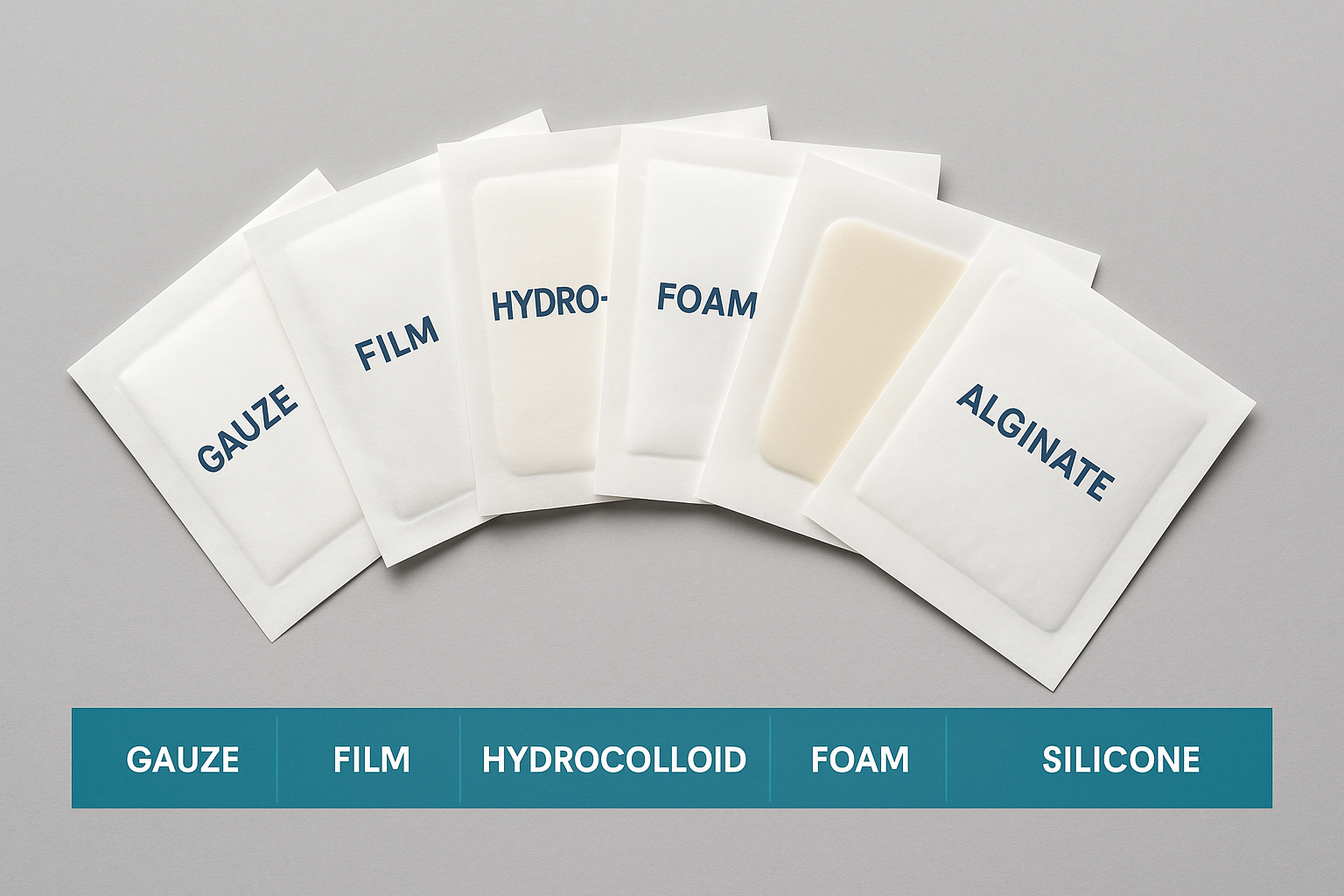
1. Real Stories: Why Wound Care Matters
Jenna had just changed the bandage on her father’s diabetic foot ulcer for the fourth time that week. The skin looked redder than before, and she wasn’t sure if the dressing was helping or hurting. The choices at the pharmacy had overwhelmed her—gauze, foam, hydrocolloids?
“I remember standing in the aisle for 20 minutes, reading packages and getting more confused,” she recalls. “I finally called my dad’s nurse who walked me through exactly what to get.”
This guide is for every caregiver and patient who’s asked: What’s the right dressing for this wound?
Dealing with a wound that won't heal?
We'll help connect you with a wound care practice near you — free, no obligation.
Find a Practice Near You2. Quick Reference Guide
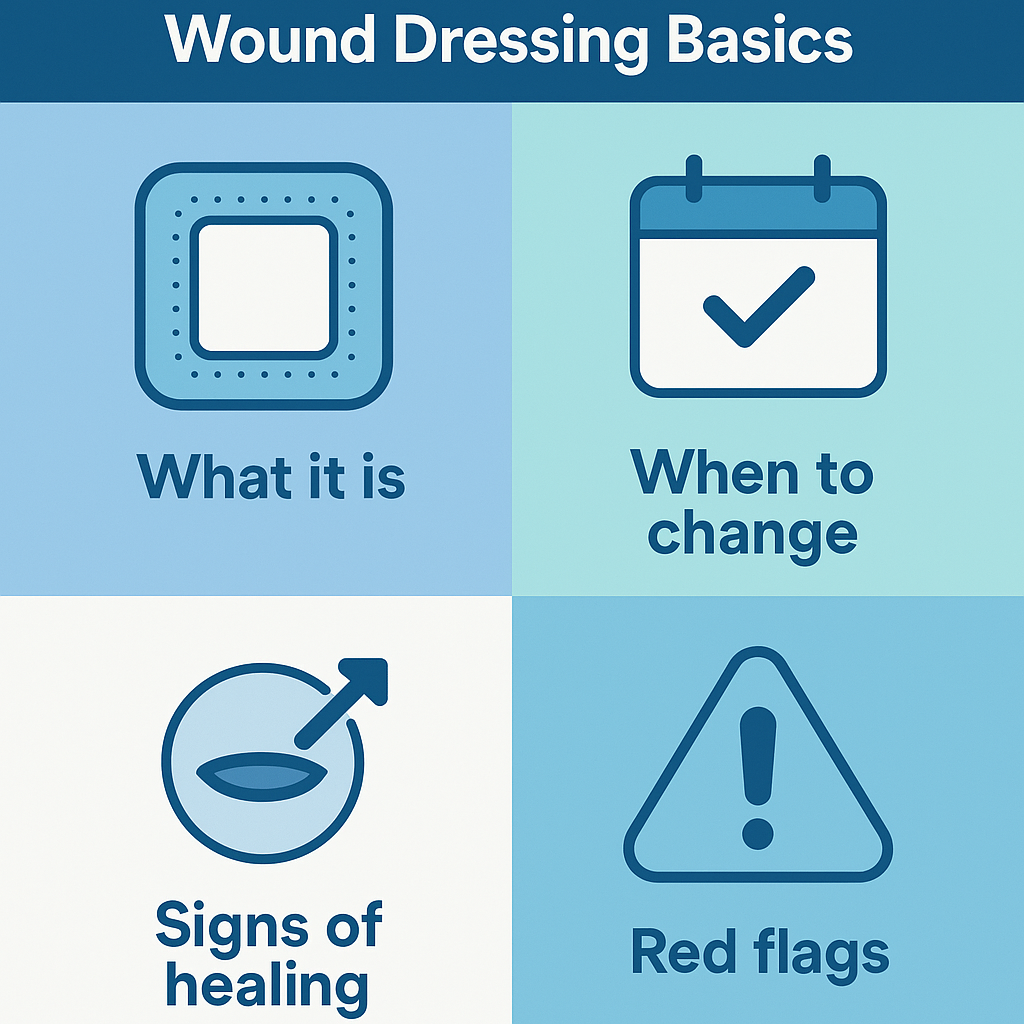
| Question | Quick Answer |
|---|---|
| What is a wound dressing? | A specialized covering that protects and supports healing by maintaining optimal moisture and keeping contaminants out. |
| When to change it? | Frequency varies: Some need daily changes, others can stay in place for up to 7 days. Follow package instructions or medical advice. |
| Signs of proper healing | Decreasing drainage, healthy pink or red tissue (granulation tissue), wound edges coming together, reduced pain and swelling. |
| Red flags | Foul odor, yellow/green discharge, increased pain, fever, spreading redness beyond the wound edges (more than 1 inch). |
| Call a doctor if… | Bleeding doesn’t stop with pressure, signs of infection appear, wound isn’t showing improvement after 2 weeks, or you have diabetes or circulation problems. |
Tip: Take photos of your wound (with ruler for scale) every few days to track healing progress.
For detailed guidance on recognizing infection signs, see our comprehensive guide: How to Tell If a Wound Is Infected
3. The Science of Healing: Why Modern Dressings Work
Think of your skin like protective roof shingles. When broken, your body launches a complex repair process:
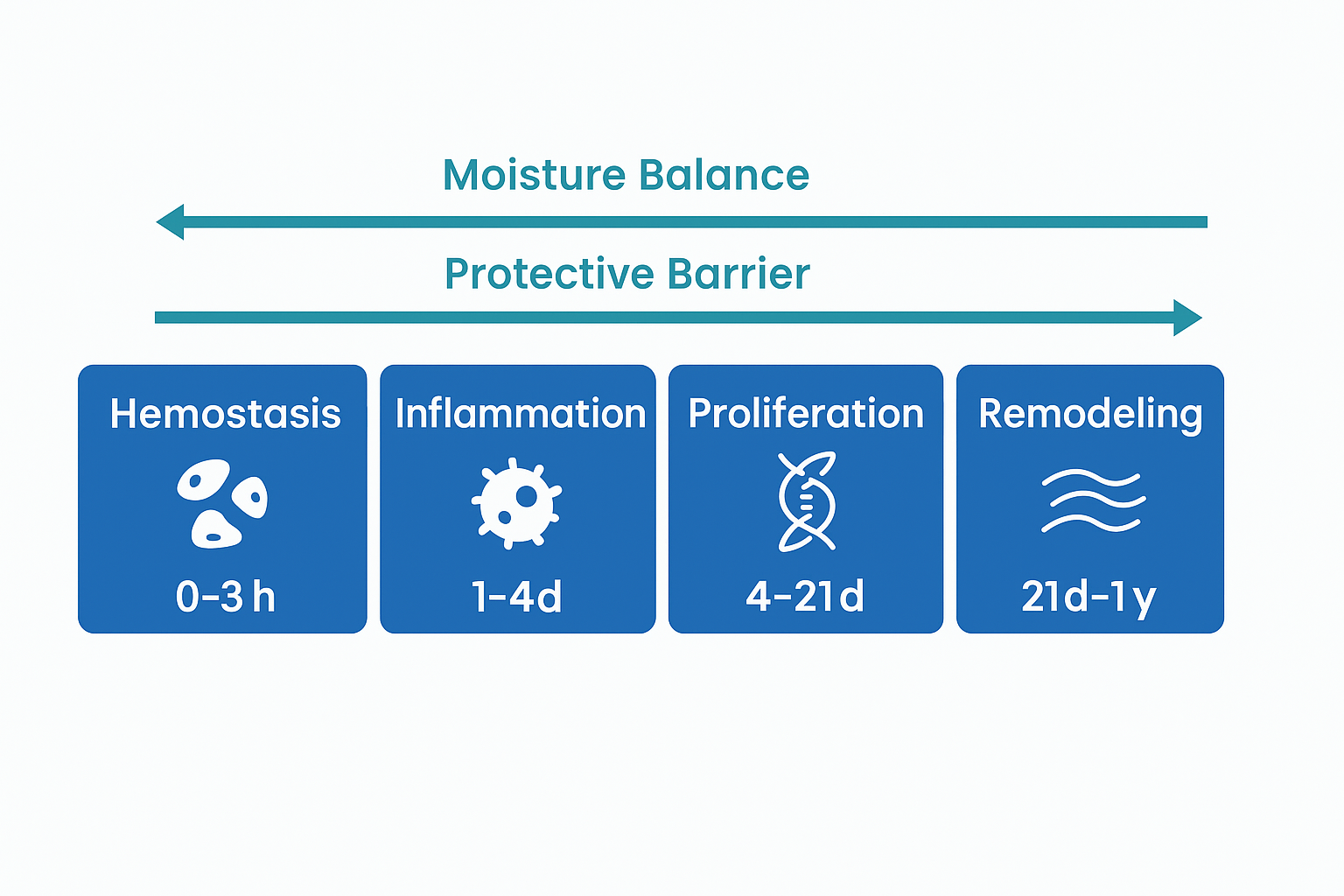
- Hemostasis (0-2 hours): Blood vessels constrict and platelets form clots to stop bleeding.
- Inflammation (1-3 days): White blood cells arrive to clean debris and fight infection.
- Proliferation (3-21 days): New blood vessels form, collagen is deposited, and wound edges pull together.
- Remodeling (21 days-1 year+): Scar tissue strengthens and reorganizes.
Why moisture matters: Research since the 1960s shows that wounds heal up to 50% faster in a moist environment. Moist wounds allow skin cells to migrate more easily, prevent scab formation (which cells must tunnel under), and maintain optimal growth factors in the wound fluid.
The right dressing creates the perfect healing environment by:
- Maintaining ideal moisture (not too wet, not too dry)
- Protecting from bacteria and contaminants
- Providing the right temperature (wounds heal best at body temperature)
- Allowing oxygen exchange when needed
- Absorbing excess fluid that could delay healing
4. Step-by-Step Wound Care Routine
Preparation:
- Wash hands thoroughly with soap and water for at least 20 seconds
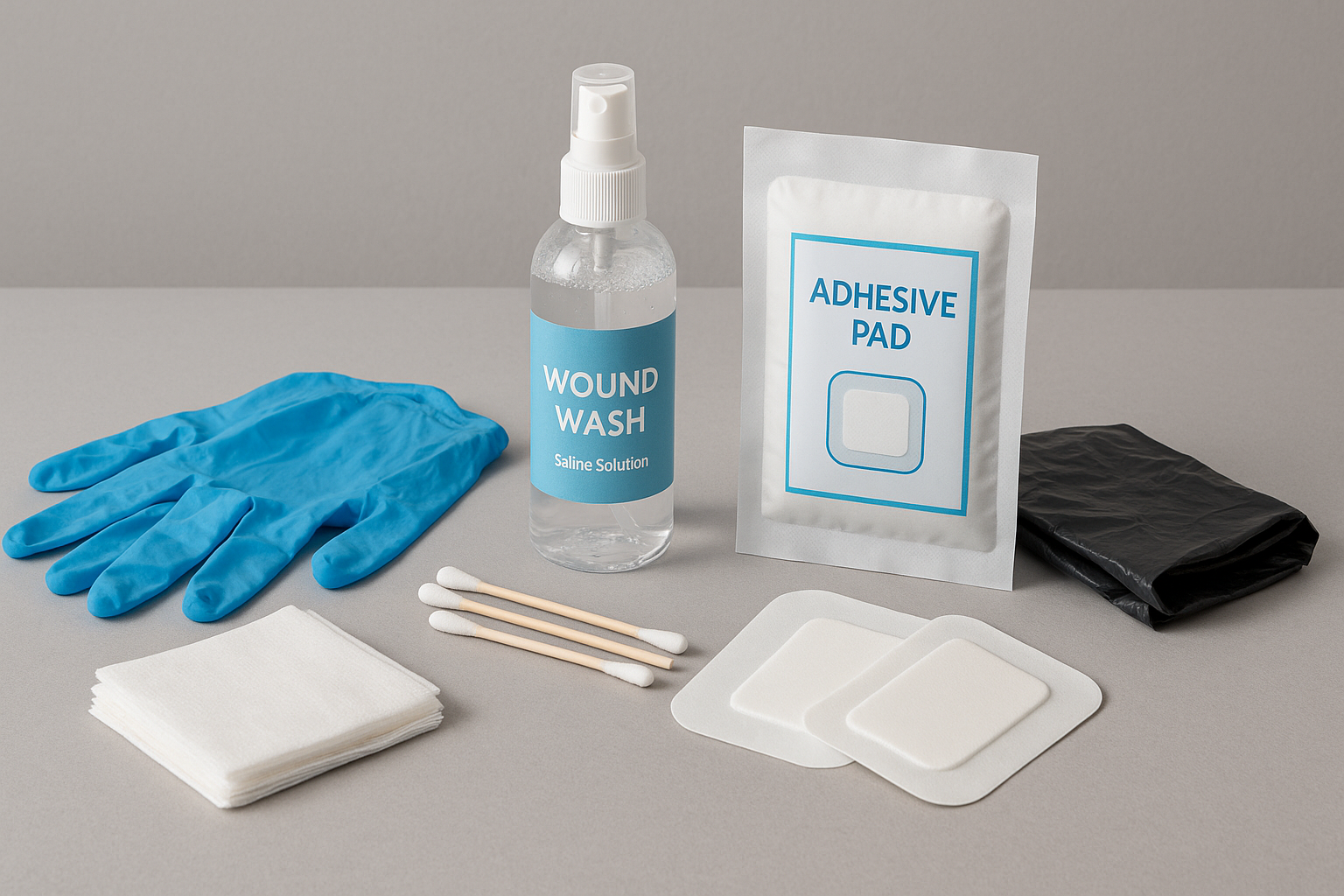
- Gather supplies: Clean gloves, saline solution or clean water, clean towel, appropriate dressing, medical tape, scissors, wound cleanser (if recommended)
- Create a clean workspace
Changing a Dressing:
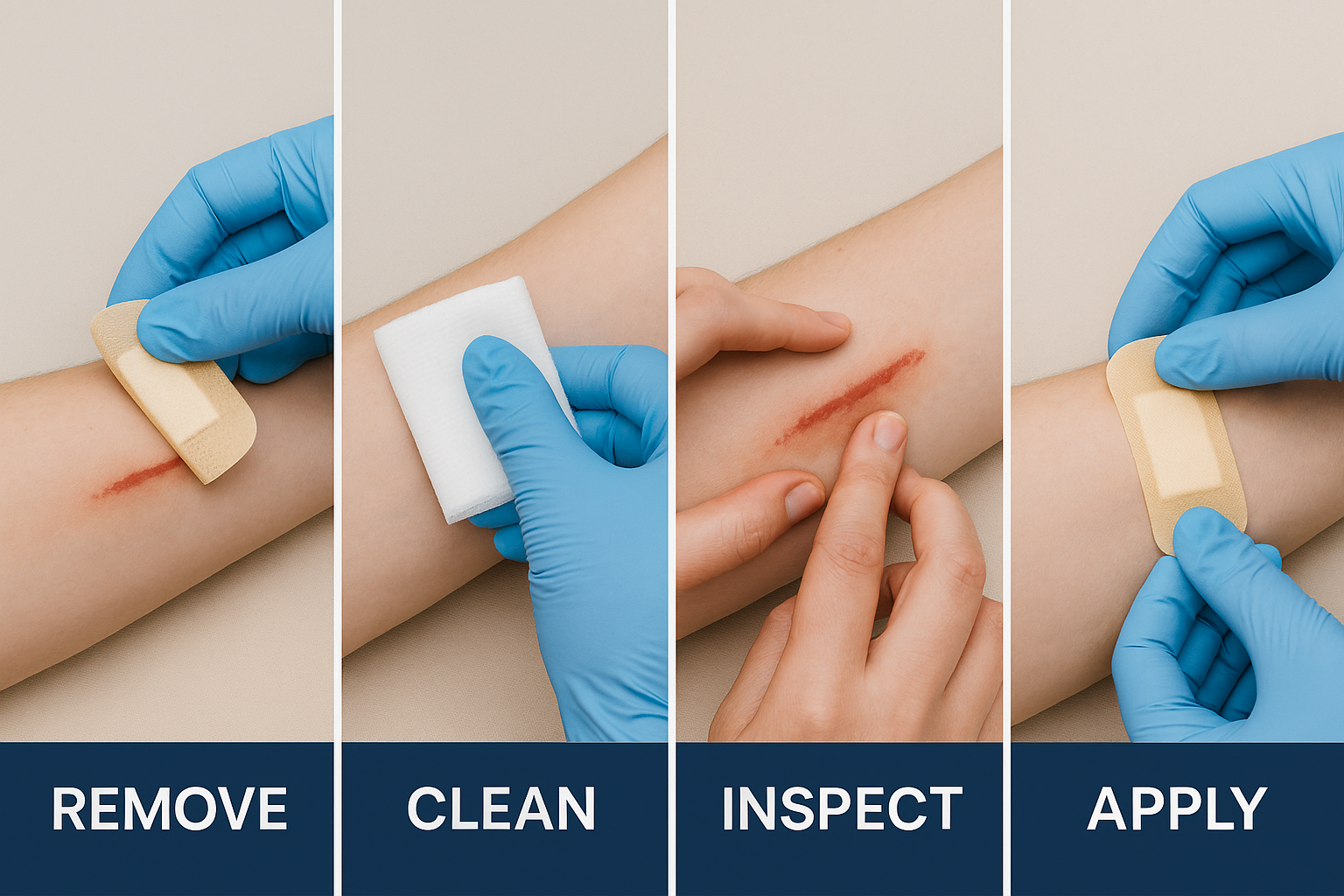
- Remove old dressing:
- Gently pull parallel to the skin, not upward
- If stuck, moisten with saline or clean water
- Use adhesive remover for tape residue
- Clean the wound:
- Use saline solution, wound cleanser, or clean water as recommended
- Gently irrigate or wipe from center outward
- Never scrub aggressively
- Pat dry with clean gauze (leave slightly moist)
- For detailed wound cleaning instructions, see our comprehensive guide: How to Clean Any Wound at Home
- Inspect the wound:
- Note color, size, drainage, odor
- Look for signs of infection
- Consider taking a photo for tracking
- Apply new dressing:
- Apply any prescribed ointments or medications
- Choose appropriate dressing type (see chart below)
- Cover at least 1 inch beyond wound edges
- Secure with tape or wrap, but not too tight
- Dispose of old dressings properly in sealed bags
Essential Wound Care Supplies:
🛒 NeilMed Cleanse Sterile Saline Wound Wash – Gentle, effective wound cleaning solution
🛒 Arm & Hammer Simply Saline Wound Wash 3-Pack – Great value sterile saline cleaning
🛒 Medical Gauze Pads and Tape Kit – Complete wound care supplies
Pro Tip: Keep a wound care journal. Note the date, appearance, pain level (1-10), and type of dressing used.
5. Professional Wound Care Treatments
When to Seek Professional Care:
- Wounds deeper than 1/4 inch
- Puncture wounds or animal bites
- Signs of infection
- Wounds not improving after 2 weeks
- Any wound if you have diabetes, circulation issues, or are immunocompromised
What to Expect at a Wound Care Clinic:
Assessment Tools:
- Wound measurements (length, width, depth)
- Tissue assessment (percentage of healthy vs. unhealthy tissue)
- Infection screening
- Vascular studies (if circulation is a concern)
- Nutritional evaluation
Advanced Treatments:
| Treatment | What It Does | When It’s Used |
|---|---|---|
| Debridement | Removes dead tissue using scalpels, enzymes, or special dressings | When dead tissue (slough or eschar) is present |
| Negative Pressure Wound Therapy (NPWT) | Uses gentle suction to remove fluid and stimulate healing | Large wounds, surgical wounds, diabetic ulcers |
| Hyperbaric Oxygen Therapy | Delivers high concentrations of oxygen to boost healing | Diabetic ulcers, radiation injury, certain infections |
| Bioengineered Skin Substitutes | Provides temporary or permanent covering to promote healing | Venous ulcers, diabetic ulcers, burns |
| Growth Factor Therapy | Applies proteins that stimulate cell growth | Diabetic foot ulcers, pressure injuries |
Case Study: Michael, 58, with diabetes, had a foot ulcer that wouldn’t heal for 3 months. After debridement, offloading (special shoes), and advanced dressings at a wound clinic, his wound closed completely in 8 weeks.
6. Evidence-Based Natural Approaches & Common Myths
What Research Supports:
✅ Medical-Grade Honey: Manuka honey with UMF 15+ or higher has proven antibacterial properties and can support healing in certain wounds.
🛒 Medihoney Antibacterial Medical Honey – FDA-approved medical-grade honey dressing
✅ Calendula: Studies show calendula-based products can promote wound healing and have anti-inflammatory effects.
✅ Proper Nutrition: Vitamin C, zinc, and adequate protein intake are scientifically proven to support wound healing.
For more natural healing approaches, see our guide: Natural Remedies for Wound Healing
What Doesn’t Work:
❌ Myth: “Let the wound air out to form a scab.” Truth: Scabs actually slow healing by creating barriers for new skin cells. Modern wound care aims to prevent scab formation.
❌ Myth: “Put butter/cocoa butter on burns.” Truth: This can trap heat and worsen damage. Cool water is the proper first aid for burns.
❌ Myth: “Hydrogen peroxide is good for cleaning all wounds.” Truth: It damages healthy tissue and slows healing. Saline or clean water is preferred for most wounds.
❌ Myth: “Alcohol sterilizes wounds.” Truth: Alcohol damages healthy cells and delays healing. It should not be used directly on wounds.
⚠️ Warning: Never apply homemade or food-grade honey to wounds. Only medical-grade honey products are safe and effective.
7. Complete Dressing Guide: Choosing the Right Type
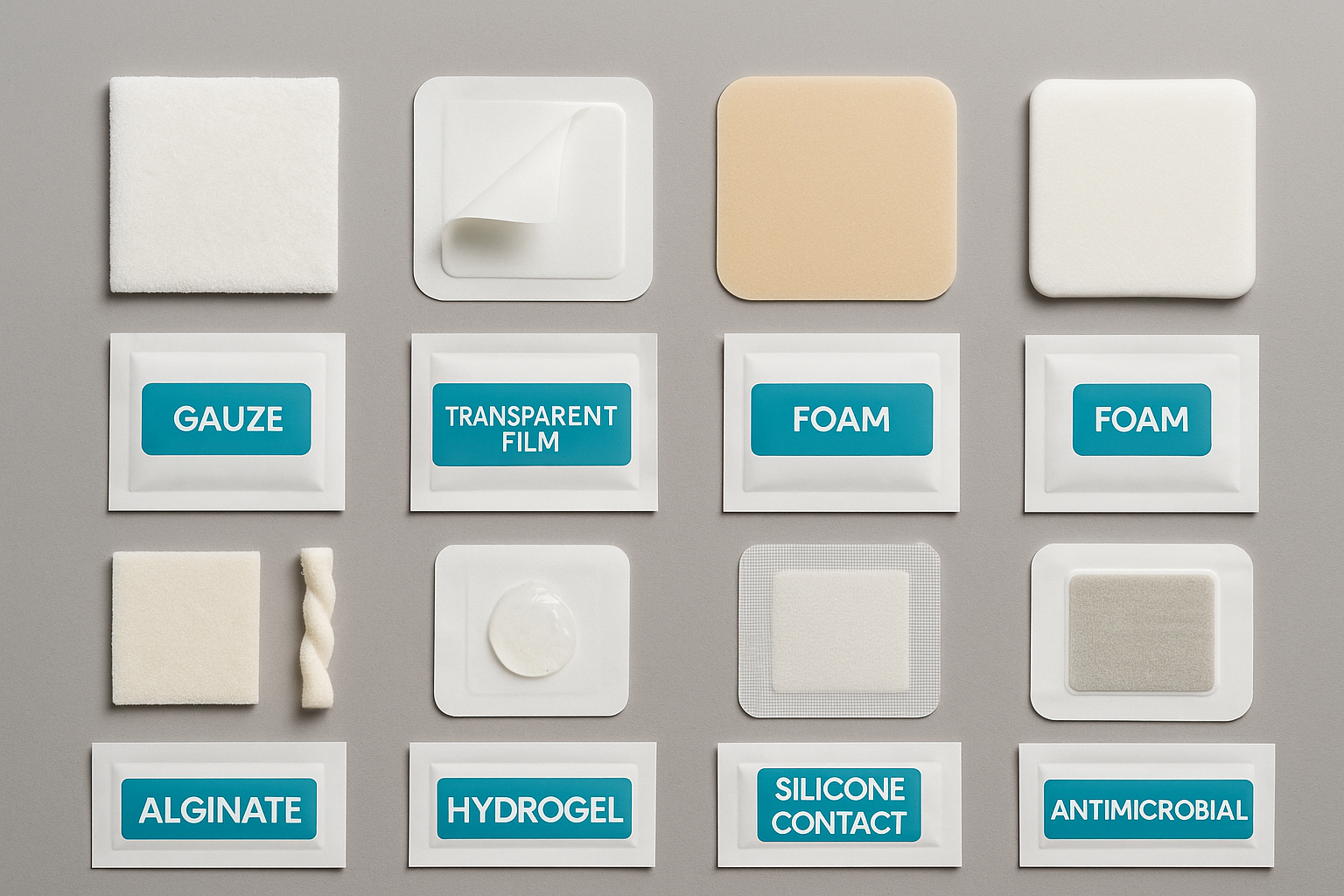
| Dressing Type | Best For | How Long It Lasts | How to Tell It’s Working | Recommended Products |
|---|---|---|---|---|
| Transparent Film (thin, clear adhesive covers) | • Minor cuts and scrapes • IV sites • Shallow wounds with minimal drainage • Protecting at-risk skin | 3-7 days | • Stays intact • Wound looks moist but not soggy • No leaking | • Tegaderm™ Film • Opsite™ Flexifix • 3M™ Tegaderm™ HP |
| Hydrocolloid (gel-forming, adhesive wafers) | • Partial thickness wounds • Light to moderate drainage • Pressure injuries • Blisters | 3-7 days | • Forms a gel with wound fluid • Edges stay sealed • Minimal odor | • DuoDERM® CGF • Comfeel® Plus • Tegaderm™ Hydrocolloid |
| Foam (soft, absorbent pads) | • Moderate to heavy drainage • Granulating wounds • Areas needing cushioning • Under compression wraps | 1-3 days | • Remains intact • Drainage doesn’t leak • Wound edges look healthy | • Mepilex® • Allevyn® Gentle • Polymem® |
| Alginate (seaweed-derived fibers) | • Heavily draining wounds • Wound cavities • Bleeding sites | 1-3 days | • Turns to gel when absorbing fluid • Controls drainage • No leaking | • Kaltostat® • Medihoney® Calcium Alginate • Aquacel® |
| Non-Adherent (mesh or fabric with non-stick coating) | • Skin tears • Abrasions • Fragile skin • Burns | 1-2 days | • Doesn’t stick to wound • Drainage passes through • Skin isn’t damaged on removal | • Telfa™ • Adaptic™ • Mepitel® |
| Antimicrobial (dressings containing silver, iodine, etc.) | • Infected wounds • High-risk wounds • Burns • Diabetic ulcers | 1-7 days (varies by type) | • Decreased signs of infection • Reduced odor • Less drainage | • Aquacel® Ag • Medihoney® Antibacterial • Silverlon® |
| Hydrogel (water-based gels) | • Dry wounds • Burns • Radiation skin damage • Painful wounds | 1-3 days | • Wound stays moist • Dead tissue softens • Pain decreases | • Intrasite™ Gel • Purilon® Gel • Aquaform® Hydrogel |
How to Choose the Right Dressing:
- Assess the wound:
- How much drainage?
- Is there dead tissue?
- Is it infected?
- Is the surrounding skin fragile?
- Match the dressing to the wound:
- Dry wounds need moisture (hydrogels)
- Wet wounds need absorption (foams, alginates)
- Infected wounds need antimicrobials
- Fragile skin needs gentle adhesives
- Consider practical factors:
- Location of the wound
- Need for showering
- Frequency of changes
- Cost and availability
Transparent Film Dressings
Best For: Minor cuts, IV sites, shallow wounds with minimal drainage Duration: 3-7 days
🛒 3M Tegaderm Transparent Film Dressing 4×4″ – Waterproof, breathable protection
🛒 Tegaderm Large 6×8″ Transparent Dressing – For larger wound coverage
How to Tell It’s Working: Stays intact, wound looks moist but not soggy, no leaking
Hydrocolloid Dressings
Best For: Partial thickness wounds, light to moderate drainage, pressure injuries, blisters Duration: 3-7 days
🛒 ConvaTec DuoDERM Extra Thin 4×4″ – Forms protective gel, promotes healing
🛒 DuoDERM Control Gel Formula – For partial and full-thickness wounds
How to Tell It’s Working: Forms a gel with wound fluid, edges stay sealed, minimal odor
Foam Dressings
Best For: Moderate to heavy drainage, granulating wounds, areas needing cushioning Duration: 1-3 days
🛒 Mepilex Border Flex Foam Dressing – Gentle silicone adhesive, superior absorption
🛒 Mepilex Ag Antimicrobial Foam – Silver foam for infected wounds
How to Tell It’s Working: Remains intact, drainage doesn’t leak, wound edges look healthy
Alginate Dressings
Best For: Heavily draining wounds, wound cavities, bleeding sites Duration: 1-3 days
🛒 Aquacel Hydrofiber Dressing – Superior absorption, gels on contact
🛒 Calcium Alginate Wound Dressing Rope – For cavity wounds and deep areas
How to Tell It’s Working: Turns to gel when absorbing fluid, controls drainage, no leaking
Non-Adherent Dressings
Best For: Skin tears, abrasions, fragile skin, burns Duration: 1-2 days
🛒 Telfa Non-Adherent Dressing Pads – Won’t stick to wounds, gentle removal
🛒 Mepitel Silicone Wound Contact Layer – Protects fragile skin during healing
How to Tell It’s Working: Doesn’t stick to wound, drainage passes through, skin isn’t damaged on removal
Antimicrobial Dressings
Best For: Infected wounds, high-risk wounds, burns, diabetic ulcers Duration: 1-7 days (varies by type)
🛒 Aquacel Ag Silver Antimicrobial Dressing – Silver ions kill bacteria, absorbs heavy drainage
🛒 Medihoney Antibacterial Medical Honey – FDA-approved medical-grade honey dressing
How to Tell It’s Working: Decreased signs of infection, reduced odor, less drainage
Hydrogel Dressings
Best For: Dry wounds, burns, radiation skin damage, painful wounds Duration: 1-3 days
🛒 Intrasite Hydrogel Wound Dressing – Rehydrates dry wounds, cools and soothes
🛒 Hydrogel Sheets for Burn Care – Cooling relief for burns and painful wounds
How to Tell It’s Working: Wound stays moist, dead tissue softens, pain decreases
Must-Have Supplies:
- Variety pack of different dressing types
- Sterile saline solution
- Medical tape (various widths)
- Non-latex gloves
- Scissors
- Antiseptic wipes
- Gauze pads
- Elastic bandages
Expert Tip: “Start with the simplest effective dressing and reassess every few days. As the wound changes, your dressing choice might need to change too.” — Jane Smith, RN, WOCN®
8. When & How to Get Help
Know The Warning Signs:
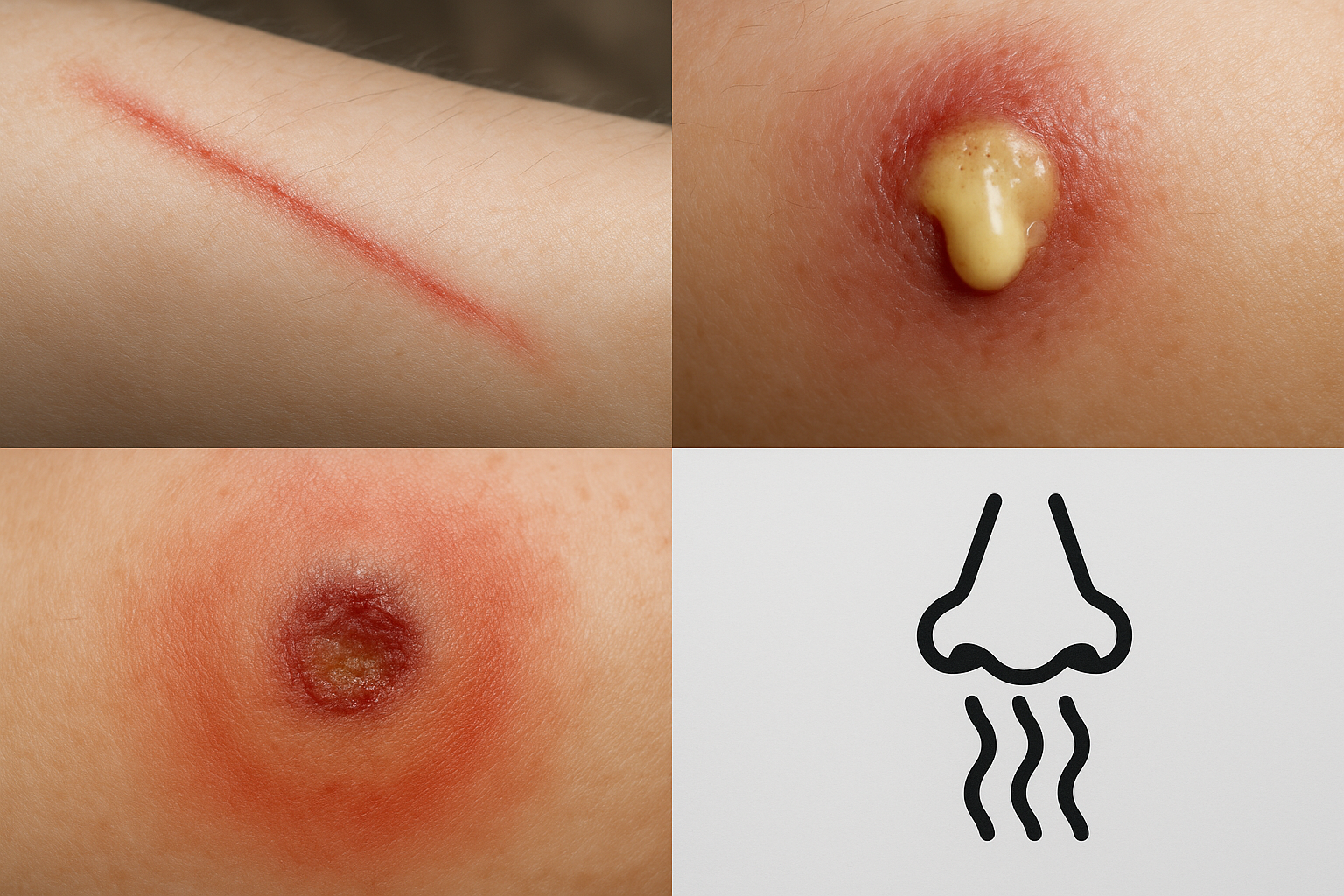
| Warning Sign | What It Might Mean | Action Needed |
|---|---|---|
| Increasing redness extending beyond wound | Cellulitis (skin infection) | Urgent: See doctor within 24 hours |
| Red streaks running from wound | Lymphangitis (infection in lymph vessels) | Emergency: Seek immediate medical care |
| Fever above 100.4°F (38°C) | Systemic infection | Urgent: See doctor within 24 hours |
| Pus or green/yellow thick discharge | Infection | Urgent: See doctor within 24 hours |
| Foul odor | Infection or necrosis | Urgent: See doctor within 24 hours |
| Increasing pain | Infection or other complications | Urgent: See doctor within 24 hours |
| Wound getting larger | Deterioration or infection | Urgent: See doctor within 24 hours |
| Excessive bleeding | Vessel damage or clotting issues | Emergency if uncontrolled with pressure |
| Numbness or tingling | Nerve damage or compression | Urgent: See doctor within 24 hours |
| No improvement after 2 weeks | Failed healing | Schedule appointment with wound specialist |
Who to Contact:
- Primary Care Provider: For most non-emergency wound concerns
- Wound Care Clinic: For specialized wound treatment
- Urgent Care: For after-hours concerns that aren’t life-threatening
- Emergency Room: For severe infections, uncontrolled bleeding, or systemic symptoms
Prepare for Your Appointment:
- Bring a list of all products used on the wound
- Know when the injury occurred
- Have photos of how the wound has changed
- Bring current medications list
- Know your medical history (diabetes, circulation problems, etc.)
Telehealth Tip: Many wound care providers offer virtual visits. Take clear, well-lit photos of your wound next to a ruler for scale.
9. Healing Timeline: What to Expect
Every wound is different, but this timeline gives you a general idea of what to expect during normal healing:
For Typical Cuts and Scrapes:
| Timeline | What You’ll See | What’s Happening | Care Needed |
|---|---|---|---|
| Hours 0-4 | Bleeding, then clotting | Platelets form clots to stop bleeding | Clean and protect |
| Days 1-3 | Redness, swelling, pain | Inflammation bringing immune cells | Keep clean, moist, and covered |
| Days 3-7 | Decreasing redness, clear or slightly yellow drainage | Cleaning and early repair | Continue appropriate dressing |
| Days 7-14 | Pink tissue, wound getting smaller | New tissue formation | Protect new tissue |
| Days 14-21 | New skin forming from edges | Wound contraction and re-epithelialization | Gentle care of fragile new skin |
| Weeks 3-8 | Fully closed but pink/red | Continued strengthening | Sun protection, gentle moisturizing |
| Months 3-12 | Fading scar | Collagen remodeling | Scar care if needed |
For More Serious Wounds:
- Surgical wounds: Often follow similar timeline but may be closed with sutures or staples
- Deep wounds: May require longer in each phase
- Chronic wounds (diabetic ulcers, pressure injuries): May stall in inflammatory phase
10. Optimizing Healing: Lifestyle Factors
Nutrition for Healing:
| Nutrient | Food Sources | Why It’s Important |
|---|---|---|
| Protein | Meat, fish, eggs, dairy, legumes | Building block for new tissue |
| Vitamin C | Citrus, berries, peppers, broccoli | Collagen formation |
| Zinc | Oysters, meat, nuts, seeds | Tissue growth and repair |
| Vitamin A | Orange/yellow fruits, leafy greens | Immune function and tissue repair |
| Iron | Red meat, spinach, fortified cereals | Oxygen delivery to tissues |
| Water | Aim for 8+ cups daily | Cellular function and circulation |
Other Factors That Impact Healing:
- Smoking: Decreases oxygen to tissues and slows healing by up to 60%
- Blood Sugar Control: High blood sugar impairs immune function and slows healing
- Stress: Elevates cortisol, which can delay healing
- Sleep: Most tissue repair happens during deep sleep
- Movement: Improves circulation but avoid stressing the wound
- Medications: Some (like steroids or chemotherapy) can delay healing
Quick Health Checklist:
- Stay current on tetanus vaccination (every 10 years)
- Control chronic conditions like diabetes
- Address nutritional deficiencies
- Maintain healthy weight
- Stay hydrated
- Get adequate sleep
Success Story: “After my surgery wasn’t healing well, my doctor tested my vitamin levels. Turns out I was deficient in zinc and vitamin D. After supplementing, my wound started closing within two weeks.” —Robert, 62
11. Comprehensive FAQ
Q: What’s the best dressing for a cut that won’t close?
A: For wounds that aren’t healing properly, a hydrocolloid or alginate dressing may help, depending on the amount of drainage. However, any wound that doesn’t show improvement after two weeks should be evaluated by a healthcare provider, as it may need more advanced care like debridement or prescription treatments.
Q: Can I shower with a wound dressing on?
A: Some dressings are waterproof (like transparent films and many hydrocolloids), while others need protection. If your dressing isn’t waterproof, cover it with a plastic bag or specialized shower cover. Pat it dry afterward if it gets damp. Never soak a wound in bath water unless specifically instructed by your doctor.
Q: Is yellow drainage always a sign of infection?
A: Not necessarily. Many hydrocolloid and alginate dressings interact with wound fluid to form a yellowish gel—this is normal. However, thick, opaque yellow or green drainage with a foul odor is concerning for infection, especially if accompanied by increasing pain, redness, or warmth.
Q: What’s the safest option for fragile skin?
A: Silicone-based dressings like Mepilex® or Mepitel® are designed specifically for fragile skin. They adhere gently and remove with minimal trauma. Alternatively, non-adherent dressings like Telfa™ with paper tape or stretch net dressings avoid adhesives entirely.
Q: When should I stop using antibiotic ointment?
A: Over-the-counter antibiotic ointments should typically be used for only 1-3 days unless directed otherwise by a healthcare provider. Prolonged use can sometimes cause contact dermatitis and may actually slow healing by keeping the wound too moist.
Q: How do I know if my wound is infected or just healing?
A: Normal healing includes mild redness immediately around the wound, slight swelling, and clear or slightly yellow drainage. Infection typically shows as increasing pain, warmth, spreading redness more than 1 inch beyond the wound, thick yellow/green drainage, foul odor, or fever.
For detailed infection identification, see: How to Tell If a Wound Is Infected
Q: Can I make my own saline solution for wound cleaning?
A: Yes. Dissolve 1 teaspoon of table salt in 2 cups of warm water that has been boiled and cooled. Use within 24 hours and store in a clean, covered container. Commercial saline is preferred for serious wounds.
Q: How tight should my bandage be?
A: A bandage should be snug enough to stay in place but not so tight that it causes discomfort, numbness, tingling, or skin color changes. You should be able to slip one finger under the bandage.
Q: What’s the difference between gauze and non-adherent dressings?
A: Regular gauze can stick to wounds, potentially damaging new tissue when removed. Non-adherent dressings have a special coating that prevents sticking while still allowing fluid to pass through.
Q: My doctor prescribed silver dressings. Are they safe to use long-term?
A: Silver dressings should generally be used for limited periods (typically 2-4 weeks) as prescribed. Long-term use can potentially delay healing and may lead to silver absorption. Always follow your healthcare provider’s instructions.
14. Key Takeaways
✅ Match the dressing to the wound: Dry wounds need moisture, wet wounds need absorption
✅ Consistent care matters: Follow a regular cleaning and dressing change schedule
✅ Watch for healing signs: Decreasing size, healthy pink tissue, reduced drainage
✅ Know the red flags: Spreading redness, increased pain, foul odor require medical attention
✅ Support healing systemically: Good nutrition, blood sugar control, and adequate rest all help
✅ When in doubt, seek help: Wounds that don’t improve in two weeks need professional assessment
For comprehensive wound cleaning instructions, see: How to Clean Any Wound at Home
For natural healing support, see: Natural Remedies for Wound Healing
15. References and Sources
- Agency for Healthcare Research and Quality. (2023). Pressure Ulcer Prevention and Treatment Protocol.
- Bolton, L. (2022). “Moist wound healing: Past, present, and future.” Advances in Wound Care, 11(4), 207-218.
- Wounds International. (2024). International Best Practice Guidelines: Wound Management in Diabetic Foot Ulcers.
- Wound, Ostomy and Continence Nurses Society. (2024). Core Curriculum: Wound Management.
- Centers for Disease Control and Prevention. (2023). Guidelines for Wound Care and Prevention of Surgical Site Infections.
- Sussman, C., & Bates-Jensen, B. (2022). Wound Care: A Collaborative Practice Manual for Health Professionals.
- World Union of Wound Healing Societies. (2024). Consensus Document: Role of Dressings in Pressure Ulcer Prevention.
16. Disclaimer
This guide is not a substitute for professional medical advice, diagnosis, or treatment. Always seek the advice of your physician or other qualified health provider with any questions you may have regarding a medical condition.
Related answers
- A Transparent Film Dressing Is Used for Which Type of Wound?
- Does Alcohol Affect Wound Healing?
- Does Nicotine Patch Affect Wound Healing?
- Evidence-Based Natural Remedies for Wound Healing
This content is for educational purposes only and is not a substitute for professional medical advice. Always consult a qualified healthcare provider about your wound.